Food free of foreign matter and residue
Food and beverage makers wash, blend, heat and pack what people eat and drink. A drop of lubricant or cleaner left after rinsing is a food-safety issue, so proof of no residue must be on record.
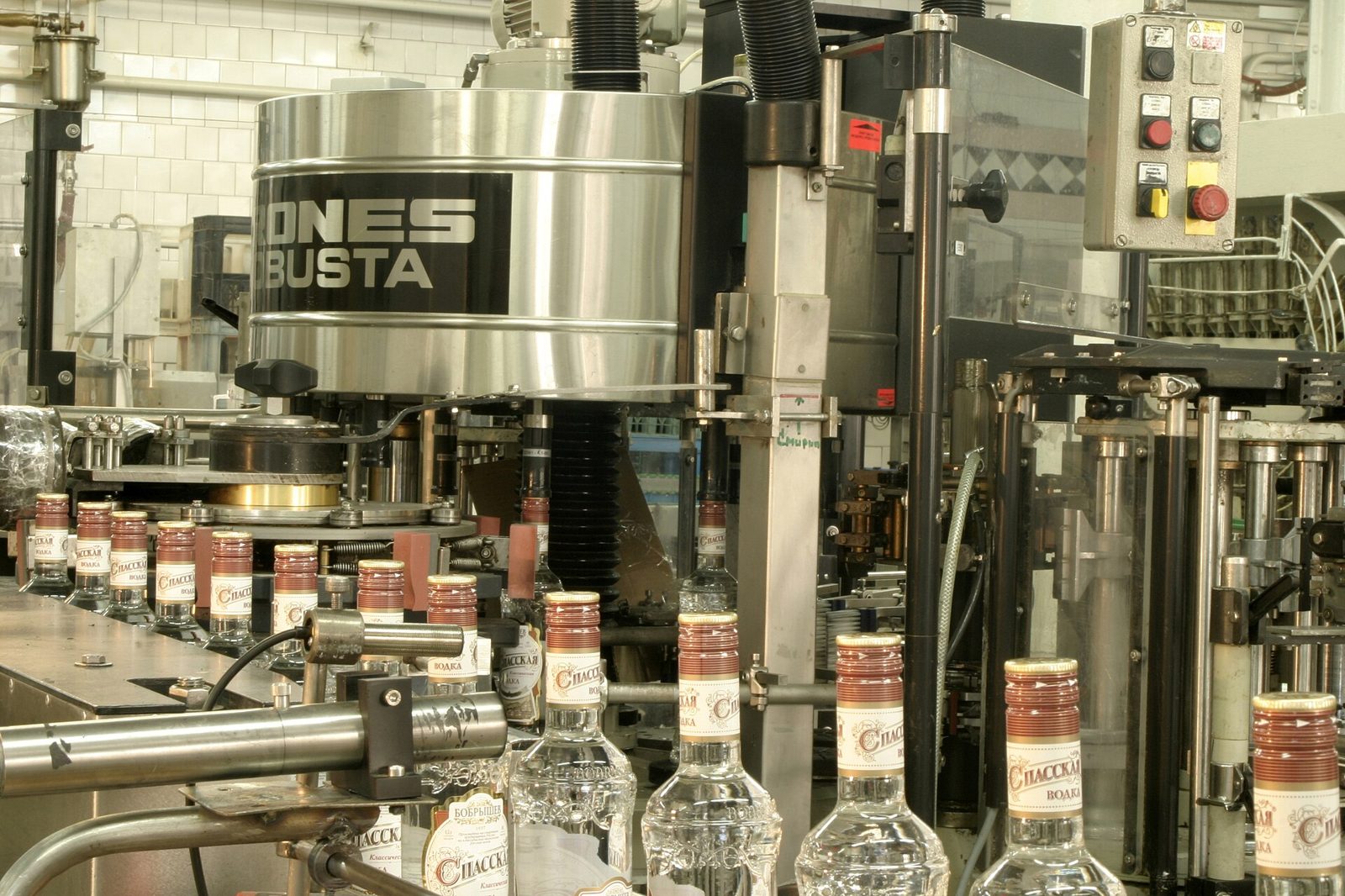
What is food and beverage manufacturing?
Food and beverage manufacturing washes, blends and heats agricultural and marine products and powdered ingredients into products people eat, then fills and packs them. Lines are always wet with water, steam and acid and alkaline cleaning solutions, and move between freezing and high heat, so equipment must deal with corrosion and microbes at the same time. Stainless piping and tanks, conveyors and fillers operate right next to the product, so lubrication that is safe in incidental food contact, cleaning and sanitizing that leave nothing after rinsing, and rust protection are required under different standards in each section.
In food and beverage, incidents usually begin when something gets into the product. A drop of lubricant from equipment or cleaning solution left after rinsing becomes a food safety issue directly. So beyond cleaning power and lubrication performance, which standard an item follows, whether it leaves residue, and whether that evidence can be recorded must all be in place. In food and beverage, discussions continue only with proposals that account for the burden of revising documents and long review periods.
- 40%
US food and beverage recalls from Listeria or Salmonella
- 01
Raw material receiving
Farm and marine products and powders go into cold stores and silos. Freezer condensation spreads corrosion to equipment and packaging. Choose rust preventives and chain oil by cold flow and possible raw material contact.
- #Cold chain
- #Pest control
- #Packaging integrity
- 02
Washing and pretreatment
Raw materials are washed with high-pressure water, peeled and trimmed. Reused wash water spoils, microbes multiply and nozzles clog. Choose cleaners and sanitizers by cleaning and sanitizing power and rinse residue.
- #Food safety
- #Washing efficiency
- #Equipment corrosion control
- 03
Separation and filtration
Centrifuges remove impurities and membranes concentrate and refine liquid ingredients. Fouling lowers throughput, and frequent cleaning shortens membrane life. Choose cleaning chemicals by cleaning power and membrane compatibility.
- #Separation efficiency
- #Fouling prevention
- #Cleaning cycles
- 04
Mixing and blending
Seasonings, sauces and beverage bases are mixed in set amounts in blending tanks and sent to the next process. Worn agitator bearings make viscosity and taste vary by batch. Choose agitator seal and bearing lubricant by load, life and food grade registration.
- #Mix homogeneity
- #Batch consistency
- #Agitator hygiene
- 05
Homogenization
Homogenizers break down fat globules and particles for texture and stability. Worn plungers and seals lower homogenizing pressure. Choose high-pressure lubricants by pressure and wear resistance and seal compatibility.
- #Pressure stability
- #Plunger wear
- #Hygienic sealing
- 06
Heating and cooking
Raw materials are cooked and dried with steam, frying and dry heat to set moisture and flavor. Scale reduces heat transfer, and grease hardens or runs. Choose heat transfer oil and lubricants by operating temperature range and thermal stability.
- #Temperature records
- #Uniform heating
- #Equipment safety
- 07
Sterilization and heat treatment
Pasteurization, HTST and retort processing control microbes and their history is recorded. Scale on heat exchanger plates lengthens time to reach set temperature. Choose descaling chemicals by removal power and plate material compatibility.
- #Sterilization records
- #Heat exchange efficiency
- #Sterility
- 08
Cooling and freezing
Heat exchangers and freezing tunnels quickly bring product temperature down into a safe range. Microbes and scale in cooling water slow cooling. Choose cooling water treatment chemicals and compressor oil by treatment performance and refrigerant compatibility.
- #Cooling rate
- #Condensation control
- 09
Clean-in-place (CIP)
Piping, tanks and filling equipment are cleaned and sanitized without disassembly by circulating alkaline and acid solutions. Drifting concentration or temperature cuts cleaning short. Choose cleaning solutions by cleaning power and corrosiveness to stainless and seals.
- #Cleaning cycle adherence
- #Cleaning solution control
- #Rinse residue check
- 10
Filling and packing
Contents are filled in set amounts and pouches and packs are sealed into finished products. Worn aseptic valve seals let microbes in through the gap. Choose filling lubricant by load, speed and possible contact with contents.
- #Fill accuracy
- #Aseptic sealing
- #Packing speed
- 11
Metal detection and inspection
Metal detectors, checkweighers and vision equipment check for foreign matter and weight. Moisture and rust in pneumatic systems slow reject devices. Choose pneumatic tool oil and rust preventives by chance of spray contact and grade.
- #Foreign matter control
- #Weight consistency
- 12
Post-packing storage and transport
Finished products are palletized, stored in warehouses and shipped through chilled and frozen logistics. As temperature swings, condensation oxidizes cartons and mold grows on pallets. Choose rust preventives by protection period and cold performance.
- #Frozen storage
- #Shock absorption
- #Shorter transit time
Regulation and certification
NSF H1
The registration category for lubricants that may have incidental food contact. Equipment close to the product, such as fillers, conveyors and mixers, uses H1-registered lubricants.
HACCP
The food safety system that analyses hazards and controls critical points in production. Lubricants and cleaners are treated as chemical hazards, so where they are used and how they are stored is controlled.
FSSC 22000
A food safety certification scheme built on ISO 22000. Its prerequisite programmes cover lubricants and chemicals, so the choice of food-grade products and their records are checked at audit.
Hygiene Products Control Act (cleaners)
The Korean law that regulates cleaners for produce, tableware and food processing equipment as hygiene products. Cleaners for food plant equipment must meet its standards and specifications.
FAQ
Conveyor chain oil splashes toward product. Is switching to H1 grade enough?
Changing grade reduces the burden of incidental contact, but often does not stop the splashing itself. If more oil is applied than needed or the application point does not match the chain's travel direction, whatever is pushed out will splash regardless of grade.
If the splashed amount does not drop, other burdens follow. Cleaning around the area becomes more frequent, and those cleaning chemicals can stay on the chain and interfere with lubrication again. Planning the grade switch and the application amount together causes fewer problems later.
Using both H1 and H2 is confusing to manage. Can't we standardize on H1?
Some sites standardize and some split. Moving everything to H1 reduces worry about mix-ups, but at high-load or high-temperature points the choice narrows and replacement intervals can shorten.
It is better to split by the conditions of each point. Keeping H1 only for sections with possible contact and separating storage and lubrication tools by color for the rest lowers mix-up risk considerably. If tools get mixed, splitting grades loses its meaning, and it can be flagged at inspection.
Microbes still show up inside piping after CIP. Do we need a stronger cleaner?
The cause is more often places the solution does not reach than the cleaner. Biofilm remains where flow drops, such as dead legs, bends and valve interiors, and in those spots it stays even at higher concentration if contact time is short.
Raising concentration has a downside. Higher alkaline and acid concentrations wear seals and gaskets first and lengthen rinsing, which can raise values in residue tests. For spots where flow cannot build, modifying piping or setting a separate disassembly cleaning interval is faster in practice.
Can residue tests show values even after thorough rinsing?
Yes. Sometimes what is detected is not the cleaning solution itself but substances formed when it meets ingredient components, or components leached from seals. Poor rinse water quality can also raise values.
Testing the rinse water as collected shows where values rise. If the water already shows values before use, the water supply is the issue; if values rise only after circulation, the cleaning solution and contact time are. If values swing widely by batch, ingredient-side variables need to be looked at alongside cleaning conditions.
Heat exchanger performance has dropped. Will removing scale restore it?
Often it does, but it is good to look at how fast scale returns as well. With hard source water or higher operating temperatures, the same symptom can return soon after removal.
If cleaning intervals keep getting shorter, water pretreatment may be the cause. Repeated use of acid unsuited to the plate material can roughen surfaces so scale settles more easily. Photographing plate condition right after removal makes comparison easier next time.
Freezer area equipment keeps rusting. Will a thicker rust preventive coat do?
There is often a limit to holding up with thickness. Where freezing and thawing alternate, condensation forms repeatedly, and water trapped under the film can drive corrosion from underneath.
A thicker coat also adds to cleaning burden. Around food equipment, routine cleaning often strips the film and corrosion restarts there, so at spots where temperature swings, such as around doors and under evaporators, addressing condensation and drainage first lasts longer. Whether the spot falls within the cleaning cycle is also considered.
If we change cleaners, how much of our HACCP documentation needs revising?
It depends on the item and where it is used, but if cleaning conditions are written into the control standards, that part usually needs updating. When concentration, temperature and contact time change, validation data follows.
What actually drives the schedule is the validation data rather than the documents. Revision is complete only with new residue validation data under the changed conditions, and gathering it late delays everything accordingly. That is why many time cleaner changes to regular document updates.
Changing equipment lubricants: is checking the registration number enough?
The registration number is the starting point; whether the product holds up under that point's conditions also matters. At demanding points such as homogenizer plungers or high-temperature drying, products of the right grade can still have short lives that pull replacement intervals forward.
Shorter intervals shift the burden elsewhere. More frequent lubrication raises the chance of incidental contact, so even with the right grade, loose management dilutes its meaning. Recording temperature and load starting with the most demanding points and narrowing down from there matches reality.