Removing before bonding
Cleaning, surface preparation and maintenance aids. The area that decides adhesion and appearance in the next step, and the condition of the plant.
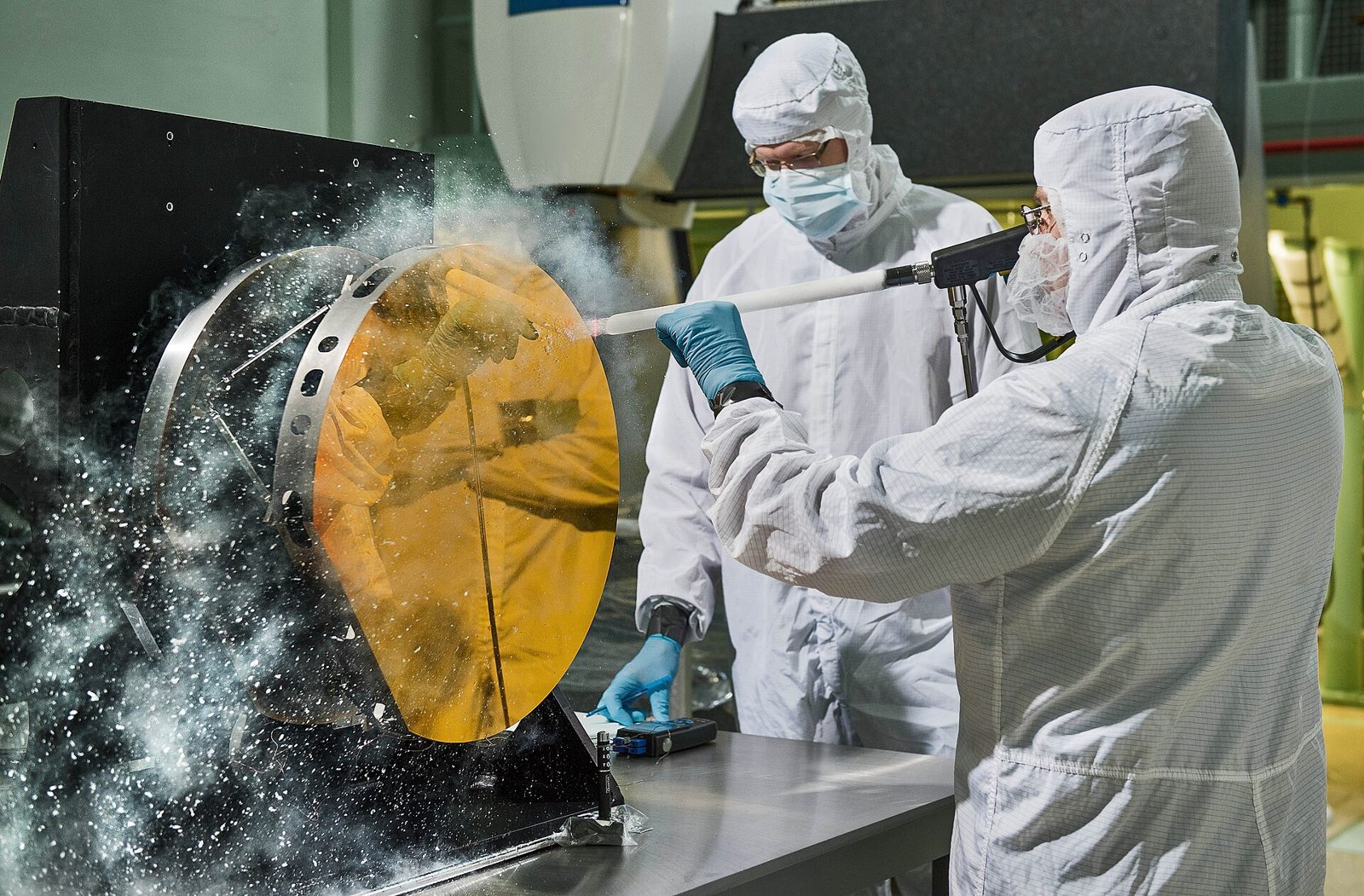
Where cleaning and maintenance part ways
Cleaning, surface preparation and maintenance brings together two kinds of work: removing what is stuck to a surface so the next process has a base to adhere to, and reviving equipment that is already running, on the maintenance floor. What may remain after the work is what separates the two. When paint lifts or a bond does not reach its strength, tracing the cause back often ends at the cleaning step. Painting, bonding, plating and welding all depend on nothing being left on the surface. This area covers the work that creates that condition, along with the work of reviving running equipment on the maintenance floor.
There are two categories. One is cleaning and surface preparation, which removes what is stuck to the surface to create a base for the next process. The method depends on what is being removed, such as oil, oxide film or hardened coatings. The other is maintenance aids, which free seized fasteners and revive equipment that has been soaked with water, with the aim of saving time during unplanned maintenance.
What separates the two is what may remain after the work. If painting or bonding follows, choose a product that leaves no residue. If the equipment will simply run again, a product that leaves some oil film for short-term protection works better. Flash rust that forms in the gap between cleaning and drying is also handled within this area.
- 226
Process conditions checked before a recommendation
- 8–10%
Cleaning share of manufacturing cost in some processes
Cleaning & Surface Prep
Removes machining fluids, oxide film and hardened coatings to create a base that paint and adhesives can hold to. What is being stripped decides between solvent-based, water-based and pickling chemicals, and also sets the time until the next process. 24 industries call for this category: EV & Batteries, Food & Beverage, Electronics & Display, Nuclear, Shipbuilding & Offshore and more.
- Industrial cleaner
- Contact cleaner
- Degreaser and desmutter
- Flash-rust inhibitor
- Clean-and-protect fluid
- Paint stripper
- Descaling and pickling chemicals
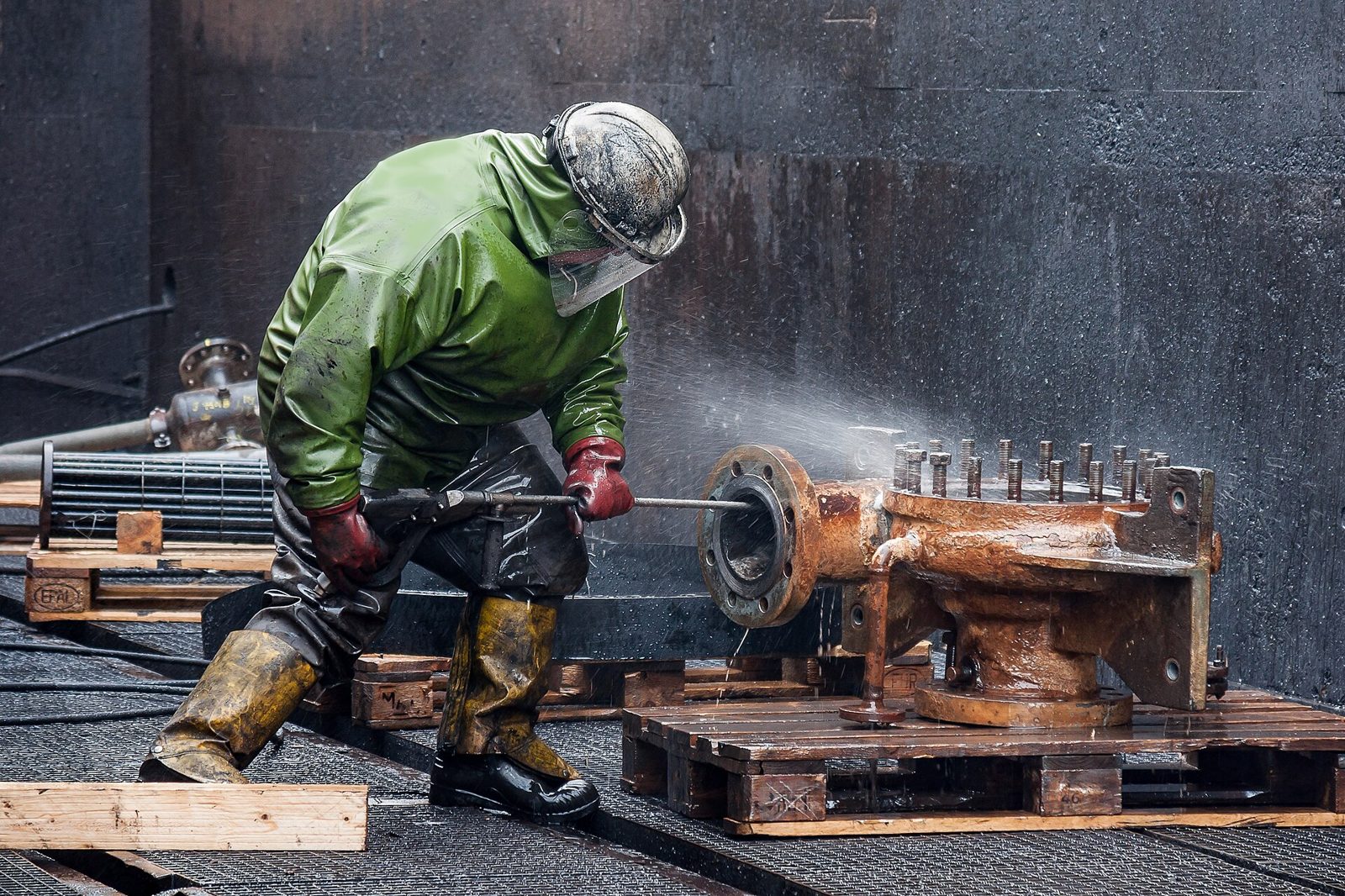
Maintenance Aids
Fluids for the maintenance floor that free seized fasteners and revive equipment that water has got into. They seep into a stuck thread to open a gap, and push water off wet contacts. 13 industries call for this category: Pharma & Medical Devices, Electronics & Display, Robotics & Logistics Automation, Agricultural & Forestry Machinery, Semiconductors and more.
- Penetrating oil
- Water-displacing spray
- Freeze-release penetrant
- Silicone spray
- Spray grease
FAQ
When is solvent cleaning better, and when is aqueous cleaning better?
The first sorting criterion is the polarity of the soil. Non-polar organics such as machining oils, greases and waxes dissolve readily in a like solvent. Solvents also have low surface tension, so they wet narrow gaps and blind holes and dry quickly by evaporation or under vacuum, which suits complex geometries and water-sensitive parts.
Polar and inorganic soils are a different story. Fingerprint salts, abrasive residues, metal fines and residues of water-miscible coolant come off far better in water. If solvent-only cleaned parts blister after painting once humidity rises, residual salts are the first suspect.
Aqueous systems rely on temperature, concentration and mechanical action to make up cleaning power, and they bring rinsing, drying, wastewater treatment and flash rust control with them. Solvent systems carry flammability or toxicity, emissions permitting and recovery equipment. Compare the whole line, including dryers, effluent, ventilation and rework, not the price per litre of cleaner.
With mixed soils, design the sequence instead of choosing one side. Heavily oiled parts can be solvent-cleaned to strip bulk oil and finished aqueously, while a line that feeds a water-based step such as phosphating is usually simpler to run fully aqueous.
If cleaning drops, change cleaner first? How to manage four factors and bath life?
A cleaning result comes from four factors working together: chemistry, temperature, mechanical action and time. When one falls, another has to make up for it, so before changing product, find out which factor moved. Common culprits are a failing heater, blocked spray nozzles that cut impingement, or a faster conveyor after a volume increase that shortened contact time.
A bath accumulates dissolved oil and fines with use while its active components are consumed. Check concentration regularly by alkalinity titration or conductivity, and log oil content alongside it; only then can you tell when topping up still works and when the bath must be dumped. Additions restore actives but do nothing about the soil already loaded.
Emulsifying cleaners hold oil in the bath and start redepositing it on parts once loading passes a certain point. Demulsifying cleaners release oil to the surface and give long bath life only when paired with a skimmer or oil separator. Set dump intervals by cleanliness results and oil-loading trend rather than by the calendar.
How much does water quality matter in washing and rinsing?
Hardness ions, calcium and magnesium, react with some cleaner components to form insoluble deposits that dry as white spotting. Chlorides and sulfates accelerate flash rust on wet steel and, after painting, drive osmotic blistering under the film. If your raw water changes with the season or source, check whether cleaning defects line up with those periods.
Rinsing exists to carry cleaner and dissolved soil off the surface. The more solution parts drag out of the wash stage, the faster the rinse fouls, so allow drain time and use multi-stage counterflow rinsing; for the same water consumption the final rinse stays much cleaner.
Ahead of ion-sensitive steps such as plating, precision painting or electronics assembly, make the final rinse deionised or RO water and treat rinse conductivity as a control parameter. A rising conductivity trend tells you both that the rinse is due for renewal and that drag-out from the wash stage has increased.
Why does rust form within minutes of aqueous cleaning, and how do we stop it?
Flash rust forms when freshly cleaned steel sits under a thin film of oxygenated water. The oil that was protecting the surface has just been removed, so the reaction is fast, and it gets worse with chlorides in the water film, slow drying and high humidity. Cast iron, heat-treated parts and freshly machined faces are particularly sensitive.
Look first at how long parts stay wet. Raise the rinse temperature so parts dry on their own heat, add air knives or hot-air drying, and avoid stacking wet parts or leaving baskets standing. Check chloride level and conductivity in the rinse water at the same time.
If drying alone is not enough, dose a flash rust inhibitor into the final rinse or move to a clean-and-protect fluid that cleans and leaves short-term protection in one step. Both leave a thin film, so when painting or bonding follows, confirm compatibility of that film with the downstream process on test panels first.
How does cleaning residue show up as defects in painting, bonding and plating?
In painting, residual oil shows up as craters, pinholes and adhesion loss, and silicone causes fisheyes at trace levels. Silicone often arrives by unexpected routes such as release agents, some maintenance sprays and hand cream, so audit aerosol use near the paint area first. Residual surfactant or salt may look fine at first and then blister once humidity rises.
Bonding is highly residue-sensitive because the adhesive must contact the substrate at molecular scale. Read the failure surface: adhesive peeling cleanly off one adherend is interfacial failure and points to the surface; adhesive tearing within its own layer is cohesive failure and points to the adhesive or its cure.
In plating, residual oil or smut gives poor adhesion, blistering and skip plating. That is why plating lines habitually check for water break after cleaning and before activation. In all three processes, if the root cause is cleaning, switching paint, adhesive or plating chemistry will not stop the defect.
How do we measure whether parts are actually clean?
Choose the method by what the next process is sensitive to. A simple option is the water break test described in ASTM F22: withdraw the part from water and see whether the film stays continuous or breaks. It is a go/no-go check for hydrophobic films; it will not detect hydrophilic soils such as salts, and it is hard to read on rough or porous surfaces. Residual surfactant after aqueous cleaning can make an oily surface hold a continuous film and pass falsely.
Many oils fluoresce under UV light, which lets you see where residue sits. Not every oil does, so confirm that your process fluid responds before relying on it. On plastics and pre-paint surfaces, dyne pens or contact angle measurement compare surface energy.
Where particles matter, as in automotive hydraulic, fuel and transmission components, technical cleanliness to ISO 16232 and VDA 19 extracts the part under a defined procedure, collects the particles on a filter, then counts and sizes them and weighs the residue. Soluble salts on steel before painting are checked with the ISO 8502 series. Where oil residue has to be managed as a number, extract with solvent, evaporate and weigh the non-volatile residue (NVR). Whatever the method, set a limit and a frequency and watch the trend; that is what links measurement to bath management.
Is electrical contact cleaner safe on energised equipment and on plastics?
The rule is to de-energise and apply lockout/tagout first. Hydrocarbon and alcohol aerosols are flammable and can ignite from contact arcing or sparks, and even non-flammable products can lose their insulating value once mixed with dissolved soil and condensed moisture. The dielectric strength on a data sheet describes the clean solvent, not the contaminated liquid running off the part. If live work truly cannot be avoided, it is controlled separately. NFPA 70E requires shock and arc flash risk assessment and an energised electrical work permit, and in Europe EN 50110-1 sets the requirements for live working. A non-flammable solvent can still come with a flammable propellant, so check both flash point and propellant on the safety data sheet.
Plastics compatibility is a separate question. Polycarbonate, ABS, polystyrene and acrylic can suffer environmental stress cracking from some solvents, with fine cracks forming where the part is under stress, sometimes only after it is back in service. Test any new product on a hidden area or a scrap part of the same material.
Residue-free means the solvent leaves nothing behind, not that the dissolved soil disappears. Without enough volume to flush it away, the dissolved oil dries back onto and around the contact. Cleaner-lubricant products are a different family from residue-free cleaners, so keep and use them separately.
What decides a halogenated solvent replacement, and in what order do we test?
Start with the power to dissolve your actual soils. For hydrocarbon solvents, solvency can be compared by Kauri-butanol value to ASTM D1133, where a higher value means stronger solvency. It is one indicator only, so confirm with the real soil. Physical properties come next. Lower surface tension carries the liquid into narrow gaps and blind holes, while boiling point and evaporation rate set drying time and equipment layout. A low-boiling solvent dries quickly but loses more to evaporation; a high-boiling one needs heat or vacuum to dry.
Non-flammability was the main virtue of halogenated solvents. A candidate with a flash point brings explosion protection and fire control into the equipment design, which is why modified alcohols and hydrocarbon solvents are commonly run in sealed vacuum machines with distillation recovery. Check materials compatibility on coupons of the plastics, elastomers, painted surfaces and non-ferrous metals in the part: some oxygenated solvents attack plastics, and alkaline aqueous cleaners can attack aluminium and zinc. Look as well at whether the non-volatile residue or additive film left after drying suits the next process, and at worker exposure routes and occupational exposure limits.
The equipment narrows the options. A vapour degreaser boils the solvent and lets the vapour condense on the cooler part, washing soil off as it drains, and it is designed around a non-flammable solvent. Few candidates drop into the same machine. A flammable solvent usually means a sealed vacuum machine, and going aqueous means a line with wash, rinse and drying stages, so put that cost and floor space into the comparison from the start.
Narrow the field step by step. Use safety and technical data sheets to screen out candidates whose solvency, flash point or materials compatibility do not fit, then test coupons carrying the real soil for cleaning result and material effects. Run the survivors side by side with the incumbent on real parts under real equipment conditions, comparing cleanliness, drying, downstream results and solvent consumption. Whatever the candidate, check its regulatory standing and supply continuity at the time of selection. Solvent rules differ by region and can change, so the last step of any substitution is to make sure the reason for leaving the old solvent does not also apply to the new one.
For a seized fastener, what comes first: penetrating oil, heat or impact?
Penetrating oil has low viscosity and low surface tension, so capillary action draws it into the clearance between threads, where it wets the corrosion products and lowers friction. Time does the work. Several applications with a long soak beat spraying and immediately putting a wrench on it, and light tapping cracks the rust layer and opens more paths for the fluid.
Impact is good at breaking the rust bond. Shock loading from an impact tool or hammer is less likely to twist a bolt off than steadily increasing torque, and a slight movement in the tightening direction first can also break the seize. Heat expands the nut ahead of the bolt to open clearance and softens cured threadlocker, so for joints assembled with high-strength anaerobic threadlocker, heat is the right tool rather than penetrant.
Watch the sequence for fire risk. Most penetrating oils contain flammable solvents, so do not put a torch on a joint that has just been sprayed. Aluminium-to-steel joints seize with bulky corrosion products and need extra soak time. After removal, clean the threads and use anti-seize on reassembly so the problem does not come back.
After washdown or flooding, how far can we rely on a water-displacing spray?
A water-displacing fluid has lower surface tension than water, so it creeps under droplets, wets the metal first, lifts the water off and leaves a thin oil film. It works well wherever moisture has to be cleared fast: wet tools, exposed metal faces, the outside of connectors.
Its limits are just as clear. The film is thin and gives short-term protection only; long storage or outdoor exposure calls for a proper corrosion preventive. Sprayed heavily into bearings or greased assemblies it can wash grease out and weaken lubrication, so after washdown the correct step is to regrease and purge the water out with fresh grease.
On flooded electrical equipment a displacing spray is first aid, not the repair. First sort what must be replaced from what can be reconditioned, using guidance such as NEMA GD 1 and the manufacturer's instructions; dry reconditioned items thoroughly and measure insulation resistance before re-energising. Molded-case breakers, fuses, ground-fault devices and electronic protective devices are usually replaced. For products used in food plant washdown areas, confirm NSF H1 registration because incidental food contact is possible.
How should descaling and pickling chemistry differ from one metal to another?
Mill scale and rust on carbon steel are dissolved with hydrochloric or sulfuric acid containing a corrosion inhibitor. The inhibitor adsorbs on bare metal as the scale dissolves and slows attack on the substrate, but it does not stop hydrogen evolution entirely. High-strength and case-hardened steels are at risk of hydrogen embrittlement, so keep immersion time short, bake when the specification calls for it, and use tests such as ASTM F519 to qualify the process.
Avoid hydrochloric acid for pickling and passivating stainless steel, because chloride causes pitting; if any chloride-bearing cleaner is used, rinse it out completely. Weld heat tint and thermal oxide are removed with nitric-hydrofluoric pickling. ASTM A380 recognises that pickling may itself give sufficient passivation depending on the application, but where the specification calls for passivation, follow with it, using procedures and verification tests per ASTM A380 and A967. Hydrofluoric acid is absorbed through the skin and is acutely toxic, so dedicated PPE and first aid provisions come before the job starts.
Aluminium is readily attacked by strong alkali and by non-oxidising acids such as hydrochloric, so it needs purpose-made deoxidisers or desmutters; copper alloys are usually treated with sulfuric-based chemistry. When descaling heat exchangers or cooling water circuits, list every metal, braze joint and gasket in the loop before choosing the acid, and plan neutralisation, rinsing and flash rust control as part of the same job.
How to choose: methylene chloride, benzyl alcohol, NMP, alkali, heat or abrasion?
Solvent strippers work by penetrating the coating and swelling it until the bond to the substrate breaks and the film lifts. Methylene chloride set the benchmark because its small molecule and strong solvency let it penetrate multiple coats quickly. It is also highly volatile, so it is formulated with evaporation retarders such as paraffin wax, and inhalation of vapour is the main exposure route. The body metabolises it to carbon monoxide, which reduces the blood's capacity to carry oxygen, so work in enclosed or poorly ventilated spaces is especially dangerous.
Benzyl alcohol strippers use the same swell-and-lift mechanism but act more slowly, and many are activated with an acid such as formic acid or with alkali. Results depend on giving enough dwell time and keeping the surface wet. Acid-activated products raise concerns about hydrogen embrittlement of high-strength steel and attack on magnesium, and some airframe manufacturers and operators prohibit them on those materials. Alkaline-activated products cannot be assumed free of embrittlement risk either, so on high-strength steel use only products shown to be acceptable by a test such as ASTM F519 or approved in the applicable maintenance documents. NMP-type strippers have low volatility, which cuts inhalation exposure, but they act slowly, are readily absorbed through the skin and are recognised developmental toxicants, so skin protection, including the choice of glove material, is the key control.
Alkaline stripping uses hot sodium hydroxide-based solutions that break down the coating resin chemically, and it is widely used for batch immersion of steel parts. Aluminium, zinc, tin and their alloys dissolve in strong alkali and release hydrogen, so keep them out of the tank; galvanised steel loses its zinc layer the same way and is treated likewise. Hot strong alkali causes severe burns, so PPE and mist control come before the job starts.
Thermal methods burn the coating off in burn-off ovens and similar high-temperature equipment, which suits powder coatings and highly crosslinked films that resist chemical stripping, but the part has to tolerate the temperature and heat-treated aluminium alloys can lose strength, so confirm the material's temperature limit first. Blasting is fast and chemical-free, but the harder the media, the more it erodes or deforms thin or soft substrates, so thin aluminium skins are stripped with soft media such as plastic or starch at low pressure. Whatever the method, stripper and debris left on the part undermine adhesion of the new coating, so build rinsing and cleaning into the stripping process itself.
Where does ultrasonic cleaning fall short?
Ultrasonic cleaning removes soil with the shock of microscopic bubbles forming and collapsing in the liquid, which is cavitation. Freshly filled baths contain dissolved gas that cushions the collapse, so degas first, and as the bath approaches its boiling point vapour inside the bubbles absorbs the shock and performance falls. Dissolving the soil is still the job of the cleaner chemistry.
Geometry and loading matter a great deal. Parts that overlap or lie on the basket floor create acoustic shadows, and air trapped in blind holes keeps the liquid out. Rotate parts, add a lift-and-lower motion and avoid overloading. A simple aluminium foil test, looking at the erosion pattern, shows how energy is distributed in the tank.
Lower frequencies produce larger bubbles and harsher action; higher frequencies are gentler and reach finer features. Soft metals, polished faces and coated surfaces can erode at low frequency, and some electronic components such as crystal oscillators and MEMS devices may be specified as not ultrasonic-cleanable, so check the component data first. Heavy baked-on carbon or paint takes a long time with ultrasound alone; put a chemical softening step in front.
How is cleaning before penetrant inspection or bonding unlike ordinary cleaning?
Penetrant only works if the defect opening is clear. Oil, paint, rust, cleaner residue and trapped moisture all plug discontinuities and erase indications. ASTM E1417 requires precleaning before inspection. Operations that smear metal, such as sanding, buffing or peening, can close defect openings. Final penetrant inspection may be performed before such operations; if it follows them, etching is part of precleaning unless the cognizant engineering organisation agrees otherwise. Acid or alkaline residue can react with penetrant, so confirm parts are rinsed and dry.
Cleaning before bonding aims to raise surface energy and remove weak boundary layers. The usual sequence is solvent degrease, abrade or blast, then solvent degrease again, using a two-cloth wipe: a solvent-wetted clean cloth followed immediately by a dry one to lift the dissolved soil away. Metal-specific surface preparations are set out in guides such as ASTM D2651 or ISO 17212.
In both cases the time and handling between cleaning and the next step decide the outcome. Bare hands, silicone-containing gloves or sprays, and oil mist in compressed air recontaminate a clean surface. Write a maximum hold time after cleaning into the process standard, and reclean any part that misses it.
Before switching cleaners, what should we check, and when is it better not to?
First confirm that the problem really is the chemistry. If operating conditions such as concentration, temperature, nozzles, rinse contamination or drying have drifted, a new cleaner will give the same result. Lay concentration, oil loading and cleanliness data from the weeks around the defects against the defect dates and look for what coincides.
If the cleaning process is tied to a customer approval or process qualification, a cleaner change is a process change: PPAP or VDA PPA for automotive parts, process specification approval in aerospace, cleaning validation in pharmaceutical and medical device manufacturing. Leave change notification and requalification out of the plan and the cost will outweigh any saving on the cleaner.
If you do switch, run the candidate side by side with the incumbent on real parts with real soils, and judge not only cleanliness but paint adhesion, bond strength, rust in storage, effects on equipment materials and wastewater treatment. Where materials and geometries vary, qualify against the difficult combinations first.