Wind, Solar & Hydrogen
From building equipment to running it in the field
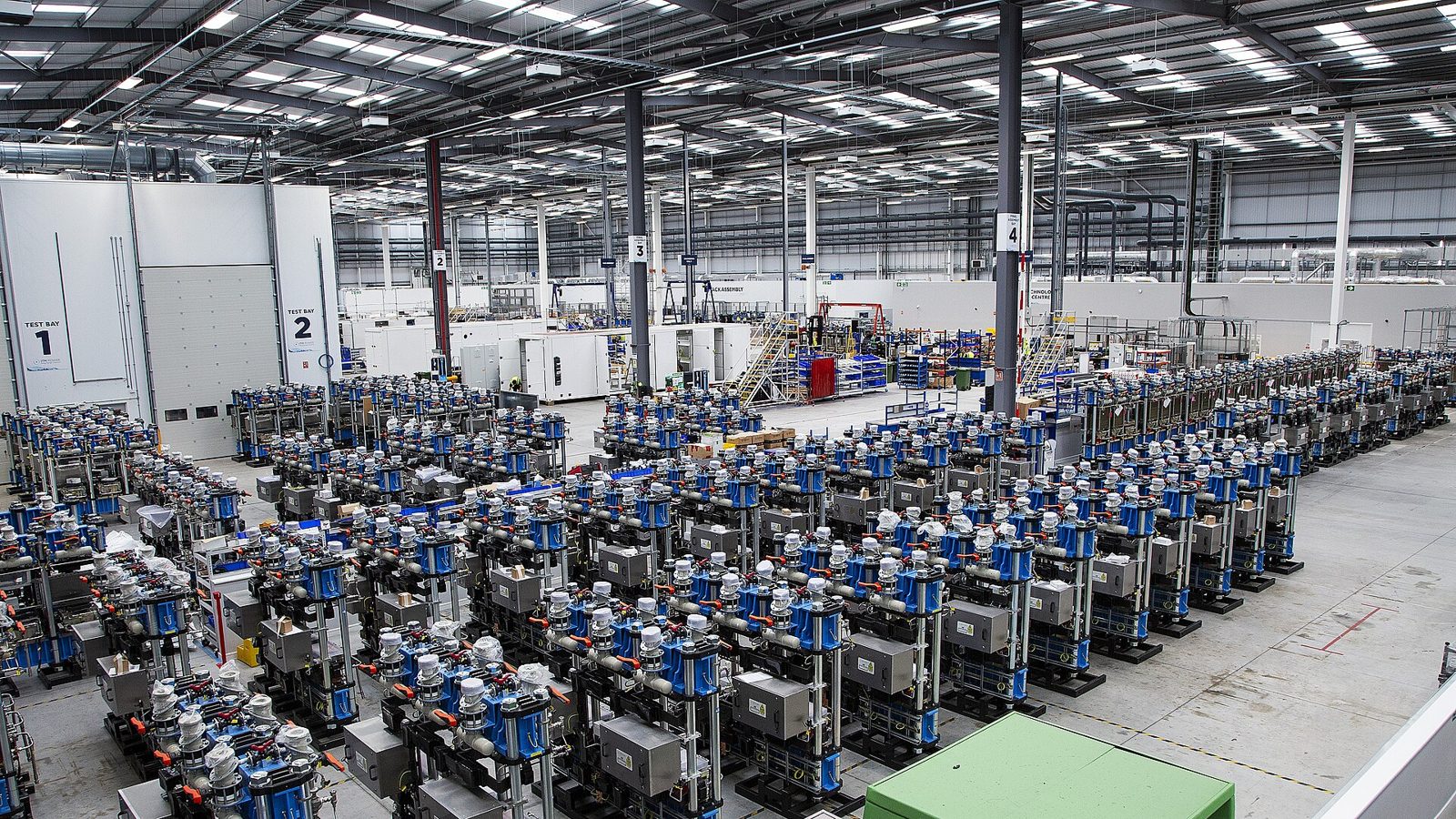
Wind, hydrogen and solar erect turbines and solar plants and produce, store and supply hydrogen over long service lives. The equipment must withstand sea wind and salt, cryogenic temperatures near minus 253°C, and more than twenty years outdoors.
- €230,000
Parts cost per offshore wind gearbox replacement
- At least €3-5B
Yearly global solar revenue lost to soiling
- 2.8
Monthly compressor repairs per US hydrogen station
What is the wind power industry?
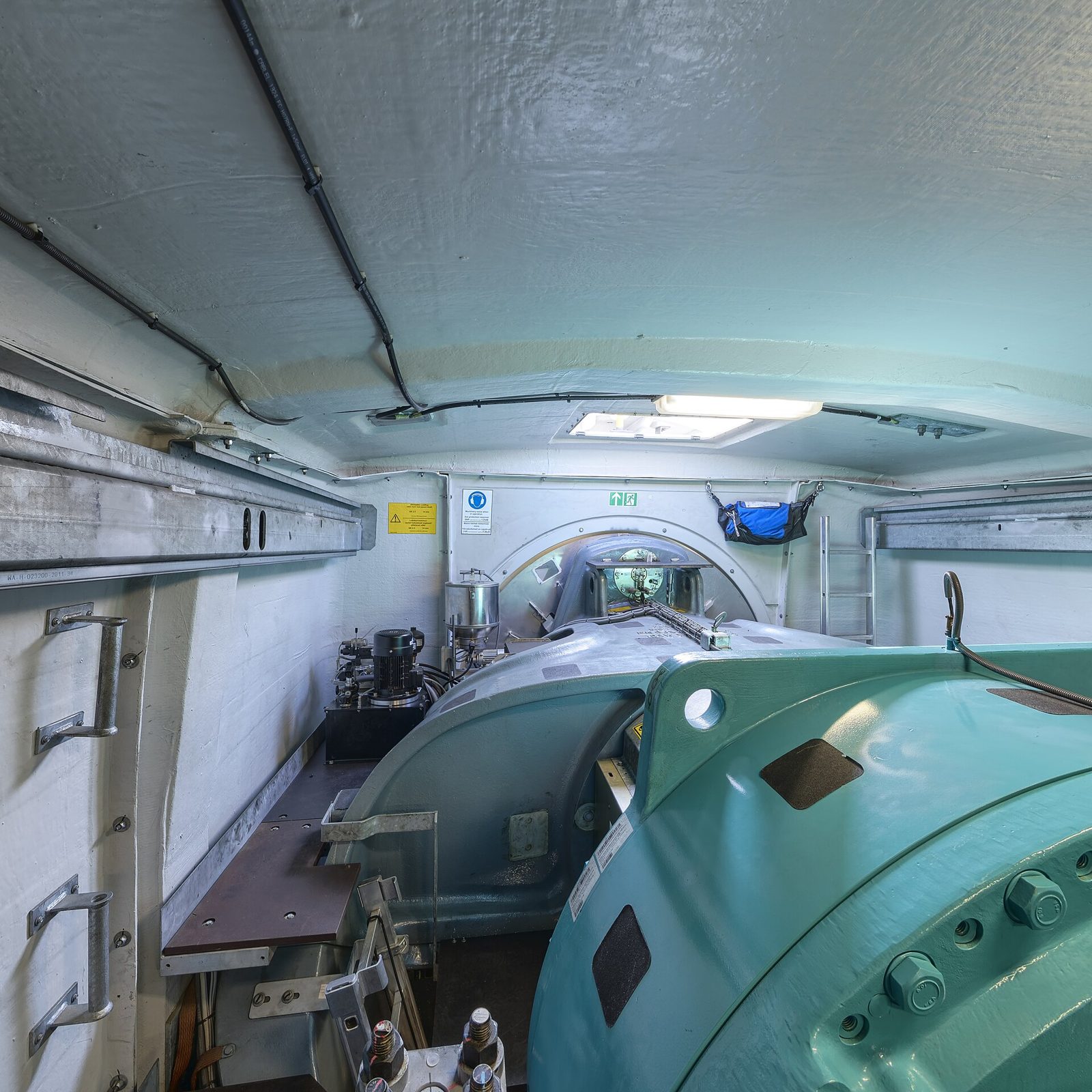
Wind power builds turbines that turn generators with wind, the towers and substructures that hold them up, and operates them over long periods. Once erected, equipment must last its design life in sea wind and salt, and the nacelle is a place people cannot easily climb to often. Blades are molded from glass and carbon fiber composites and towers from thick steel tube, so very different chemistries gather in one installation: release agents and structural adhesives, painting and corrosion protection, and gear and bearing lubrication that can go long periods without attention.
A single problem in wind power is costly because it takes a long time to reach. Offshore turbines can be accessed only when weather allows, and if something goes wrong with gearbox oil or bearing grease, time passes with generation stopped. So selection must look beyond initial performance to how fast moisture and wear particles build up and when refilling and replacement are actually possible. Wind power stays with a product for decades once adopted, so the order in which validation data will be built should be planned together even before listing on an approved list.
- 01
Blade layup and resin infusion molding
Glass and carbon fiber fabrics are laid up in molds and resin is infused under vacuum to form shells and spar caps. A single vacuum leak leaves voids around it. Choose resin and release agents by viscosity, pot life and cure exotherm.
- 02
Blade surface finishing with gelcoat and topcoat
Gelcoat or topcoat is applied to blade surfaces in the mold to provide weather and flame resistance. Long UV exposure brings discoloration and peeling, and tips see leading edge erosion. Choose coatings by weather resistance, adhesion and field repairability.
- 03
Blade structural bonding of spar caps and shells
The two shells and spar caps are bonded with structural adhesive, and metal root inserts are bonded into the composite. Release agent left on bond faces prevents adhesion. Choose adhesive by strength, cure conditions and surface preparation.
- 04
Tower and component steel machining
Thick steel tube is cut, welded and machined into tower sections and jacket frames. Welding with cutting fluid left on weld bevels causes porosity and blowholes. Choose cutting fluid and cleaner by machining performance and ease of removal before welding.
- 05
Surface treatment and rust protection
Weld scale is removed, surfaces are blasted and a corrosion protection layer is formed by galvanizing or painting. Thin film at welds and edges lets white rust appear first. Choose the paint specification by corrosion protection, surface temperature and dew point and temporary protection.
- 06
Jacket and pile substructure assembly
Steel tube sections are bolted together and joined with foundation piles to complete offshore foundations. Unstable friction on fastening faces keeps design preload from being reached at specified torque. Choose anti-seize and temporary rust preventives by friction consistency and storage time.
- 07
Main gearbox oil lubrication
The main gearbox in the nacelle is filled with synthetic gear oil to run for long periods without attention. As emulsification and oxidation progress, micropitting spreads on tooth flanks. Choose gear oil by extreme-pressure performance, oxidation stability and water separability.
- 08
Main and generator bearing grease lubrication
Dedicated grease is refilled periodically in main shaft and generator bearings to withstand heavy load and high temperature. In converter-driven generator bearings, shaft currents leave electrical erosion and fluting on raceways. Choose grease by load capacity, high-temperature durability and shaft-current behavior.
- 09
Pitch and yaw bearing and open gear grease lubrication
Adhesive grease is applied to pitch bearings, yaw bearings and exposed slewing ring gear meshes. Small oscillations stop the film rebuilding, leaving fretting corrosion and false brinelling. Choose grease by adhesion, water resistance and reapplication interval.
- 10
Transport and storage
Finished components are moved to site by container and dedicated vessel and kept until installation. Temperature swings on land cause condensation and corrosion inside packaging. Choose rust preventives and packaging by protection period and performance in salt environments.
- 11
Wind farm operation and maintenance
Turbine condition is monitored while routine inspections, gear oil checks and bearing and open gear grease changes continue. Offshore, salt and condensation raise moisture in gear oil. Choose replacement oil by extreme-pressure performance and cold start.
What is the solar industry?
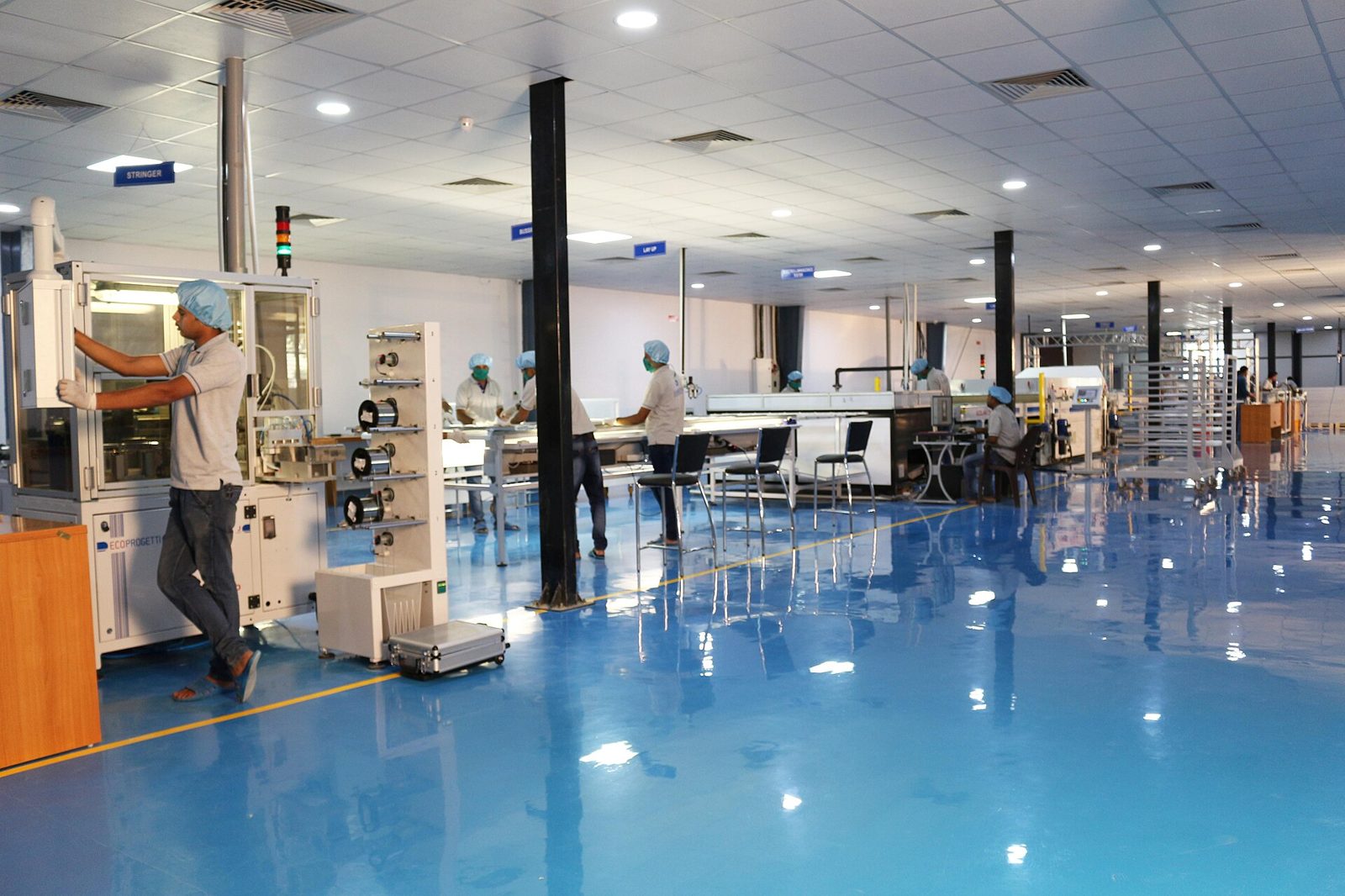
The solar industry makes cells from silicon wafers, assembles them into modules, and builds and operates generating facilities with those modules. Modules must stay in place for over twenty years fully exposed on roofs and fields, so care after installation drives output as much as cleanliness and sealing in manufacturing. Silicon, glass and aluminum frames are handled together, so ingot slicing and frame machining lubrication, cell cleaning, sealing and rust protection, drive lubrication and panel cleaning are each required at different stages.
In solar, what cuts output is concentrated on surfaces and contacts. Dust and bird droppings on panels block light, and outdoor wiring, connectors and tracker drives are continuously exposed to moisture and temperature change. Whether a product damages glass and coated surfaces, how long it holds up outdoors and whether it is safe near high-voltage equipment weigh as much as cleaning power or lubrication performance. Solar spends far more time after installation than in manufacturing, so reading site location and contamination conditions and setting maintenance methods together follows.
- 01
Ingot slicing for wafers
Diamond wire saws cut silicon ingots into thin wafers. A wire break loses every wafer caught on that line. Choose cutting fluid by cooling and lubrication balance, dispersion of silicon fines and fluid life.
- 02
Wafer and cell cleaning
The saw damage layer is removed, surfaces are textured and contaminants from cell processing are washed off. Uneven texture changes reflectance by cell and splits output grades. Choose chemicals by reaction speed, uniformity and reaction heat control.
- 03
Module assembly with lamination and frame machining
Cells are connected and laminated with encapsulant and backsheet, and protective glass and aluminum frames are attached. Moisture entering through weak seals at the frame and junction box lowers output. Choose sealant by sealing performance, cure conditions and UV resistance.
- 04
Panel import and storage
Imported and domestic modules arrive at port and go into warehouses. In coastal warehouses, salt corrodes frames and metal parts. Choose rust preventives and packaging by protection period, salt and humidity.
- 05
Installation and mounting
Aluminum rails are erected, modules are fixed, and wiring and inverters are connected. Galvanic corrosion starts where aluminum rails meet stainless fasteners. Choose anti-seize and fixing agents by fastening performance and outdoor durability.
- 06
Tracker drive lubrication
Grease and gear oil are filled into tracker slew drives, gearboxes and motor drives and topped up periodically. Hardened or washed-out grease speeds tooth wear, which shows as tracking error. Choose lubricants by cold flow, load capacity and water resistance.
- 07
Commissioning and performance verification
Generation is checked, capacity measured and inverter control tested. Measuring with contaminated panel surfaces gives low performance. Choose cleaners and contact cleaners by cleaning power, residue on glass and effect on anti-reflective coating.
- 08
Regular panel cleaning
Dust and bird droppings are removed from panel surfaces periodically and contamination is checked. Strong alkaline or abrasive cleaners damage the anti-reflective coating on glass. Choose cleaners by contaminant removal, surface damage and rinsability.
- 09
Fault diagnosis and repair
Infrared cameras find hot spots, insulation resistance is measured and faulty parts are replaced. Mixing connectors from different makers raises contact resistance, leading to heat and arcing. Choose contact chemicals by cleaning, protection and insulation.
What is the hydrogen industry?
The hydrogen industry produces hydrogen by splitting water with electricity or reforming feed gas, then compresses or liquefies it for storage and transport, supplying fueling stations, power facilities and industrial processes. Hydrogen molecules are small and leak easily, reduce the ductility of metals at high pressure, and in liquefaction temperatures fall to around minus 253 degrees Celsius. Electrolyzers, compressors, storage tanks, piping and fueling equipment are handled together, so lubrication and sealing that withstand hydrogen contact, cryogenic grease and seals, and system water management apply differently to each piece of equipment.
The most delicate points in hydrogen equipment are leakage and material damage. Where pressure is high and temperatures swing to cryogenic, the same material withstands conditions in different ways. So when choosing lubricants and sealants, beyond performance, it must be checked where the contacting materials reach their limits, how products behave at low temperature and whether they fall within equipment certification scope. Hydrogen is still at a stage where equipment configurations and operating practices are taking shape, so whoever has organized what worked and what caught at earlier sites sets the starting line for proposals.
- 01
Electrolysis stack reaction
Electricity and water react in alkaline, PEM and AEM electrolyzer stacks to produce hydrogen. Iron or calcium ions in feed water block ion exchange sites in the membrane and raise voltage. Choose water purification packages and sealants by purification performance and membrane compatibility.
- 02
Boosting hydrogen for dispatch
Low-pressure hydrogen from reforming or electrolysis is first compressed at the dispatch center. Compression heat left unremoved degrades crankcase oil. Choose compressor oil by viscosity, oxidation stability and the original manufacturer's specification.
- 03
High-pressure hydrogen compression for stations
Hydrogen is compressed into the 200 to 900 bar range for storage and fueling. When seals wear or compressor oil decomposes at high temperature, the products mix into the gas. Choose lubricants by extreme-pressure performance, heat resistance and seal compatibility.
- 04
Hydrogen liquefaction by centrifugal cryogenic compression
Hydrogen is cooled to around minus 253 degrees Celsius through centrifugal compression, intercooling and expansion to make it liquid. Rubber seals lose elasticity in repeated cooling and become leak paths. Choose cryogenic grease and sealants by cold flexibility and shrinkage versus metal.
- 05
Liquid hydrogen storage
Liquefied hydrogen is held in vessels, piping and valve systems. Heat entering through joints increases boil-off loss. Choose pipe sealants and protective fluids by sealing performance and cryogenic behavior.
- 06
Dispensing
Stored high-pressure hydrogen is delivered to vehicles through pumps and nozzles. Precooled fueling forms ice around nozzles and receptacles and hinders disconnection. Choose products for precooling systems and contacts by cold performance and whether they add icing.
- 07
Fuel cell power generation
Stationary hydrogen fuel cell stacks generate electricity. When coolant conductivity rises, leakage current damages cells and joints. Choose coolant by freezing point, heat transfer and lasting low conductivity.
- 08
Industrial hydrogen use
Hydrogen is used directly as a reducing agent or feedstock in refining, semiconductor and chemical processes. Residue from piping work or maintenance slows the return to high purity. Choose maintenance fluids by residue after drying and effects on materials.
Regulation and certification
IEC 61400
The international series of standards on the design, safety and performance of wind turbines. Gearbox and bearing design follows it, so oils and greases are chosen to suit the operating conditions it sets.
IEC 61215
The test standard for design qualification and type approval of terrestrial PV modules. Sealants and adhesives are certified as part of a tested build, so changing a material may require retesting for damp heat and thermal cycling.
ISO 14687
The international specification for hydrogen fuel purity and impurity limits. In equipment that touches fuel-cell hydrogen, lubricants, sealants and cleaners are checked so they do not add contaminants such as sulphur or hydrocarbons.
High-Pressure Gas Safety Control Act
The Korean law setting safety rules for facilities that produce, store, transport and use high-pressure gas. Lubricants and leak-test fluids for high-pressure hydrogen equipment are used within its inspection and safety procedures.
FAQ
Water content keeps rising in gearbox oil analysis. Will changing oil fix it?
Changing only the oil often sees it rise again. Offshore, there is often a separate path for water ingress through salt and condensation, and it can also come in through breathers or seals.
Changing only the oil while leaving the ingress path in place brings the same value at the next analysis, and in the meantime additives are consumed first, so the same oil may not hold up as before. Offshore, the change itself depends on weather, so it is better to plan to fix breathers and seals at the same time once values rise.
Can we switch nacelle gear oil or grease to a different product?
Products are normally used only if named on the approved list managed by the turbine maker, and listing often requires long-term usage history.
Even listed products go through requalification if the formulation changes, and that period often sets the adoption schedule. So inside the nacelle, listing and requalification history come before performance comparison, and products off the list sometimes approach by building a record on equipment outside the nacelle first.
Tower paint gets white rust from the welds first. Do we need different paint?
Conditions before painting often decide it more than the paint. Film tends to form thin at welds and edges, so those spots show first even when painted to the same specification.
Measuring film thickness by area confirms it. If film is thin only at edges and weld beads, look at application method and stripe coating first; if it is evenly thin overall, look at the specification and work conditions first. The gap between blasting and painting is also worth checking.
Offshore turbines are hard to climb. How should lubrication intervals be set?
Rather than by calendar, they are often set by looking at accessible windows together with oil analysis results. Weather sometimes prevents climbing on the planned date.
Lining up trends in water and wear particle items over several analyses gives a sense of whether it will last until the next maintenance. If the trend is gentle, leave it until the planned point; if the slope steepens, schedule the earliest accessible time. That approach tends to work well.
Some sites clean panels with water only. Do we really need a cleaner?
It depends on the nature of the contamination. Dry dust often comes off with water and a brush, while bird droppings or oily contamination often do not come off with water alone.
Strong alkaline and abrasive products can damage the anti-reflective coating, so avoiding them here is safer. Even without cleaner, washing with hard water leaves water spots as it dries and takes more work, and spraying cold water in midday heat thermally shocks the glass. Work hours and water quality tend to decide results as much as product choice.
White powder is appearing at rail fastenings soon after installation. Why?
Galvanic corrosion starting where aluminum rails meet stainless fasteners is the likely cause. It tends to appear faster at coastal or humid sites.
Checking whether the powder gathers only around bolt heads or spreads across the rail surface tells them apart. If it gathers at contact faces, look at contact surface treatment and anti-seize at installation; if it spreads widely, look at surface condition and site conditions first.
Output is not what it used to be. Will cleaning alone restore it?
If surface contamination is the cause, cleaning often brings much of it back. But if invisible causes such as potential-induced degradation or cell micro cracks are mixed in, they remain after cleaning.
Comparing output before and after cleaning under similar irradiance splits the path. If recovery is small, it is good to look at infrared thermography and insulation resistance as well; if output is low only on certain strings, check connections first.
Does a different tracker lubricant affect the equipment warranty?
Equipment with a specified standard is normally lubricated within it, and products outside it can become an issue under warranty conditions.
Using products off the approved list can make lubrication the first suspect in failure analysis. So even when changing, many start with trackers past warranty to build records. For equipment from overseas makers, preparing compliance data in both Korean and English shortens the process.
Why do our hydrogen compressor's ordinary oil changes come ever sooner?
Heat of compression and gas contact act together here, so the oxidation stability of ordinary compressor oil is often not enough. When cooling falls short and crankcase temperature rises, viscosity drops first, and sludge follows.
Measuring viscosity and acid number of the used oil at each change narrows the cause. If only viscosity has dropped, suspect cooling and operating temperature first; if acid number has risen too, suspect the oil's own heat margin. Bringing change intervals forward while leaving cooling as is often raises cost while sludge keeps building at the same rate.
What criteria work best for seals in contact with high-pressure hydrogen?
Polymer seals exposed to high pressure can be damaged when hydrogen absorbed inside expands and ruptures them during depressurization. So depressurization rate and the range of pressure swings often decide actual life more than the material's chemical resistance.
Changing a seal also does not end with one part. In high-pressure systems, changing material can mean resetting assembly compression and groove dimensions, and in piping that follows hydrogen-specific codes, materials without test data can be screened out at review. Rushing in a substitute has seen depressurization damage repeat in other places.
Do fueling station lubricants and cleaners also need approval history?
Fueling stations involve both safety standard certification and inspected equipment, so approval history is often checked for chemicals used there too. Hydrogen supplied to vehicles must meet fuel quality standards, so products touching the gas system must be able to explain their contamination potential.
Checking approval history late throws off the order. If it turns out after performance comparison that a product cannot be used on inspected equipment, the review starts over, and products touching the gas system sometimes need new data explaining contamination potential. In many cases, gathering data takes longer than choosing the product.
Purity recovers slowly after maintaining high-purity piping. Can we speed it up?
Residue left from maintenance is often the cause. Stronger cleaning fluids tend to leave more residue, and components left inside piping escape slowly and delay purity recovery.
Moving only toward stronger cleaning can actually lengthen recovery time. Obtaining data on residue after drying for maintenance fluids lets purge time be planned in advance, and limiting maintenance to sections rather than the whole line also shortens the time to recover.