From the heat of the furnace to shipping packaging
Flat glass, container glass and ceramics are base materials for construction, automotive, appliances and electronics.
What is the glass and ceramics industry?
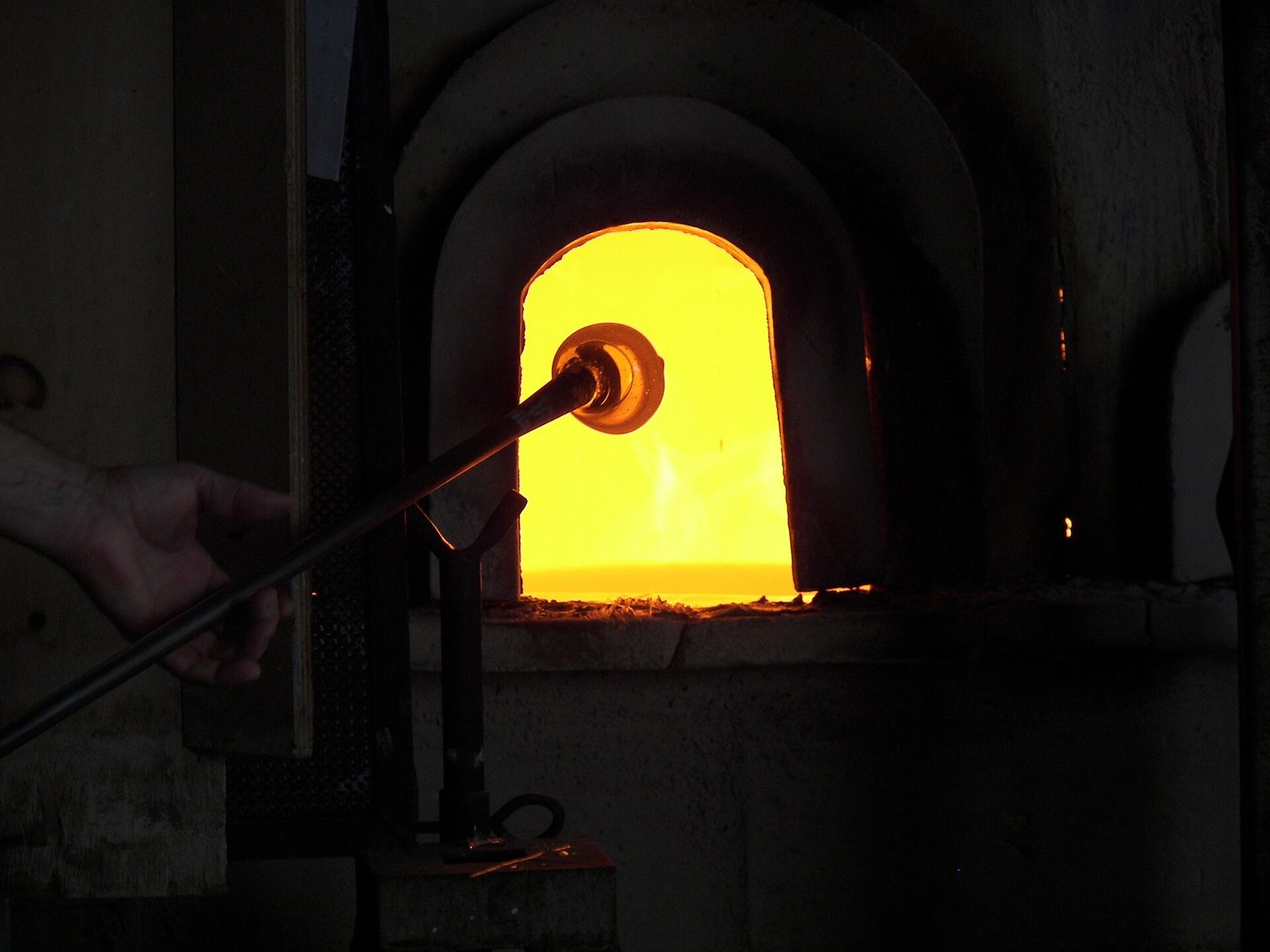
Glass and ceramics melts or fires mineral raw materials such as sand, soda ash and limestone at high temperature to make flat glass, container glass and ceramic products. Clarity, surface condition and internal stress of the finished product are its quality, so forming and cooling conditions must be held consistently. Sites handle molten glass at around 1,500 degrees Celsius and hot molds, so mold release and high-temperature lubrication for shearing, cleaning and functional coatings, and rust protection for shipment are divided between hot and cold sections.
In glass processes, flaws usually form while hot and show after cooling. Release agent left on molds leaves marks on the surface, and unstable forming and annealing temperatures leave internal stress that later causes breakage. That is why what gases a product gives off at high temperature, what it leaves on the glass surface and whether it can be used for container products must be weighed alongside performance data. Glass and ceramics keeps process conditions unchanged for long periods once set, so discussion opens only when a reason to change comes with evidence that standards will hold after the change.
- 2%
European ceramic tile scrapped after firing
- 01
Raw material storage and weighing
Sand, soda ash, limestone and other raw materials are stored in silos and weighed to the batch formula. Hoppers with repeated condensation rust and shed foreign matter. Choose rust preventives by protection and raw material contact.
- #Humidity control
- #Batching accuracy
- 02
Melting
Raw materials melt in the furnace near 1,500 degrees Celsius into homogeneous molten glass. Degraded heat transfer oil upsets circuit pressure and temperature control. Choose heat transfer oil by operating temperature range, thermal stability and top-up intervals.
- #High-temperature durability
- #Uniform temperature
- 03
Gob forming and shearing for container glass
Shear blades cut the stream of molten glass into gobs of set weight. When the lubricant film breaks, glass sticks to the blades. Choose shear lubricant by lubricity, residue at high temperature and marks on bottles.
- #Cut precision
- #Uniform gob weight
- 04
Mold forming and swabbing on IS machines for container glass
Parisons are formed in blank molds and final shapes in blow molds while mold surfaces are swabbed. Poor release makes glass stick to molds, causing stains and bubbles. Choose swab compound by release, smoke and swabbing intervals.
- #Mold release
- #Surface defect prevention
- 05
Takeout and conveying for container glass
Formed bottles move across the dead plate onto the conveyor. When the lubricant film breaks, bottles stick to the dead plate and stop the line. Choose conveying lubricant by friction reduction, smoke and carbon residue.
- #Scratch prevention
- #Friction reduction
- 06
Annealing
Glass passes through the lehr and is cooled slowly so stress does not remain. Uneven cooling leaves residual stress that causes breakage in later cutting and edge work. Choose lehr drive lubricant by temperature, smoke and glass contamination.
- #Stress balance
- #Uniform cooling
- 07
Cleaning and coating surface treatment
Cooled glass is cut to size and edges are ground or drilled. Micro cracks left on edges become starting points for breakage. Choose cutting and grinding fluids by machinability, cleanability, odor and mist.
- #Thorough cleaning
- #Coating adhesion
- 08
Tempering of flat glass
Surfaces are cleaned and functional films such as low-emissivity coatings are applied and cured. Poor cleaning breaks adhesion so coatings later peel. Choose cleaners by cleaning power, rinse residue and adhesion effect.
- #Stress profile
- #Uniform cooling
- #Breakage strength
- 09
Cutting and edge processing of flat glass
Cut and edged flat glass is reheated near its softening point and quenched to put compressive stress into the surface. Oxidized hot-roller lubricant marks the sheet. Choose products by heat resistance and marks transferred to glass.
- #Clean cut edges
- #Edge strength
- 10
Inspection and packing
After optical inspection, products are given protective treatment and packed for shipment. Moisture-soaked packaging leaves marks between sheets. Choose protective materials and rust preventives by protection period, residue removal and stacking.
- #Contamination control
- #Transit protection
Regulation and certification
Food Sanitation Act: utensils and containers
The Korean standards for materials in utensils and containers that contact food. Glass and ceramic tableware have lead and cadmium migration limits, so the composition of glazes and release agents must be checked.
ISO 12922
The international specification for fire-resistant hydraulic fluids. Hydraulic systems near hot sources, such as melting furnaces and forming lines, are assessed for fluids under this standard.
ISO 14001
The international standard for environmental management systems. When process chemicals are chosen, waste liquid treatment and emissions are included in the assessment of environmental aspects.
Chemicals Control Act
The Korean law on hazardous chemical facilities, business permits and accident preparedness. Substances such as hydrofluoric acid used to etch and polish glass must be stored and handled to its standards.
FAQ
Bottle stains recur only from certain molds. Where should we look first?
Release and swabbing conditions are often involved together. With the same product, too much builds carbon on the mold and marks the next forming, and too little causes sticking stains. If it repeats in only one section, though, the condition of that mold carries more weight than application conditions.
As forming cycles accumulate, mold parting lines wear and carbon hardens on the surface, so the defect rate can rise only in that section even with the same release agent. Unless release agent changes and mold maintenance intervals are considered together, stains tend to return in the same place even after the product is changed.
Glass sticks to the shear blades. Will a stronger lubricant concentration help?
Raising concentration sometimes helps for a while, but residue at high temperature can increase and move the problem elsewhere. In the shearing section, glass temperature, feed position and blade wear act together, so changing one thing alone is hard to judge.
Looking first at where it sticks helps. If it gathers at the blade edge, check feed amount and where it reaches; if carbon builds on the sides and holders as well, narrowing to a low-residue specification is the better order.
Can release agent and dry lubricant powder be used together on molds?
Some sites use both. Their roles differ, though, so it is best to first determine whether release or lubrication is what is currently lacking. Using both makes application amount harder to control and can increase carbon buildup.
When combining them, application control becomes the real variable. Swabbing depends on the operator, so it varies by section, and when both products build up, that variation can lead to carbon accumulation. So when deciding on combined use, settling how to fix application intervals and amounts tends to come before the product combination.
Sheets that have passed the lehr keep breaking at cutting. Where should we look?
Residual stress is the likely cause. Uneven cooling in the annealing section leaves stress, and cutting or drilling in that state often cracks the glass at that spot.
The annealing section runs continuously, so its temperature distribution is often hard to adjust right away. What can be addressed now are edge work and cutting fluid residue. Cutting fluid seeping into edges with micro cracks can start cracks there during tempering or handling, so cleaning condition is reviewed together.
Low-emissivity coating peels in places. Will a different cleaner solve it?
Cleaning is often the cause, but in many cases rinsing and drying conditions matter more than the cleaner itself. Insufficient rinsing leaves invisible residue that interferes with adhesion, and slow drying leaves water marks in place.
Consider the procedures that come with changing cleaners too. If coating composition or pretreatment specifications change, customer requalification starts again, so it is better to keep adhesion test results under the same conditions in advance so the cleaner change is not read as a coating condition change.
We make bottles for food containers. How is release agent residue managed?
Management is often decided more by application conditions than by data. Release agents and swab compounds mostly burn off at forming temperature, but when too much is applied, some remains after firing and leads to stains or carbon at that spot.
So many sites fix application amount and swabbing intervals by section and confirm residue at the washing and inspection stages. Composition data and residue test results are evidence layered on top, and with different application conditions, test results for the same product may not carry over.
Our tempering line is KS certified. Is it all right to change lubrication products?
The certification schedule often comes before the product itself. Architectural tempered glass keeps process records to meet impact safety glass standards, so changing specifications in the tempering section brings a recertification burden.
Recertification needs both test volume and line time, and tempering lines are hard to stop, so the window for test conditions falls at scheduled maintenance. If that does not line up, the change may wait a year even after performance comparison is complete.
We cannot stop the furnace. How can we test a new product?
Continuous lines make full replacement testing difficult. So many align with scheduled maintenance or apply the product to one line or a few mold sections and compare under the same conditions.
When comparing, recording mold cleaning intervals and residue condition along with defect rates makes judgment easier. Differences often do not show over a short period and then appear in cleaning intervals.