From hot, humid paper machines to export packaging
The paper and packaging industry turns pulp into paper and processes it into printing paper, corrugated board and specialty grades for packaging and print.
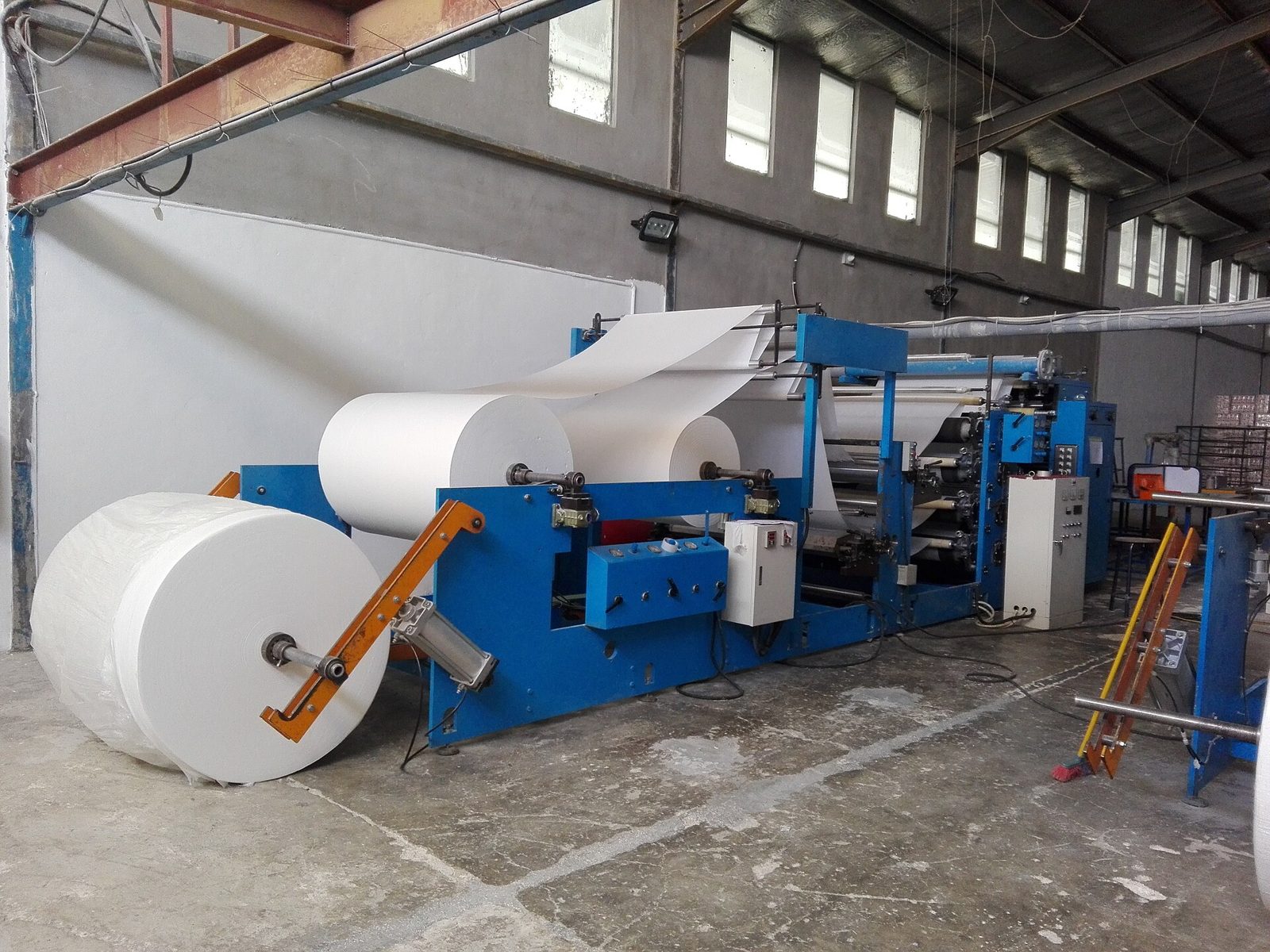
What is paper and packaging manufacturing?
Paper and packaging forms paper from pulp, dries it and converts it into printing paper, corrugated board and packaging. A paper machine squeezes water out at one end and dries with heat at the other, so a single machine runs with a wet section and a hot, humid section at the same time. Large rolls and open gears turn nonstop amid water, steam and paper dust, so lubrication that does not wash out and holds up to heat, release agents, coatings and rust protection that carries on after the product becomes packaging are needed throughout the equipment.
The heaviest burden at a paper mill is stopping the paper machine. Once it stops, it takes time to return to normal speed, so even a bearing problem caused by one lubrication shortfall quickly becomes lost production. Whether a lubricant resists washout in the wet section, holds its film in dryer heat and can pass through centralized lubrication lines comes before the performance table. In paper and packaging, even one trial means giving up a running line, so validation plans should be laid out around scheduled maintenance.
- $6B
Yearly direct corrosion cost of US pulp and paper
- 01
Pulp production and import
Wood is pulped and bleached, or imported pulp is received and prepared for papermaking. Without pH control at each bleaching stage, brightness wavers. Choose control chemicals and flocculants by performance and tolerance of raw material variation.
- #Raw material cost
- #Logistics cost
- #Environmental compliance
- 02
Paper machine wet end, wire and press sections
Diluted pulp is formed into a web on the wire and pressed to remove water. Constant water and steam corrode rolls and bearings. Choose wet end lubricants by load, viscosity and resistance to washout.
- #Sheet formation
- #Dewatering efficiency
- #Roll corrosion resistance
- 03
Paper machine dryer section, Yankee dryer and soot blowers
The web is dried on heated dryers and soot built up on surfaces is removed. When bearings give out first, the whole continuous machine stops. Choose high-temperature grease by operating range, grade, evaporation and oil separation.
- #Bearing durability
- #Heat transfer
- 04
Precision lubrication of paper machine open gears and roller bearings
Centralized lubricators feed grease and gear oil to drive open gears and bearings in each section. Wrong viscosity stops lubricant short of the line end, so points run dry. Choose grease and gear oil by pumpability and antiwear performance.
- #Gear wear prevention
- #Pumpability
- #Easy inspection
- 05
Water-repellent and release size press and coating
Liquids giving water, oil and release resistance are applied to the web surface and dried. Uneven application makes coatings peel or stick to rolls. Choose coatings by coatability, drying speed and fit with base paper.
- #Uniform coating
- #Drying speed
- #Water repellency
- 06
Corrugating with corrugating rolls and starch adhesive
Liner and medium are fluted on corrugating rolls, bonded with starch adhesive and dried. Glue on corrugating rolls causes bonding defects and wasted energy. Choose defoamers and cleaners by performance and effect on adhesive properties.
- #Roll temperature
- #Bond strength
- #Drying energy
- 07
Slitting with disc cutters and printing with ink drying
Finished corrugated board is cut to size and printed if needed. Glue from undried adhesive sticks to cutter blades and unsettles dimensions. Choose slideway oil and cleaners by lubricity and marks left on paper.
- #Cut precision
- #Clean blades
- #Ink drying
- 08
Finished packaging and storage
Finished packaging is arranged so it does not stick together and stored long term. Mold grows in damp spots, and metal parts stored alongside rust. Choose rust-protective packaging by base paper impregnation and sealing.
- #Humidity control
- #Warp prevention
- #Rust protection
- 09
Transport and delivery
Finished packaging is loaded on pallets and shipped by sea and land. At sea, salt and condensation bring rust to metal parts. Choose rust preventives for transport by rust protection and package tightness.
- #Shock protection
- #Vibration protection
- #Humidity control
Regulation and certification
NSF H1
The registration category for lubricants that may have incidental food contact. Lines making food packaging use H1-registered lubricants at points where they could reach the product.
FDA 21 CFR 176.170
The US FDA rule on components of paper and paperboard that contact aqueous and fatty foods. Additives and coating chemicals used in papermaking must be checked against the substances it permits.
Food Sanitation Act: packaging
The Korean standards for packaging materials such as paper and plastics that contact food. Adhesives and coatings are reviewed together with the finished packaging to confirm it meets these standards.
ISO 14001
The international standard for environmental management systems. Wastewater and chemical consumption in papermaking are included in the assessment of environmental aspects and in improvement targets.
FAQ
Only wet end bearings fail often. If we cannot keep water out, is there no answer?
Even if water cannot be kept out, there are options. The wet end is where water easily mixes into oil, so as the film thins and additives leave with the water, the same product lasts a shorter time.
Reducing ingress and tolerating what mixes in are used together. Improving seals and drainage reduces ingress, and oils with good water separation let mixed water settle and drain out. Products that emulsify readily, on the other hand, can keep water in the oil and carry additives away with it.
Ordinary dryer section grease hardens. Will any high-temperature product work?
A high-temperature label alone often does not decide it. Even at the same temperature rating, oil separation and evaporation differ by thickener family, so relubrication intervals can vary widely, and actual life differs by location even at the same grade.
Changing only the product while keeping the same greasing interval often repeats the symptom. Higher temperature grades also cost more, and if actual surface temperature is below the rating, adjusting amount and interval can be better for both cost and results.
Centralized lubrication leaves end-of-line bearings dry. Should we raise pressure?
The combination of viscosity and line length matters more than pressure in many cases. Products whose viscosity rises sharply at low temperature cannot reach the end in winter, and raising pressure alone in that state stresses intermediate fittings.
Checking whether the symptom changes with the seasons separates the causes. If it appears only when it gets cold, low-temperature pumpability is the issue; if it appears regardless of season, look at line blockage or the distributor. If the lines are hard to change, stepping down to a more pumpable grade is one setup.
Grease drips onto the web and causes defects. How can we reduce it?
Often more grease is applied than needed. What is pushed out falls somewhere eventually, so it is better to look at greasing interval and output before changing products.
Reducing grease carries the opposite risk. Cutting too far raises bearing temperature, and left that way, replacement intervals can shorten. Recording temperature after reducing shows how far it can safely go, and also shows that the right level differs by location.
This is a food packaging line. How much coating data should we collect?
Performance data alone is often not enough. Food contact compliance data and ingredient registration are needed to move into the customer coating line's approval process, and this data tends to be required separately by item.
Also check the scope of validity. Even for the same product, data must be obtained again if its issue date and covered items do not match the current specification, and when export volume is mixed in, the destination country's standard is added to the domestic one. Both feed directly into the approval schedule.
Can't we use the same lubricant on tissue lines and regular lines?
Lubricants on tissue lines require both food grade registration and hygienic design registration. Using one product means meeting the higher standard, which narrows choice and raises price.
Even with separate products, the separation loses meaning if storage locations and lubrication tools get mixed. Color-coding containers by line tends to last longest on site, and many also separate lubrication tools and storage shelves. In practice, a setup where tools cannot get mixed lasts longer than records of split grades.
To extend relubrication intervals, can we judge by bearing temperature alone?
Temperature is often a lagging indicator. Even as the film starts to thin, it looks normal until temperature rises noticeably, and by the time it rises, damage has sometimes already progressed.
It is better to look at vibration and the condition of purged grease as well. A paper machine is continuous, so missing one point stops the whole machine; when extending intervals, many sites widen them in steps starting with lower-load sections and check actual condition at scheduled maintenance.
Corrugated bonding is uneven across the width. Is it the adhesive?
Glue preparation conditions and roll temperature are often involved together. Small swings in solids and viscosity change the bond, and glue built up on corrugating rolls throws off results even with the same batch.
Checking roll surface condition right after cleaning and again a few hours later gives an idea of how fast glue builds up. If it builds quickly, defoaming and cleaning intervals often matter before glue solids, and on lines that cannot shorten cleaning intervals, the setup leaves margin on the glue side instead.