Steel of consistent quality
Steel turns iron ore and scrap into sheet, wire and pipe for cars, construction and shipbuilding. Lines rarely stop and a drift costs whole coils, so conditions are tuned on site as the line runs.
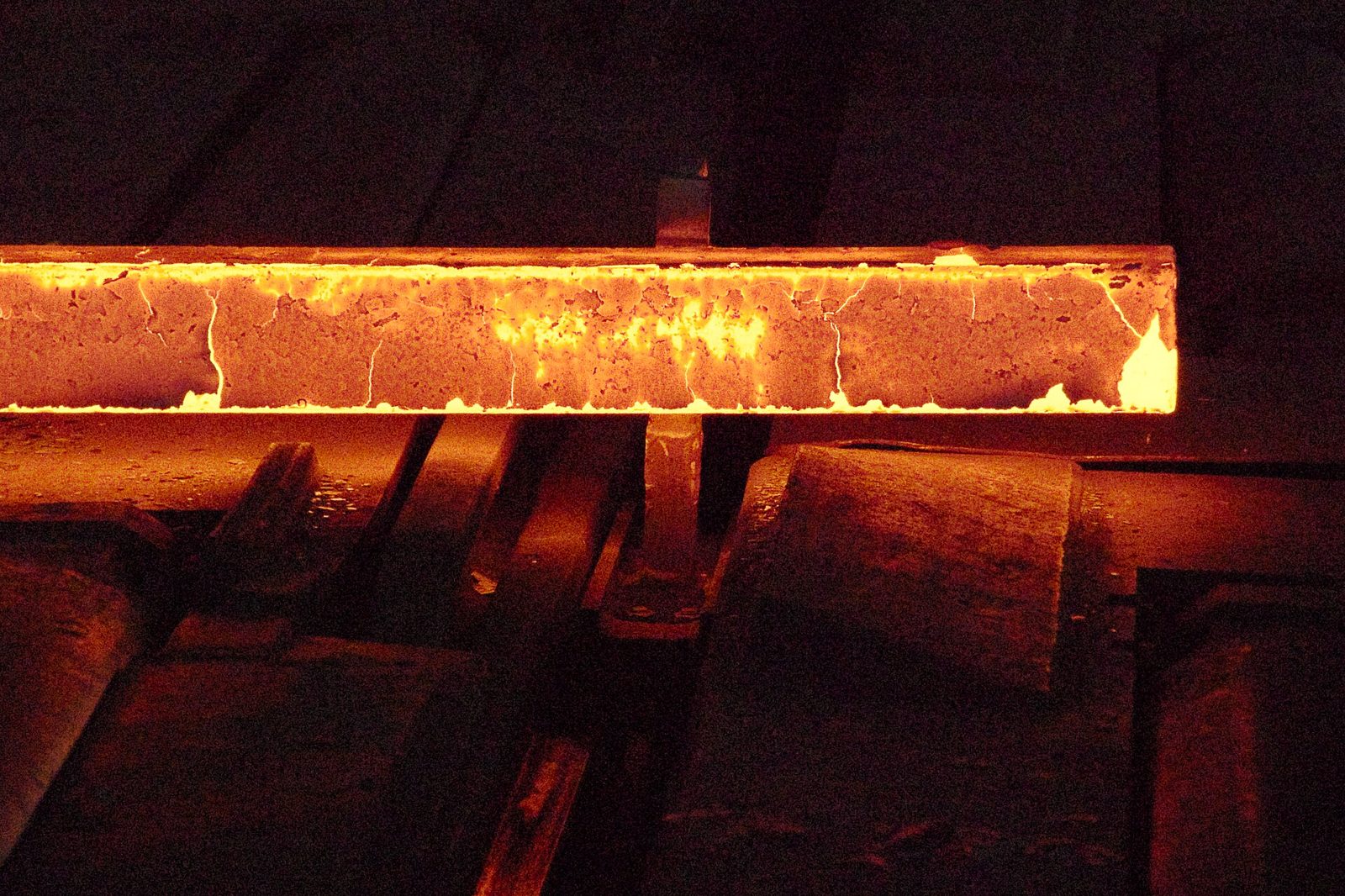
What is the steel industry?
The steel industry draws molten iron from iron ore and scrap and mass-produces materials such as steel sheet, wire and pipe for other industries. These materials are the base for automotive, construction, shipbuilding and energy equipment, so thickness, surface and properties must come out evenly across every product. The process passes in turn through hot metal, rolling rolls, pickling tanks and plating baths, so rolling and drawing lubrication, scale control, pickling and plating chemicals, cooling water management and rust protection for shipment are needed one after another along the line.
Once a steel process starts running it is hard to stop, and when conditions drift, losses grow coil by coil. Scale or rolling oil residue left on the surface shows up late in plating adhesion and later painting, and after shipment, moisture and condensation lead to surface rust. So beyond the performance of each chemical, behavior in high-heat and dusty environments, wastewater treatment burden and residue left for later processes must be considered together. Steel is an industry where conditions are adjusted little by little without stopping the line, so technical support that checks and adjusts on site must follow.
- 1.40%
Direct corrosion cost of China's steel industry, against output
- 01
Blast furnace, BOF and EAF ironmaking and steelmaking
Iron ore and scrap are melted in blast furnaces and electric arc furnaces into molten iron, with impurities removed in converters. Heat and dust degrade equipment lubrication quickly. Choose circulating oil and grease by viscosity, oxidation stability and radiant heat exposure.
- #Temperature control
- #Impurity removal
- #Energy saving
- 02
Continuous casting
Refined molten steel is poured into molds and solidified into slabs, billets and blooms. Uneven mold lubrication leaves surface cracks and sticking. Choose mold lubricants and release agents by high-temperature behavior, anti-sticking performance and casting speed.
- #Mold lubrication
- #Solidification rate
- #Surface quality
- 03
Hot rolling
Slabs are reheated and run through roughing and finishing mills into hot-rolled coils. When the oil film fails at high temperature, rolls wear quickly. Choose hot rolling oil by high-temperature lubricity, cooling and fit with roll material.
- #Heat retention
- #Roll lubrication
- #Dimensional precision
- 04
Pickling
Iron oxide scale on hot-rolled coils is dissolved in pickling tanks to prepare the surface for cold rolling. Unstable acid strength or temperature leaves scale or attacks base metal. Choose pickling chemicals and inhibitors by removal speed and base metal protection.
- #Acid concentration control
- #Equipment corrosion control
- #Base metal protection
- 05
Cold rolling
Pickled sheet is pressed under high pressure at room temperature to reduce thickness and even out the surface. Emulsion separation leaves roll marks and scratches along the coil. Choose rolling oil by lubricity, plate-out and emulsion stability.
- #Rolling oil stability
- #Erosion resistance
- #Thickness precision
- 06
Skin pass temper rolling
Cold-rolled and annealed sheet is re-rolled at low reduction for surface roughness and yield point elongation. When reduction and fine lubrication vary across the width, stretcher strain marks appear. Choose temper rolling oil by roughness transfer, residue and rust protection.
- #Uniform roughness
- #Elongation control
- #Micro lubrication
- 07
Hot-dip and electro galvanizing
Cold-rolled sheet runs through zinc plating baths for a corrosion-resistant zinc layer on the surface. Poor pre-degreasing causes adhesion defects such as pinholes and peeling. Choose degreasers and plating chemicals by cleaning power, plating quality and bath life.
- #Coating adhesion
- #Uniform coating weight
- #Surface defect control
- 08
Wire drawing
Wire rod is pulled through dies into thinner wire. Poor lubrication heats the die and increases breaks and scratches. Choose drawing lubricant by lubricity, cooling and residue.
- #Tension control
- #Drawing lubrication
- #Surface protection
- 09
Steel pipe manufacturing
Steel sheet is rolled round, seam-welded and brought to dimension by sizing. Poor forming lubrication leaves cracks, and oil near the weld leads to defects. Choose bending oil and cutting fluid by forming load, lubricity and weld-zone residue.
- #Forming control
- #Weld quality
- #Corrosion protection
- 10
Rust protection and packing
Inspected steel is rust-protected and wrapped in paper, plastic and VCI materials to ship. At sea, condensation and salt bring up surface rust. Choose rust preventive oil and packaging by protection period and even application.
- #Transit rust protection
- #Transit damage prevention
- #On-time delivery
Regulation and certification
ISO 9001
The international standard for quality management systems. Process chemicals such as rolling oils, rust preventives and cleaners fall under its purchasing specifications, incoming inspection and change control.
IATF 16949
The quality management standard for the automotive supply chain. Mills supplying automotive sheet follow customer notification and approval procedures before changing rust preventives or rolling oils.
ISO 12922
The international specification for fire-resistant hydraulic fluids. Hydraulic systems near hot sources, such as continuous casters and hot rolling mills, are assessed for fluids under this standard.
Chemicals Control Act
The Korean law on hazardous chemical facilities, business permits and accident preparedness. Pickling acids such as hydrochloric and hydrofluoric acid must be stored and handled to its standards.
FAQ
Plating adhesion keeps dropping. Should we look at degreasing?
Degreasing is often the cause, but residual rolling oil carried over from earlier processes is sometimes involved too. Oxidized oil does not come off well under ordinary alkaline conditions, so it can remain even with longer cleaning.
Responding only by raising degreasing power can shorten bath life and add to wastewater burden. When residual rolling oil is the cause, peeling returns in the same place however much the plating section is adjusted, so it is ultimately faster to look at oil application and coiling conditions in earlier processes as well.
Can we standardize on one product for both hot and cold rolling oil?
Some lines can, but requirements differ, so many use separate products. Hot rolling depends more on film strength at high temperature and cooling, while cold rolling depends more on plate-out and emulsion stability.
Standardizing reduces inventory and management items, but one oil covering both sections means giving up some performance on one side. On lines where tanks and supply systems are already separate, the gain from standardizing is small; on shared systems, the real criterion tends to be which can be given less weight, cooling on the hot side or plate-out on the cold side.
Stains remain on the surface after pickling. Do we need to change cleaners?
The cause more often lies in rinsing and drying than in the cleaner. If water dries with acid still present, marks remain, and the shape of stains can change with rinse water quality.
Even if a new cleaner lightens the stains, the same marks often return in the next lot if rinsing and drying stay the same. Causes that start with equipment, such as clogged nozzles or spots where solution pools, are not fixed by changing chemicals, and on lines that recover rinse water, whether the quality of recovered water swings with the seasons is also checked.
Our cold rolling emulsion separates often. Will changing the rolling oil fix it?
Separation that looks like an oil type problem often starts with water quality and management conditions. With hard water, tramp oil or microbial growth, stability can drop whatever rolling oil is used.
After changing rolling oil, the emulsion sometimes stabilizes at first and then separates again on the same cycle, so unless makeup water quality and leak paths are sorted out before the change, the cause remains. Noting how fast a sample from the tank separates and how it smells after standing gives values to use when setting the next change.
Will a new drawing lubricant reduce the rising breaks in wire drawing?
The lubricant can be a cause, but die condition and reduction ratio are often intertwined. When the die bore wears and loses its shape, breaks can repeat in the same place even with more lubrication.
The shape of the break surface is a clue. A break along a scratch points to lubrication and the die; a break that necks down points to reduction ratio and material ductility. Raising only the lubricant while keeping the die often lengthens the break interval briefly before it returns.
Can paint go directly onto steel coated with rust preventive oil?
It depends on the product. Some rust preventive oils are made on the assumption of removal before painting, and others are designed to leave a thin film that can be painted over, so the name rust preventive oil alone is not enough to judge.
Even with a specification that allows a residual film, adhesion results can change if application amount varies, so when changing products, the uniformity of the application equipment is checked too. When adhesion fails after painting, rework cost far exceeds the price of the oil, so it is safer to run an adhesion test once on the actual material.
Where do we start to reduce pickling and plating wastewater burden?
It is best to narrow down which items hit the discharge standards first. Pickling centers on acidity and iron ions and plating on heavy metals, so the places to fix differ. Changing chemicals often comes after that.
In some cases, managing bath life and recovering rinse water alone lowered the load before any chemical change, so many sites address usage first. If the treatment plant is already near capacity, a chemical change gives little room, and changing the bath maintenance cycle can show more in discharge concentrations.
Is there anything extra to check for rust preventive oil on energy line pipe?
Often there is. Energy line pipe is reviewed for standard compliance and for residue left for later painting and coating, so adoption tends not to end with rust protection performance.
If the customer's specification has a separate item for rust preventives, that condition comes before performance comparison. Even without such an item, unless adhesion test conditions are agreed with the coating contractor in advance, a removal step is added on site, and when exports are involved, regulatory documents for the destination apply and the product sometimes has to be chosen again at that point.