From the melting furnace to 24 months of export transport
The non-ferrous industry turns aluminum, copper, tin, zinc and their alloys into semi-finished and finished parts by rolling, extrusion, forging, casting and sheet forming.
What is nonferrous metal processing?
Nonferrous metal processing melts, rolls and finishes metals other than iron, such as aluminum and copper, into sheet, coil and parts. These metals conduct electricity and heat well and form easily, but their surfaces are soft and oxidize quickly, so dents or discoloration during processing go straight into quality judgments. The flow runs through casting, hot and cold rolling, annealing, degreasing and pickling, and surface treatment, so rolling lubrication, cleaning, conversion treatment and rust protection against discoloration and white rust follow throughout the process.
The most frequent problem area in nonferrous metals is the surface. Stains start where rolling oil remains, white rust spreads inside coils where moisture is trapped, and the risk rises again at sea. Residual oil content, reactivity of each material and humidity inside packaging decide results as much as lubrication and cleaning performance. Each customer requires a different surface grade, so the work starts by agreeing which standard to meet and then coordinating conditions.
- 39 Mt
Liquid aluminium that never becomes a product each year
- 01
Raw material receiving and storage
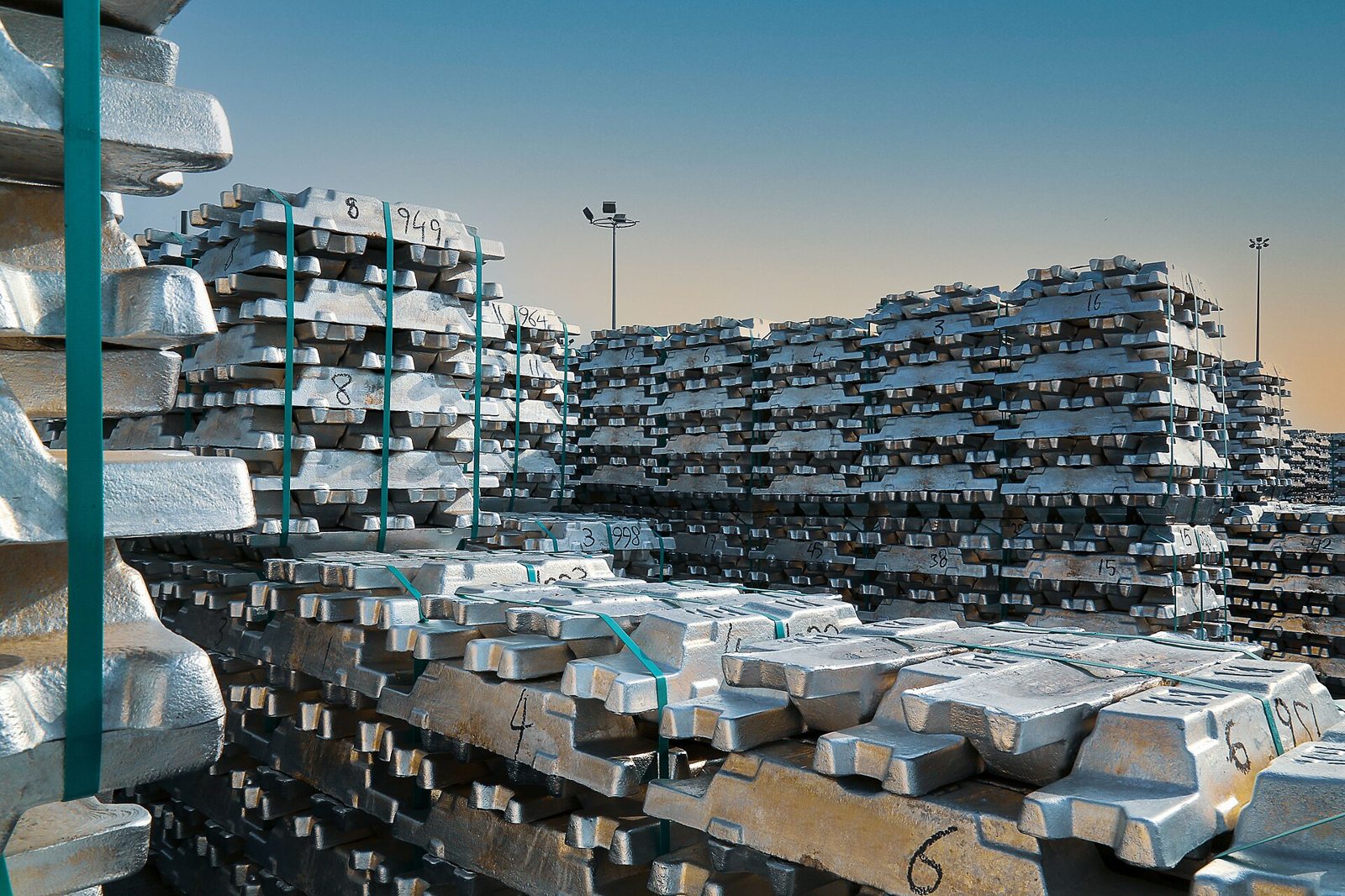
Recycled scrap and refined ingots are received, sorted and stacked in the yard. Repeated condensation outdoors starts surface oxidation. Choose rust protection by protection period, application and reaction per metal.
- #Oxidation prevention
- #Corrosion control
- #White rust prevention
- 02
Melting and continuous casting
Ingots and scrap are melted, then cast into slabs and billets by direct chill or continuous casting. Uneven mold release makes molten metal stick and leaves cast surface cracks. Choose release agents and cooling water chemicals by release and scale control.
- #Cast surface quality
- #Mold release
- #Cooling water control
- 03
Hot rolling
Slabs are reheated and reduced in thickness by multi-stand mills into hot-rolled coils. When rolling oil cannot hold a film, the roll surface condition transfers to the coil. Choose hot rolling oil by the balance of friction reduction and cooling, and alloy type.
- #Heat control
- #Friction reduction
- #Roll wear prevention
- 04
Cold rolling
Hot-rolled coils are rolled again at room temperature to target thickness and roughness. Oil trapped in wound coils hardens into oil stains. Choose cold rolling oil by lubricity, surface finish and residual oil.
- #Thickness precision
- #Surface roughness
- #Residual oil control
- 05
Temper rolling and annealing
A light-reduction skin pass and heat treatment in annealing furnaces set final roughness and properties. Residual oil that does not fully evaporate carbonizes into annealing stain. Choose skin pass oil by roughness uniformity and evaporation.
- #Uniform roughness
- #Grain control
- #Annealing stain prevention
- 06
Degreasing, cleaning and pickling
Rolling oil, metal dust and oxide film left on coils are removed by alkaline cleaning and pickling. Harsh conditions etch soft surfaces and add wastewater load. Choose cleaners and pickling chemicals by cleaning power and degree of attack.
- #Cleaning efficiency
- #Environmental compliance
- #Bath recycling
- 07
Surface treatment by anodizing, conversion coating and other coatings
Aluminum is given an oxide film electrochemically or a protective film chemically. Insufficient sealing leaves pores open and white rust appears. Choose treatment chemicals by film properties and corrosion resistance.
- #Uniform film
- #Corrosion resistance
- #Color range
- 08
Cutting, bending, punching and other secondary processing
Surface-treated semi-finished products are cut, bent and drilled to final dimensions and passed to assembly. Lingering chips cause scratches and distortion of thin sheet. Choose machining fluid by lubricity, dimensional precision and effect on the film.
- #Machining precision
- #Surface protection
- #Lubrication conditions
- 09
Packing and transport protection
Finished products are packed and palletized against vibration, humidity and sea salt in transit. On long sea routes, trapped moisture spreads white rust and discoloration. Choose packaging materials by protection duration, sealing and VCI type.
- #Transit rust protection
- #Discoloration prevention
- #Packaging protection
Regulation and certification
ISO 9001
The international standard for quality management systems. Aluminium rolling oils, copper drawing fluids and surface treatment chemicals fall under its purchasing specifications, incoming inspection and change control.
IATF 16949
The quality management standard for the automotive supply chain. Suppliers of automotive aluminium and copper follow customer notification and approval procedures before changing process chemicals.
FDA 21 CFR 178.3910
The US FDA rule on surface lubricants used in making metallic articles. Rolling oils for aluminium foil and sheet that will contact food must be made from substances it permits.
RoHS
The EU directive restricting lead, mercury, cadmium, hexavalent chromium and other substances in electrical equipment. Copper alloys and plated stock for electronics must be checked for restricted residues from surface treatment.
FAQ
Ingots in the yard get white rust. Any option besides moving them indoors?
Indoor storage is the surest, but volume and space often make it hard. Outdoors, reducing condensation tends to work better than keeping off rain, and covering stacks without ventilation can trap moisture inside.
Stacking method matters too. Oxidation often starts first in the layers touching the ground and the lower tiers, and simply raising supports and leaving gaps between tiers can slow it. When using rust protection materials, it is good to decide in advance whether they must be removed before melting. On lines without a removal step, the choice narrows accordingly.
Aluminum and copper share one line. Do we need separate rust preventives?
Many sites use separate ones. Copper can discolor on contact with sulfur-containing ingredients, so a rust preventive with no issues on aluminum can show as stains on copper. A product with documented multi-metal compatibility can make one-product setups possible.
Splitting, however, adds materials and inventory management, and if the two products get mixed up on site, management becomes harder. Sorting out first whether storage areas and application points can be separated by material usually settles whether to use one product or two.
Coil surfaces turn yellowish after annealing. Will changing rolling oil fix it?
It is often discoloration from residual oil carbonizing in the furnace. But coiling tension, residue amount and heating conditions matter as much as oil type, so changing rolling oil alone does not always resolve it.
If discoloration gathers at coil edges, look at coiling and where residual oil pools; if it appears evenly over the surface, look at heating rate and atmosphere control as well. Reducing oil application to lower residue can increase roll marks and scratches, so it is better not to move rolling and annealing conditions at the same time, so the cause can still be identified.
White rust appears on anodized parts. Is it the treatment conditions?
Insufficient sealing that left pores open is the likely cause. Sometimes poor pre-cleaning also kept the film from growing evenly.
If white rust gathers at edges and cut faces, later machining and handling are often the cause rather than treatment conditions. Areas cut or drilled after the film is formed remain unprotected, so checking whether the process order can be changed before adjusting treatment conditions saves time.
Meeting residual oil limits is hard. Should we clean more aggressively?
Stronger cleaning can meet them, but it can etch soft surfaces or change gloss, so reducing residue in earlier processes first is less of a burden. Raising cleaning conditions also adds to wastewater treatment load.
Residue often differs between the inside and outside of a coil, so where the sample was taken decides the result. Measurement methods for residue limits also differ by customer, so the same coil can give different results; unless measurement conditions are aligned as carefully as the limit value, the same rejection can repeat even after the line is adjusted.
Thin aluminum sheet distorts in machining. Can machining fluid reduce it?
Machining fluid can help, but distortion more often starts with cutting conditions and fixturing. The material is soft, so clamp pressure alone can push the shape, and the thinner the sheet, the bigger the effect.
When changing machining fluid, the gains are more on the surface than on distortion. For material that already has a film, stains the fluid leaves on the film and the cleaning burden before assembly come into play, and finding this out later can mean adding another cleaning step.
How do we check a surface treatment chemical for regulated substances?
Not seeing a name on the ingredient list does not end the check. Some regulated items apply by content threshold rather than substance name, so if the data does not state content, it may need to be obtained separately from the supplier.
Also check whether the customer's specification includes a list of prohibited substances. Switching to an alternative often means building corrosion data again from scratch, so placing the regulatory check early in product review saves time. Export volume is subject to the importing country's regulations as well, so domestic standards alone are not enough to judge.
A customer requires a surface grade. Which section should we work on first?
Surface grade is often not created only in the last section. Residual oil from cold rolling, annealing conditions and skin pass reduction overlap, so adjusting one section alone rarely stabilizes the grade.
So meeting the grade is closer to tying conditions together across sections than to changing products. Collecting defect types from rejected coils shows which section is unstable; lots with many stains and discoloration and lots with many marks and scratches call for work in different places.