From hydraulic oil filling to 24 months of storage overseas
Tractors, harvesters, sprayers and mechanized forestry equipment made in Korea.
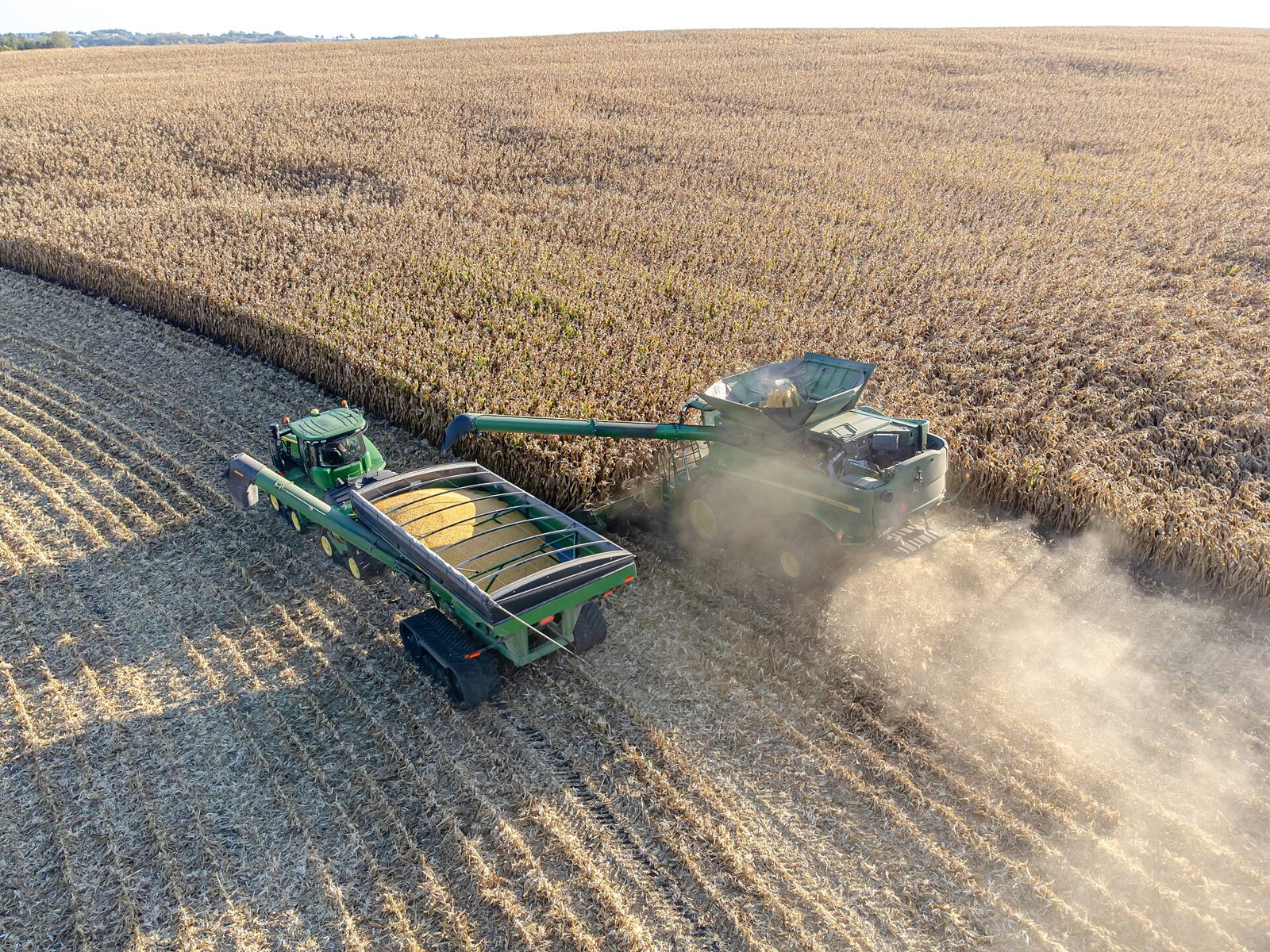
What is agricultural and forestry machinery manufacturing?
Agricultural and forestry machinery manufacturing makes machines that work in fields and forests, such as tractors, harvesters, chainsaws and fellers. These machines are covered in soil, water, fertilizer and pesticide, run at different temperatures each season, and are often parked for months before being used again. Engines, transmissions, hydraulics and drive chains are assembled and shipped, so initial-fill engine oil, gear oil, hydraulic oil, grease, and rust protection and cleaning that withstand outdoor exposure are used both on the assembly line and in the field.
The performance of farm machinery shows not in the lab but after a full farming season. Only after a full cycle of seasons can winter starting, summer oil temperature and the behavior of grease washed by muddy water be confirmed. So beyond grade documents, field data covering the seasons, biodegradability where fluids reach soil and water, and rust protection for long warehouse stays after export must all be prepared. Agricultural and forestry machinery does not finish at the factory; evaluation ends only after a year of farming.
- 10,000-hour repair cost of a 2WD tractor, against its new price70%
- 01
Engine assembly and oil filling
The engine block is assembled, then filled and circulated with its first engine oil. Poor low-temperature flow delays starting, and viscosity loss at high temperature speeds wear. Choose engine oil by viscosity grade, extreme-pressure performance and the maker's approved list.
- 02
Transmission and axle assembly and gear oil filling
Transmissions, final drives and PTO gearboxes are assembled and filled with gear oil or universal tractor fluid. Mismatched wet brake friction properties cause chatter in braking and clutch slip. Choose the fluid by extreme-pressure properties, friction material compatibility and the maker's approved list.
- 03
Hydraulic system assembly
Hydraulic cylinders, pumps and valves are assembled and filled with hydraulic oil. Water from fields forms emulsions that do not break, speeding pump and cylinder wear and leading to leaks. Choose hydraulic oil by viscosity grade, heat resistance and water separation behavior.
- 04
Central lubrication system, drive chain and PTO shaft lubrication
Multi-point centralized lubrication lines are installed, and grease is filled into drive chains, PTO shafts and torque limiter joints. With poor pumpability, the farthest points do not receive the set amount and wear starts there. Choose grease by extreme-pressure properties and low-temperature pumpability.
- 05
Greasing bearings, joints and implement heads
Grease is applied to tractor wheel axles, universal joints, rotary blades and cutter bar bearings. With insufficient water resistance, grease emulsifies and is pushed out, and rust forms on raceways. Choose grease by extreme-pressure properties, oxidation stability and resistance to washout.
- 06
Cooling system coolant filling
Antifreeze and coolant are filled into engine and hydraulic oil cooler circuits. Topping up with tap water or groundwater breaks the dilution ratio and uses up corrosion inhibitors first. Choose coolant by freezing point, heat transfer and miscibility with existing coolant.
- 07
Chain oil and biodegradable lubrication for forestry machines
Forestry machinery such as chainsaws and fellers is filled with saw chain oil and biodegradable hydraulic oil. Plant-based products can thicken through oxidative polymerization in long storage and clog oil holes. Choose fluids by biodegradability test data, low-temperature flow and oxidation behavior.
- 08
Rust protection of exposed metal parts
Exposed metal such as frames, implement blades and sprayer nozzles is given rust protection. Salts, fertilizer and pesticide reach these spots, so a thin film lets rust form through the rainy season. Choose a rust preventive by duration, application method and biodegradability data.
- 09
Cleaning and washing
Soil, fertilizer and pesticide residue are washed off machines after work. Strong cleaning can damage aluminum parts or paint. Choose a cleaner by contaminant removal, material compatibility and rinse residue.
- 10
Protection in transport and storage
Finished machines travel through ports and sea routes to importers' warehouses and are stored there. Temperature swings inside containers cause condensation. Choose rust preventives by protection period, coverage and packaging method.
Regulation and certification
OECD 301
The OECD test guideline for ready biodegradability of chemicals. Lubricants likely to escape into forests and farmland, such as chainsaw oils and hydraulic fluids, are checked for biodegradability using its results.
EU Ecolabel
The EU environmental label for products that meet set environmental criteria, with separate criteria for lubricants. Lubricants that meet requirements such as biodegradability and low aquatic toxicity can carry the label.
ISO 15380
The international specification for environmentally acceptable hydraulic fluids (HETG, HEPG, HEES, HEPR). Fluids for farm and forestry machinery are chosen from its grades with both biodegradability and equipment compatibility in view.
John Deere J20C
John Deere's specification for the shared oil in tractor transmissions, hydraulics and wet brakes. Meeting it is a common benchmark when choosing a universal tractor transmission oil (UTTO).
FAQ
Our tractor is hard to start on winter mornings. Will changing engine oil help?
It may be the engine oil, but it is good to check the battery and preheat system as well. Higher viscosity at low temperature increases cranking resistance and often delays starting, and moving to a grade with a lower number before the W has helped in some cases.
Changing oil type for one winter symptom, however, can come back as a weaker film in heavy summer work. Farm machinery handles both freezing mornings and continuous midsummer work with the same oil over a year, so it is hard to decide by one season. Telling whether cranking is heavy or the engine does not crank at all helps estimate whether it is the fluid or the electrical system.
Our wet brakes make noise when braking. Is it the oil?
It may be chatter from mismatched friction properties between friction material and fluid. Universal tractor fluid handles both gear protection and wet brake friction, so putting in a general gear oil chosen for extreme-pressure performance alone can cause this symptom.
If the noise started after the fluid was changed, reverting comes first. Universal fluid is designed for a setup where transmission, brakes and hydraulic circuit share one fluid, so choosing for one spot costs performance elsewhere. Friction properties are set by the additive combination, so the same viscosity is not a substitute.
Can we use a gear oil of a different grade from the one in the specification?
A higher grade is not necessarily safer. Grades with high extreme-pressure additive content have been reported to attack copper alloy parts such as brass, and wet brake friction properties can change as well.
Raising the grade on your own can also spill over into warranty. When a failure occurs, which fluid was used tends to be checked first, so a record of using a grade different from the specification can lead to disputes over responsibility before the cause is found. If there is a reason to change, it is safer to record the basis in maintenance history and get the maker's confirmation.
Our biodegradable forestry chain oil feeds poorly in winter. Is there an alternative?
Plant-based chain oils tend to rise sharply in viscosity at low temperature, so this symptom is common in winter. Even within the biodegradable family, low-temperature flow differs widely with base oil composition, and some sites use separate winter and summer products.
For equipment parked for a long time, oil thickened by oxidative polymerization clogging the oil holes is also worth suspecting. Splitting by season, however, adds inventory and misdelivery management, so to stay with one product, it is practical to choose a specification with margin on the low-temperature side and then confirm summer performance. Telling whether the oil pump has high resistance when turned by hand or the oil itself has thickened identifies the cause.
Exported machines sit months at destination. Is rust preventive oil alone enough?
One coating oil often cannot cover it. Warehouse storage involves repeated condensation as temperatures rise and fall, so the usual setup layers rust preventive oil with VCI packaging and adds wax types in some areas.
Volume going to North America has one more destination standard. Shipments made on the assumption that domestic data settled everything have been sent back over local content regulations or customs documents. Field data showing performance through long warehouse stays is sometimes required too, so it is safer to base the rust protection specification on time in the warehouse rather than the voyage.
Bearings stay noisy despite frequent greasing. What should we look at?
If the raceways are already damaged, noise often remains even with more grease. In fields, soil often gets in where water has washed grease away and acts like an abrasive, and this pattern repeats with grease that lacks water resistance.
Adding more grease can even work against you. Pushing more grease into a spot where the seal has already shifted can open the seal under internal pressure, widening the path for soil. Check whether purged grease has turned milky white or feels gritty, and fix sealing before shortening the greasing interval.
How do we verify a product is biodegradable for use where it touches soil?
It is verified by test data, not by wording in the product name. If there is only a biodegradable label without the test method used and whether the data applies to the formulation currently supplied, the review often comes back for lack of data.
Having data does not mean it can be used as is in the field either. Within the biodegradable family, low-temperature flow and oxidation behavior in storage differ with base oil composition, so getting certification data together with seasonal performance data reduces the need to choose again in winter. Some products harden if left long after opening, so it is good to set inventory turnover on site as well.
We have been topping up coolant with water in the field. Is that a problem?
Repeated, it often is. Each addition of water lowers the dilution ratio, reducing corrosion inhibitor concentration and pushing up the freezing point. Corrosion in radiators and water pumps tends to appear after that.
Recovery does not end with adding concentrate either. Hardness from groundwater or tap water may already remain as scale, so heat still does not transfer well even after the ratio is restored. For systems with a long top-up history, it is safer to plan draining and flushing, and some sites keep purified water separately for later top-ups.