From electrolyzer stacks to liquefaction at minus 253 degrees
The hydrogen industry spans green hydrogen production by electrolysis, compression, storage and liquefaction infrastructure, refueling networks, fuel cell power and fuel cell mobility.
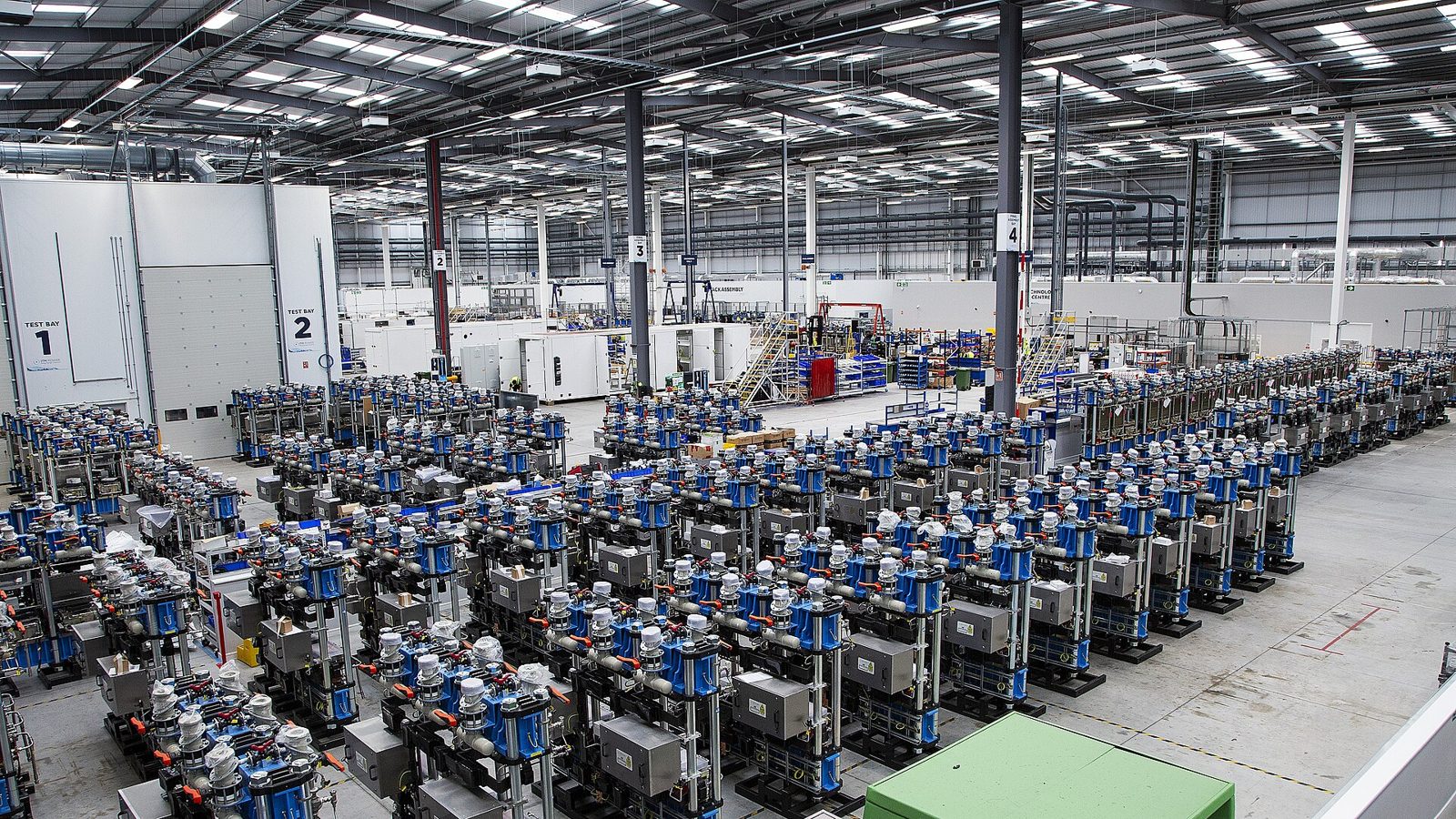
What is the hydrogen industry?
The hydrogen industry produces hydrogen by splitting water with electricity or reforming feed gas, then compresses or liquefies it for storage and transport, supplying fueling stations, power facilities and industrial processes. Hydrogen molecules are small and leak easily, reduce the ductility of metals at high pressure, and in liquefaction temperatures fall to around minus 253 degrees Celsius. Electrolyzers, compressors, storage tanks, piping and fueling equipment are handled together, so lubrication and sealing that withstand hydrogen contact, cryogenic grease and seals, and system water management apply differently to each piece of equipment.
The most delicate points in hydrogen equipment are leakage and material damage. Where pressure is high and temperatures swing to cryogenic, the same material withstands conditions in different ways. So when choosing lubricants and sealants, beyond performance, it must be checked where the contacting materials reach their limits, how products behave at low temperature and whether they fall within equipment certification scope. Hydrogen is still at a stage where equipment configurations and operating practices are taking shape, so whoever has organized what worked and what caught at earlier sites sets the starting line for proposals.
- Monthly compressor repairs per US hydrogen station2.8
- 01
Electrolysis stack reaction
Electricity and water react in alkaline, PEM and AEM electrolyzer stacks to produce hydrogen. Iron or calcium ions in feed water block ion exchange sites in the membrane and raise voltage. Choose water purification packages and sealants by purification performance and membrane compatibility.
- 02
Boosting hydrogen for dispatch
Low-pressure hydrogen from reforming or electrolysis is first compressed at the dispatch center. Compression heat left unremoved degrades crankcase oil. Choose compressor oil by viscosity, oxidation stability and the original manufacturer's specification.
- 03
High-pressure hydrogen compression for stations
Hydrogen is compressed into the 200 to 900 bar range for storage and fueling. When seals wear or compressor oil decomposes at high temperature, the products mix into the gas. Choose lubricants by extreme-pressure performance, heat resistance and seal compatibility.
- 04
Hydrogen liquefaction by centrifugal cryogenic compression
Hydrogen is cooled to around minus 253 degrees Celsius through centrifugal compression, intercooling and expansion to make it liquid. Rubber seals lose elasticity in repeated cooling and become leak paths. Choose cryogenic grease and sealants by cold flexibility and shrinkage versus metal.
- 05
Liquid hydrogen storage
Liquefied hydrogen is held in vessels, piping and valve systems. Heat entering through joints increases boil-off loss. Choose pipe sealants and protective fluids by sealing performance and cryogenic behavior.
- 06
Dispensing
Stored high-pressure hydrogen is delivered to vehicles through pumps and nozzles. Precooled fueling forms ice around nozzles and receptacles and hinders disconnection. Choose products for precooling systems and contacts by cold performance and whether they add icing.
- 07
Fuel cell power generation
Stationary hydrogen fuel cell stacks generate electricity. When coolant conductivity rises, leakage current damages cells and joints. Choose coolant by freezing point, heat transfer and lasting low conductivity.
- 08
Industrial hydrogen use
Hydrogen is used directly as a reducing agent or feedstock in refining, semiconductor and chemical processes. Residue from piping work or maintenance slows the return to high purity. Choose maintenance fluids by residue after drying and effects on materials.
Regulation and certification
ISO 14687
The international specification for hydrogen fuel purity and impurity limits. In equipment that touches fuel-cell hydrogen, lubricants, sealants and cleaners are checked so they do not add contaminants such as sulphur or hydrocarbons.
ISO 19880
The international series of standards on equipment and safety for gaseous hydrogen fuelling stations. Lubricants and sealants for compressors, valves and hoses are chosen for hydrogen compatibility and the risk of contaminating the fuel.
High-Pressure Gas Safety Control Act
The Korean law setting safety rules for facilities that produce, store, transport and use high-pressure gas. Lubricants and leak-test fluids for high-pressure hydrogen equipment are used within its inspection and safety procedures.
Hydrogen Economy Act
The Korean law on promoting the hydrogen economy and the safety of hydrogen products. Electrolysers and fuel cells are inspected under it, so the materials inside them are managed to match the inspected design.
FAQ
Why do our hydrogen compressor's ordinary oil changes come ever sooner?
Heat of compression and gas contact act together here, so the oxidation stability of ordinary compressor oil is often not enough. When cooling falls short and crankcase temperature rises, viscosity drops first, and sludge follows.
Measuring viscosity and acid number of the used oil at each change narrows the cause. If only viscosity has dropped, suspect cooling and operating temperature first; if acid number has risen too, suspect the oil's own heat margin. Bringing change intervals forward while leaving cooling as is often raises cost while sludge keeps building at the same rate.
What criteria work best for seals in contact with high-pressure hydrogen?
Polymer seals exposed to high pressure can be damaged when hydrogen absorbed inside expands and ruptures them during depressurization. So depressurization rate and the range of pressure swings often decide actual life more than the material's chemical resistance.
Changing a seal also does not end with one part. In high-pressure systems, changing material can mean resetting assembly compression and groove dimensions, and in piping that follows hydrogen-specific codes, materials without test data can be screened out at review. Rushing in a substitute has seen depressurization damage repeat in other places.
Do fueling station lubricants and cleaners also need approval history?
Fueling stations involve both safety standard certification and inspected equipment, so approval history is often checked for chemicals used there too. Hydrogen supplied to vehicles must meet fuel quality standards, so products touching the gas system must be able to explain their contamination potential.
Checking approval history late throws off the order. If it turns out after performance comparison that a product cannot be used on inspected equipment, the review starts over, and products touching the gas system sometimes need new data explaining contamination potential. In many cases, gathering data takes longer than choosing the product.
Purity recovers slowly after maintaining high-purity piping. Can we speed it up?
Residue left from maintenance is often the cause. Stronger cleaning fluids tend to leave more residue, and components left inside piping escape slowly and delay purity recovery.
Moving only toward stronger cleaning can actually lengthen recovery time. Obtaining data on residue after drying for maintenance fluids lets purge time be planned in advance, and limiting maintenance to sections rather than the whole line also shortens the time to recover.