From mold machining to rust protection for sea freight
Machine tools, molds and dies, hydraulics and contract precision machining.
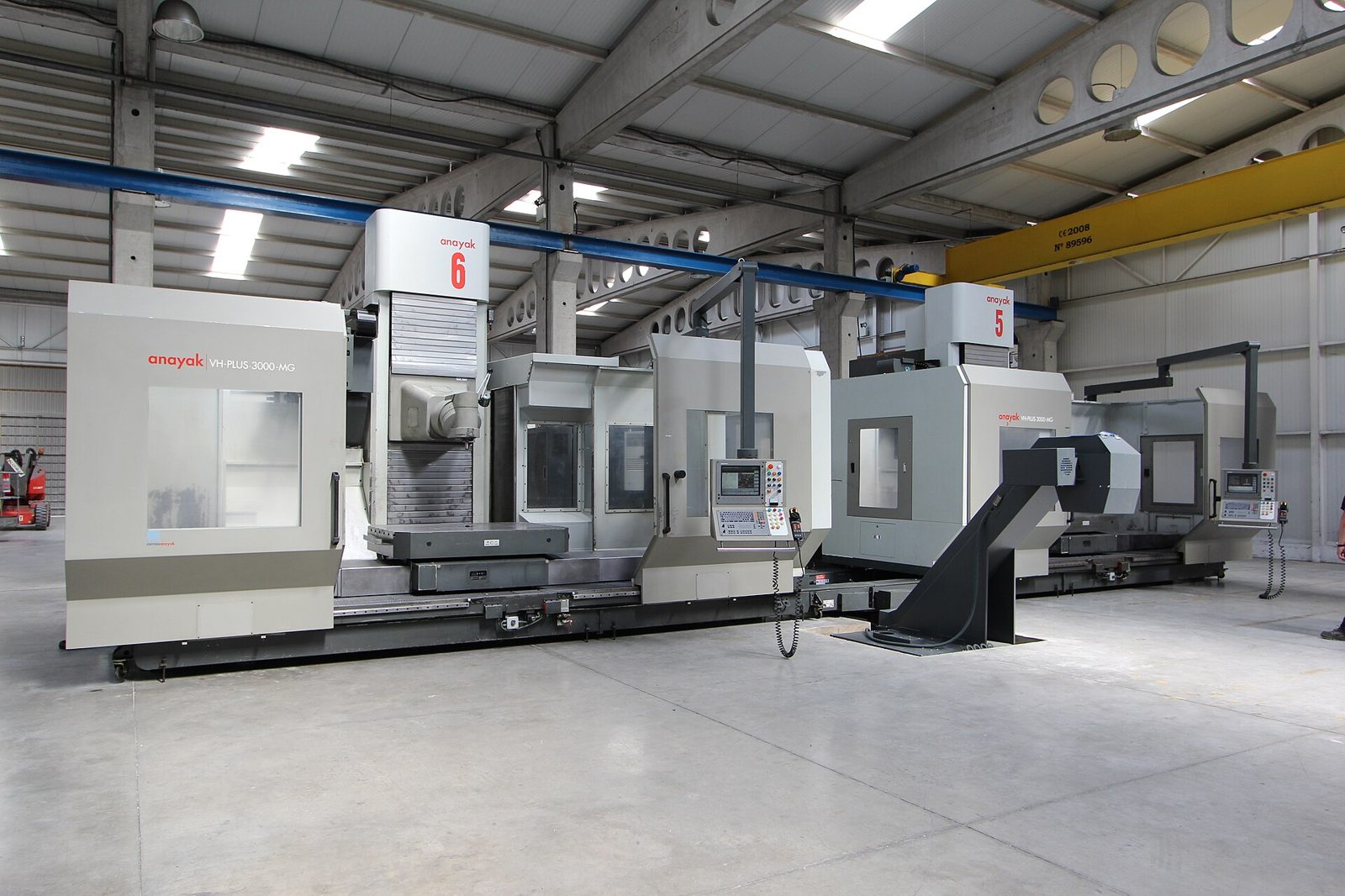
What is the general machinery and precision machining industry?
General machinery and precision machining makes machines and parts that become production equipment for other industries, such as machine tools, molds and hydraulic components. The precision of the molds and parts made here sets the upper limit of quality for the next industry, so fine dimensional errors and surface condition must be held continuously. Aluminum, stainless steel, tool steel and general steel are machined, heat treated and ground, so lubrication and cleaning suited to cutting, EDM, tapping and grinding, and rust protection after machining, each apply separately by process.
What makes this industry demanding is that materials, shapes and machines differ from site to site. The same cutting fluid gives different results when machine and material change, and finished parts face rust risk again while waiting for the next process. So beyond machining performance, the equipment and material the product will meet and the wait until the next process must be considered together. Here, how a product behaves on that site's machines decides adoption more than the specifications in a catalog.
- Cutting fluid share of manufacturing cost7-17%
- 01
Mold design and machining
Molds are milled and finished by EDM based on product design. When fine chips and sludge build up in cutting fluid and dielectric, they are drawn back onto the machined surface as defects. Choose machining fluids by cutting performance, EDM stability and sludge settling.
- 02
Rough turning, milling, drilling and boring
Aluminum, stainless steel and steel are turned, milled and drilled to remove large amounts of material close to the target shape. With stainless steel, cutting heat concentrates at the edge, and with aluminum, built-up edge sticks. Choose a cutting fluid by cooling-lubrication balance and chip evacuation.
- 03
Quenching heat treatment
Parts are heated and quenched to reach the required hardness. A vapor blanket breaking unevenly leaves hardness variation and distortion. Choose quench oil by cooling capacity, part shape and agitation.
- 04
Finish turning, milling and reaming
Turning, milling and reaming bring parts to target dimensions and surface finish while correcting distortion from heat treatment. Distortion beyond the finishing allowance cannot be cut into tolerance. Choose a cutting fluid by lubricity, surface finish stability and fluid life.
- 05
Threading and tapping
Threads are made at fastening points with taps and cutting tools. A broken oil film in narrow holes snaps taps or tears threads. Choose tapping oil by extreme-pressure performance, material fit and chip clearing.
- 06
Grinding
Grinding wheels finish parts to ultra-precise size and finish. Heat at the grinding point leaves thermal damage, and clogged grains cause burning. Choose grinding fluid by cooling, cleaning and wheel-material match.
- 07
In-process ultrasonic cleaning
Chips and lubricant particles left from cutting are removed by ultrasonic cleaning. When the cleaning solution is saturated with oil, fine chips settle back onto the surface. Choose a cleaner by cleaning power and flash rust in the drying stage.
- 08
Post-machining corrosion protection
Machined surfaces are rust-protected for storage. Humidity swings cause condensation, and even pinpoint rust means rework. Choose rust preventives by duration and alloy reactivity.
- 09
Final assembly and shipping
Parts are assembled, packed and shipped by sea, land and air. Repeated condensation in containers can leave rust found on arrival. Choose packaging by rust protection and protection period.
Regulation and certification
DIN 51524
The German specification setting minimum requirements for hydraulic fluids in the HL, HLP and HVLP categories. Machine tool makers often specify fluids by these categories, so replacements use the same category.
ISO 4406
The international standard expressing solid particle contamination in hydraulic and lubricating oils as a code by particle size. Precision valves and spindles are protected by managing oil and filters to the code the machine requires.
Occupational Safety and Health Act
The Korean law governing chemical handling and exposure at work, including the preparation and supply of safety data sheets. Cutting fluids and cleaners need proper safety data sheets and should be chosen to reduce mist and skin exposure.
K-REACH
The Korean act placing registration and notification duties on those who manufacture or import chemicals. Substances in imported lubricants and processing oils must be confirmed as registered so supply is not interrupted.
FAQ
Can one cutting fluid serve aluminum and stainless alternated on one machine?
Many sites use one, but it is best to decide first which material's conditions to favor. Stainless often needs heat removal most, and aluminum needs lubrication that suppresses built-up edge, so one fluid covering both can fall short on one side.
Alternating materials on one machine also adds to fluid management. Fine chips from aluminum machining float rather than settle and wear out the fluid faster, and setting concentration for stainless can discolor aluminum surfaces. So unless volume leans heavily to one side, addressing filtration and concentration control first is often more practical than splitting fluid types.
Once cutting fluid starts to smell, must it be replaced?
Sometimes it must, but often management brings it back. Odor is usually a sign of microbial growth, commonly against a background of diluted concentration, circulation stopped over the weekend, or tramp oil mixed in.
Measuring concentration and pH first speeds the decision. If they have fallen below the control range, topping up can restore the fluid; if it has already turned brown and the odor returns even after filtering, a full change and tank cleaning is the better route. Biocides used without addressing the cause tend to have a short effect.
Ground areas show what look like burn marks. What causes them?
Often heat could not escape at the grinding point. When chips clog the spaces between grains, the wheel rubs instead of cutting, and the resulting heat remains as discoloration or burn marks on the surface.
Burn marks sometimes do not end there. A surface that grinding heat has passed through changes in structure and residual stress, so plating or paint can adhere poorly in that area, or it can become a crack initiation point in service. Simply removing visible discoloration can let the problem reappear in later processes, so it is safer to adjust dressing intervals and grinding fluid supply conditions together.
Machined parts get pinpoint rust in days. Will a thicker coat of rust preventive do?
A thicker coat can delay it, but if the cause remains on the surface, it tends to return. Where cutting fluid was not fully washed off or bare-hand marks remain, corrosion can progress underneath even with a protective film on top.
A thicker film can also shift the burden to the next process. More must be removed before assembly or painting, lengthening degreasing, and narrow holes and thread interiors may be left less clean. For parts held only a few days, a thin film combined with packaging conditions is usually easier to manage.
How do we check whether our cleaner falls under VOC regulations?
It depends on both the ingredients and the site's emission conditions, so the product name alone is not enough. The usual order is to check ingredients, flash point and vapor pressure in the safety data sheet first, then determine whether the site counts as an emission facility under the Clean Air Conservation Act.
Whether switching to a low-volatility product or installing emission reduction equipment is more practical depends on cleaning volume and equipment setup. Low-volatility products tend to dry more slowly, though, so on lines that pass parts straight to the next process after cleaning, the drying stage or flash rust protection may need adjusting as well.
We want to try a different cutting fluid. What can we measure on site to decide?
There are fewer items to measure on site than one might expect. Comparing three things, tool life, surface finish and fluid life, on the same workpiece under the same conditions settles most decisions.
Recording baseline values for about two weeks before switching makes comparison easier. Also checking compatibility data for existing piping and seal materials and for later processes such as rust protection and painting reduces the chance of reverting after adoption.