From the quarry face to kiln open gears
Cement is a base chemical industry that turns limestone into the foundation material of construction.
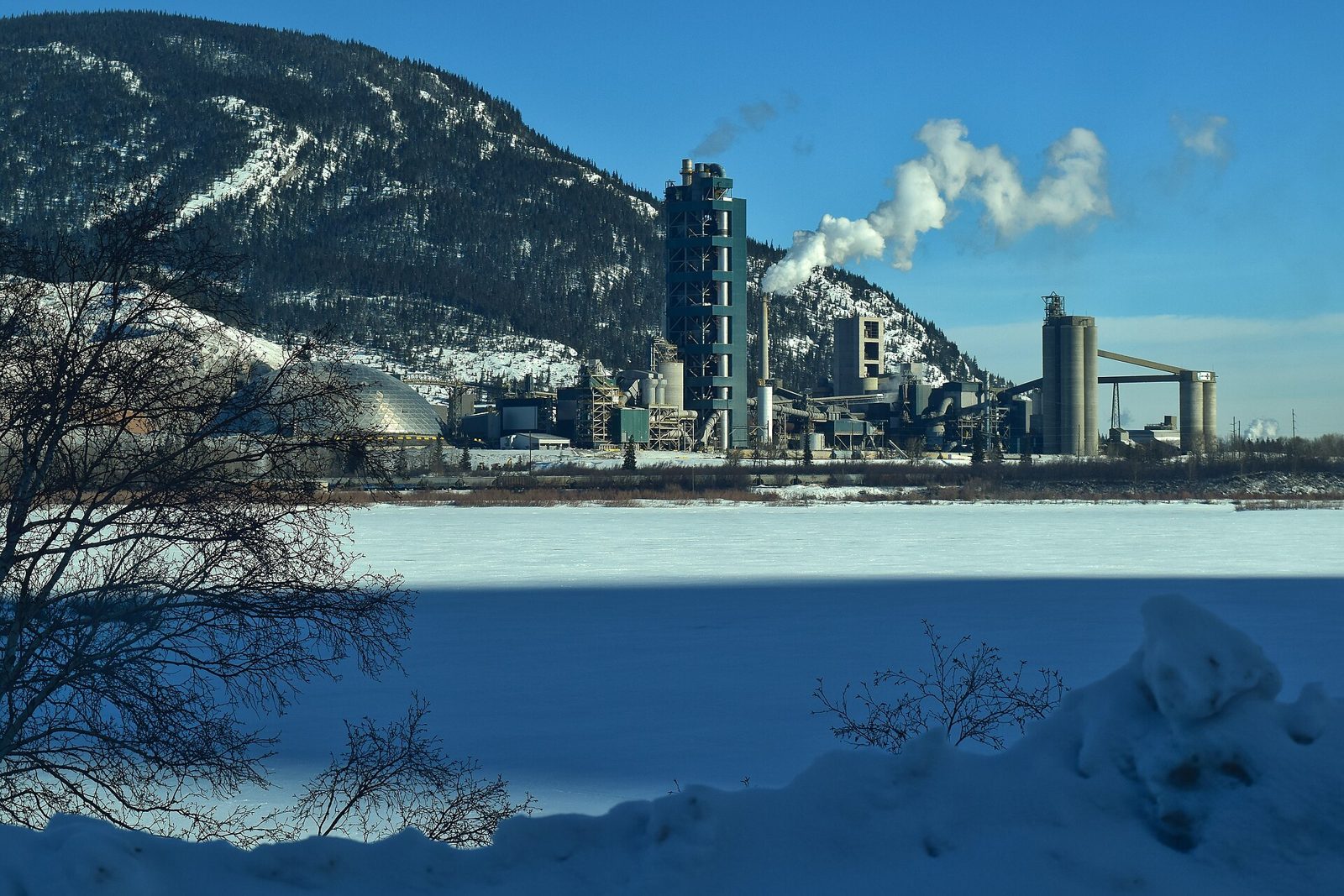
What is the mining and cement industry?
Mining and cement quarries limestone, crushes and grinds it, and burns it at high temperature to make the base material for construction. Large crushers, mills and rotary kilns run day and night amid stone dust and heat, so results depend on how long equipment can run without stopping. Sites handle hard, abrasive materials such as limestone and clinker, so heavy-load bearing and open gear lubrication, high-temperature grease, reducer gear oil and humidity control in storage are spread along the equipment.
At these sites, lubrication fails in two main ways. Grease takes up dust and hardens into something that acts like an abrasive, or it cannot withstand heat and is pushed out of where it is needed. So beyond lubrication performance, how long a product holds at high temperature, how it changes in dusty conditions and whether it meets the conditions fixed in equipment specifications must all be checked. Mining and cement has little room to stop equipment for testing, so what can be changed and how while equipment keeps running must be worked out as well.
- Yearly loss from friction and wear in global mining€210B
- 01
Mining and blasting
Limestone is extracted at the quarry by drilling and blasting. Stone dust enters pins and bushings on excavators and dump trucks, so wear starts where grease is pushed out. Choose grease by load capacity, behavior with dust and greasing intervals.
- 02
Primary crushing
Extracted rock is broken in crushers to a size that can be conveyed. Shock loads break the bearing oil film, and limestone dust getting in speeds wear. Choose grease by extreme-pressure performance and film retention under shock.
- 03
Raw meal blending and grinding
Crushed limestone is blended with additives such as clay and iron oxide and finely ground in vertical mills. Dust and humidity wear conveyor chains quickly. Choose chain and gear oils by tackiness, extreme-pressure performance and viscosity grade.
- 04
Kiln drive clinkering
Preheated raw meal is burned into clinker in a rotary kiln turned by a large open gear and tire rings. Above the dropping point, the thickener fails and the film breaks. Choose open gear lubricant by dropping point, high-temperature oxidation stability and film on flanks.
- 05
Clinker cooling
Hot clinker from the kiln is cooled quickly in the cooler. Grease exposed to radiant heat degrades early. Choose high-temperature grease by dropping point, life under radiant heat and rust protection.
- 06
Cement finish grinding
Cooled clinker is ground with additives such as gypsum in roller presses and ball mills to make finished cement. Ball mill drive open gears are exposed, so dust reaches the flanks. Choose lubricants by load conditions, dust ingress and the specified grade.
- 07
Compressed air system
Compressors send compressed air to kiln burners and pneumatic conveying lines. Long runs at high discharge temperature oxidize the oil and build varnish on rotors and piping. Choose compressor oil by oxidation stability, discharge temperature and miscibility.
- 08
Storage, packing and dispatch
Finished cement is bagged, stored in warehouses and shipped. Cement that absorbs moisture in storage starts to set and forms lumps. Choose humidity control products and packaging by barrier performance, ventilation and shelf life.
Regulation and certification
Mine Safety Act
The Korean law that protects mine workers from harm and prevents mining damage. Hydraulic fluids and lubricants for underground equipment are chosen with fire risk and working conditions in mind.
ISO 4406
The international code for the level of solid particle contamination in hydraulic fluid. Dusty mine and cement sites use it to set cleanliness targets and manage filters and change intervals.
ISO 12922
The international specification for fire-resistant hydraulic fluids. Hydraulic systems where fire risk is high, such as underground equipment and areas around kilns, are assessed for fluids under this standard.
Clean Air Conservation Act
The Korean law that controls dust, exhaust gases and volatile organic compound emissions. Coatings and solvents are reviewed for VOC content, and process chemicals for their effect on emission facilities.
FAQ
Grease on the kiln open gear turns black and hard before long. Why?
Often the dropping point is exceeded, the thickener structure breaks down and cannot hold the base oil, oxidation follows at high temperature, and then dust mixes in and it hardens. In this state it acts like an abrasive rather than a lubricant and grinds the flanks, so adding more grease alone rarely reverses it.
Even after hardened lumps are removed, residue left in the tooth roots can keep the next application from reaching, so some sites insert one flank cleaning before changing products. Open gear work time is concentrated at scheduled maintenance, and missing that window can mean the same condition continues for another cycle even with a higher grade.
To extend open gear greasing intervals, is a higher grease grade enough?
Higher grades sometimes extend intervals, but spray equipment and the thickness left on flanks also come into play, so changing only the product often does not extend them as much as expected. Higher viscosity can also outpace what pumping and spraying can handle.
It is good to check spray nozzle condition and spray width before changing. If grease gathers on one side of the flank, setting spray conditions first tends to bring results faster than changing the product.
Compressor discharge temperature is creeping up. Is changing oil enough?
Oil degradation is often part of it, but the cause of rising temperature is frequently outside the oil. At dusty sites, powder building up on intake filters and coolers raises discharge temperature little by little at the same load.
Oxidized oil builds varnish on rotors and piping, and that layer traps heat and pushes temperature higher. So when changing oil, it is safer to align filter and separator changes to the same time and confirm the new oil is in a family that can mix with the existing one without problems.
Grease in crusher bearings is pushed out quickly. How do we control it?
These spots take repeated shock loads, so the film is often crushed, broken and pushed out. When limestone dust enters where grease was pushed out, wear speeds up and the symptoms overlap.
How much stone dust is mixed into the purged grease is a hint. If it has turned gray, look at sealing and greasing interval first; if the color is unchanged but the amount is large, adjust greasing amount and load conditions.
Can a grade outside the vertical mill reducer spec be reviewed at all?
Many sections, such as vertical mill reducers and separators, have viscosity and consistency grades fixed in specifications. Products outside the grade are usually dropped from review, so substitutes start by choosing within the same grade.
Equipment maker specifications are often set separately for each type of reducer, so even within one plant, vertical mills and ball mills can require different grades. Trying to cover both with one product can fall outside one grade, so it is safer to start substitute reviews by equipment rather than by plant.
Is there data to prepare in advance when bringing chemicals into a mine site?
Limestone quarries are subject to the Mine Safety Act along with the Occupational Safety and Health Act, so safety data sheets are checked before entry. With dust and ignition sources together on site, flash point data is reviewed particularly strictly.
Data applies product by product, so even within the same family, a different flash point can decide whether entry is allowed. Mine areas and cement plant areas sometimes have separate management systems, so for materials going into both, it is better to decide in advance which standard to meet.
A different product got mixed into our grease. Can we leave it as is?
If thickener families differ, the mixed area can soften or harden and break the film. Particularly at spots like open gears where grease sits on the flanks, reduced tackiness after mixing often keeps thickness from holding even with more grease.
For equipment where full replacement is hard, some sites shorten greasing intervals for a while to push the old product out. Kiln drives carry large downtime losses, so they are rarely changed without vendor registration and test history, and building a record in lower-risk sections such as crushing and grinding before moving up is the realistic path.
Cement keeps lumping in storage. Is changing packaging enough?
Packaging sometimes helps, but warehouse humidity and stacking are often involved too. If condensation forms where bags are stacked against floors and walls, lumps form again in the same places even with new packaging.
On the warehouse side, the easier fixes come first. Laying pallets to break contact with the floor and stacking away from walls has reduced condensation in some cases, and if lumping still repeats, packaging barrier performance and shelf life are considered together.