From valve cleaning to preserving idle equipment
Refining and petrochemicals turn crude oil into fuels and crack naphtha into base chemicals such as ethylene and propylene.
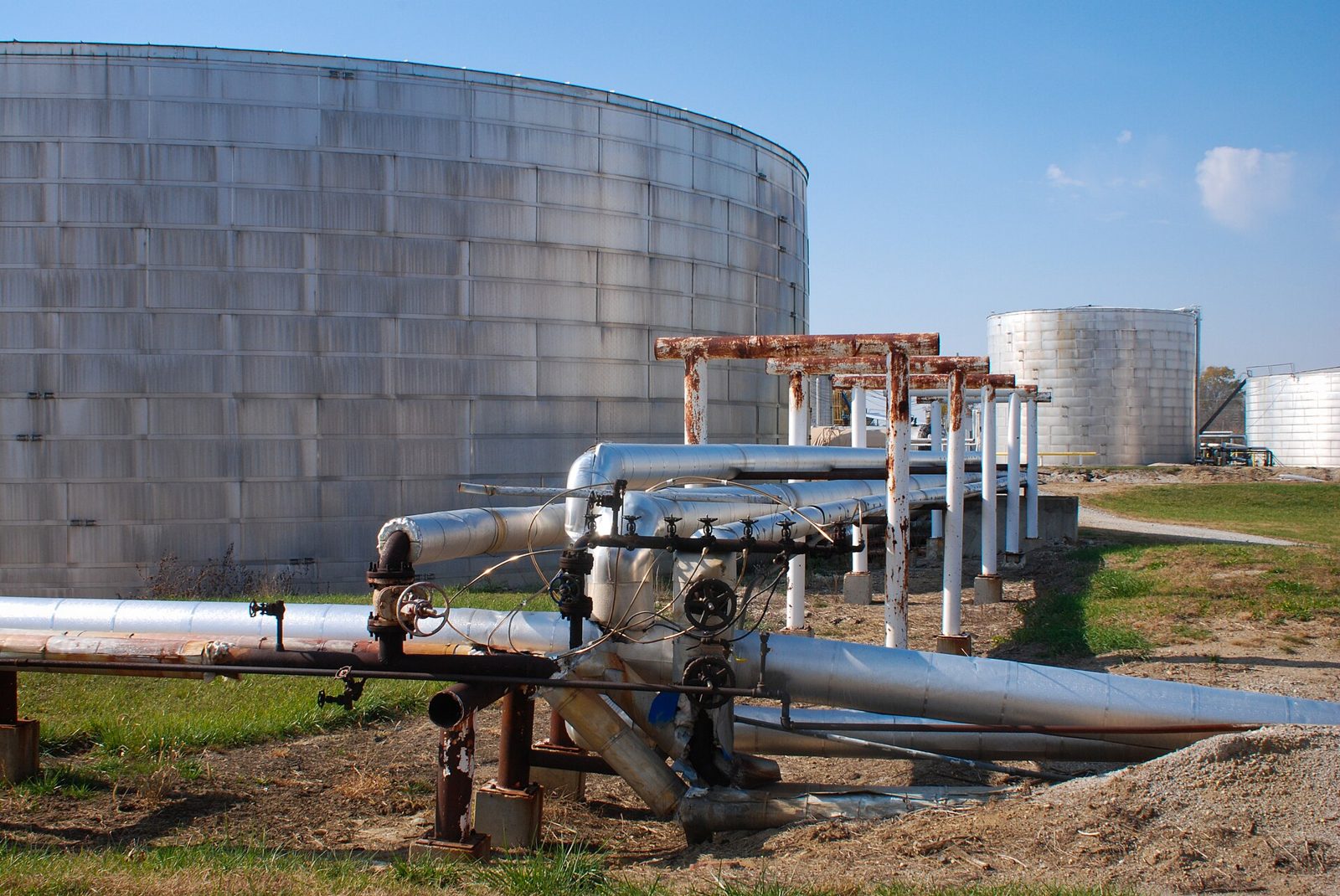
What are refining and petrochemical plants?
Refining and petrochemical plants refine and crack crude oil and naphtha into fuels and basic chemicals. Equipment handles flammable materials at high temperature and pressure, so even small leaks or contamination become safety issues at once, and once built, plants run through many turnaround cycles. Metal equipment such as valves, piping and pressure vessels is cleaned, assembled, tested and put into service, so cleaning and assembly lubrication, rust protection after testing, rotating equipment lubrication and preservation during shutdowns are each needed in different places.
In this industry, corrosion is more often a problem while equipment is stopped than while it runs. Interiors not fully dried, spares stored for long periods and equipment waiting for the next start-up are all such places. So along with rust protection, how far a product reaches, what it leaves at restart and whether its properties are allowed in that area must be weighed together. In refining and petrochemicals, the same product gets different answers depending on which equipment in which area it goes into, so a proposal works only after reading together what condition the equipment is currently in.
- Yearly direct corrosion cost of US refining$3.7B
- 01
Metal cleaning and surface treatment of valves and piping
Oil, oxide film and metal particles are removed from valve, piping and pressure vessel surfaces received from fabricators before assembly. Leftover particles lodge in valve seats and orifices, causing blockage and seat damage. Choose cleaners by cleaning power and effect on base metal.
- 02
Valve and piping assembly with sealing and lubrication
Cleaned equipment is assembled to drawings and sealants and lubricants are applied to valve seats and stems to build the piping system. The wrong sealant makes valves stick or leak. Choose assembly lubricants and sealing grease by friction reduction and contact material compatibility.
- 03
Hydrostatic test and adding rust preventive
Equipment is filled with water or seawater and checked for leaks and deformation at high pressure. Corrosion then progresses inside over time. Choose corrosion inhibitors by protection performance and test water quality.
- 04
Drying and fogging of voids after hydrostatic testing
Water is drained from tested equipment and fogging solution is sprayed into voids where water remains, such as under stems and inside bonnets. Corrosion in damp voids can go unseen until after shipment. Choose fogging solution by protection duration and spray properties.
- 05
Nitrogen filling or VCI film packing
Pressure vessel interiors are filled with nitrogen, or valves that are hard to blanket are wrapped in VCI film for storage. Poor sealing lets inhibitor escape and shortens protection. Choose the packing method by protection period and equipment weight and shape.
- 06
Applying certified lubricants for gas and oxygen lines
Only lubricants certified to standard are applied to valves and fittings on process gas piping and oxygen service piping. Uncertified products can react with the medium or create ignition risk. Choose lubricants by the scope of required certification and medium compatibility.
- 07
Precision lubrication and condition monitoring of compressors, pumps and turbines
Lubricant is supplied to operating gas compressors, centrifugal pumps and turbines, and wear and contamination are managed through routine inspection. Degraded compressor oil contaminates process gas and adds wear. Choose lubricants by viscosity, oxidation stability and contact gas compatibility.
- 08
Mothballing equipment during turnarounds
When equipment stops for turnarounds or shutdowns, surfaces are cleaned, given rust protection and wrapped. Long unpreserved stops bring recleaning and repainting costs before restart. Choose preservatives by maintenance-free protection and removal at restart.
- 09
Corrosion control for critical spares in storage
During long storage of replacement valves and parts, existing rust is removed and parts are fogged and packed. Without climate control or in outdoor storage, corrosion spreads widely. Choose rust preventives by duration per storage condition and repacking intervals.
- 10
Equipment export and long-term storage
Finished plant equipment is shipped by sea to project sites or kept long in domestic storage. Salt and humidity in transit speed internal corrosion. Choose rust preventives and packaging by protection period and container condensation.
Regulation and certification
API 614
The API standard for lubrication, shaft-sealing and control-oil systems in petroleum, chemical and gas service. Compressor and turbine oil systems are designed to it, so lubricants are chosen to suit the system.
ATEX and IECEx
The EU directives and the international certification scheme for equipment in explosive atmospheres. In these zones the flash point of cleaners and solvents and the rating of application equipment are checked together.
Process Safety Management (PSM)
The scheme under Korea's Occupational Safety and Health Act that requires process safety reports and management of change for hazardous plants. Changing a process chemical calls for a risk review under management of change.
ISO 12944
The international standard for protective paint systems on steel structures, defining corrosivity categories and durability. Coatings for piping and storage tank exteriors are specified for the corrosivity category of the site.
FAQ
Rust forms inside days after hydrostatic testing. Should we add more inhibitor?
Raising concentration can delay it, but water and salt left after draining are often the real cause. With seawater-tested equipment in particular, if rinsing and drying fall short, rust repeats in the same place even at higher inhibitor concentration.
Seeing where rust starts splits the path. If it gathers at low points that drain poorly and around voids, look first at drying and fogging; if it spreads evenly across the interior, look first at test water management and inhibitor specification.
How do we find where water remains inside a valve?
It is often in voids off the drain path, such as under the stem or inside the bonnet. Drawings alone do not show it well, so some sites disassemble one valve of the same type and check directly where water remains.
Where water remains tends to repeat by type, so some sites fix a list of fogging points for each valve type. Setting it from drawing review alone tends to miss where water actually collects, and the locations of rust on valves after shipment often become the basis for filling in that list.
Is it all right to use VCI film packing instead of nitrogen blanketing?
Film packing is often used for valves that are hard to blanket with nitrogen due to shape and weight. Film, however, performs only while the seal holds, so protection shortens greatly once the package tears or is opened.
It is good to decide in advance whether it will need to be opened during storage. For items opened often for inspection or audits, repacking procedures must be planned as well to fill the period.
What should we look at to time compressor oil changes by analysis?
Oxidation, viscosity change, water and wear metals are often looked at together. A single item is hard to judge, and the values become meaningful when you look at how they have changed over time on the same equipment.
Where the sample is taken affects results as much as the analysis items. Unless samples are taken from the circulating line at the same point under the same conditions, values waver and the trend cannot be read, and without a baseline recorded right after a change, a single result is often hard to judge as normal or not.
What should we check first to bring a cleaner into an explosion-proof area?
Flash point and static conditions come first. Most process areas are designated explosion-proof, so whether the same product can be brought in depends on which zone it enters, and aerosol forms are restricted in some places.
Checking the work area classification and hot work permit procedure first when reviewing products puts things in order. It reduces cases where performance comparison is finished only to be blocked and sent back at entry.
We hear oxygen piping can't take just any lubricant. What should we check?
Products that have passed separate compatibility tests to keep ignition risk low on contact with oxygen are used. Ordinary grease can react in oxygen-rich conditions, so even good performers are not used in this section as a rule.
Certification attaches to the product but comes with conditions. If pressure or medium range differs from the certification conditions, the same product is hard to use there as is, and if other oil gets mixed in during piping assembly, using a certified product alone does not meet safety conditions.
If the shutdown runs longer than expected, how do we maintain rust protection?
Shutdowns often run longer than planned. If maintenance-free protection is chosen to match the planned shutdown exactly, a delay of a month brings recleaning and repainting, so it is safer to base preservatives on a range above the planned period.
Setting interim inspection points in advance is also used. Checking packaging and surfaces at set intervals and retreating spots with damaged film or water droplets first stops the problem before it becomes full rework. As inspection records build up, setting periods for the next shutdown also becomes easier.
Spares in the warehouse have already rusted. Can rust protection go on over it?
Removing existing rust comes first. Covering rust with a protective film lets corrosion continue underneath, which only delays it and often shows up more widely later.
After rust removal, whether neutralizing and drying are complete decides the result. Remover ingredients left on the surface can restart corrosion under the new film, so many sites manage rinse water condition and drying time together.