From ingot wafering to packaging
The semiconductor industry manufactures the core components of every electronic device, from computers and smartphones to data centers and vehicles.
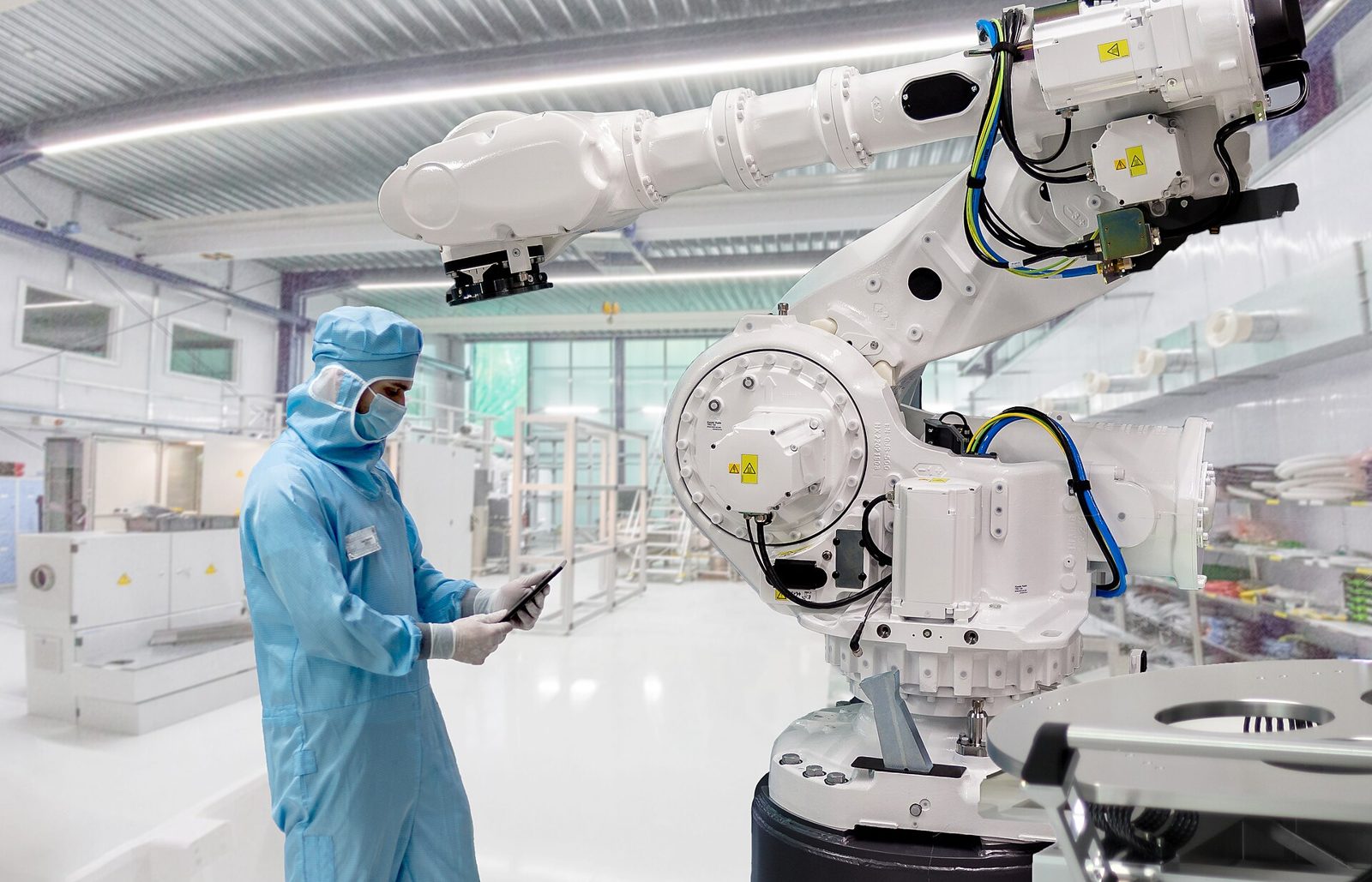
What is the semiconductor industry?
Semiconductor manufacturing builds chips by stacking fine circuits layer by layer on silicon wafers. As line widths have come down to nanometers, a single particle or trace metal ion left on the wafer surface now decides how a device behaves. Through wafering, patterning, thin film deposition, planarization and back-end encapsulation, the chemistry needed changes at each stage: polishing, cleaning, residue removal, vacuum equipment lubrication and rust protection for shipping.
On a semiconductor line, problems show up in yield. Yield is eroded not by visible defects but by small amounts of contamination and residue building up, so tracing back to the cause is difficult. That is why chemicals must be checked and recorded lot by lot, not only for performance but also for purity, residue and changes in raw materials and refining conditions. Semiconductors are not a one-delivery business; line conditions and validation data are aligned together over several years.
- Fab yield loss from particle contamination75%
- 01
Wafer slicing, lapping and polishing
High-purity ingots are sliced thin, then lapped and polished to set flatness and surface purity. Trace process chemicals left on the surface show up as defects later. Choose process fluids and cleaners by processing performance and metal ion and particle content.
- 02
Photolithography with resist coating, exposure and development
Photoresist is applied and exposed, then developer selectively removes it to form patterns. Contaminated or degraded chemicals directly cause pattern defects. Choose chemicals by resolution and ultra-high-purity grade.
- 03
Dry plasma and wet etching
Exposed films are removed with plasma or wet solutions to form circuit patterns. Contaminated etchant lowers repeatability, causing over-etch or undercut. Choose chemicals by etch performance and selectivity to underlying films.
- 04
Post-etch cleaning
Polymer residue and leftover resist from etching are removed on a separate line. Weak cleaning lets residue reattach, and aggressive chemistry corrodes metal layers. Choose a cleaning solution by residue removal and metal layer damage.
- 05
PVD and CVD thin film deposition
Metal and insulating films are deposited by physical or chemical vapor deposition. Uneven thickness or particles cause rework. Choose precursors and chamber cleaners by film quality, purity grade and byproduct handling.
- 06
Chemical mechanical polishing (CMP)
Slurry and pads remove material by combined chemical and mechanical action to planarize multilayer interconnects. Agglomerated slurry particles or lagging pad conditioning cause scratches and dishing. Choose slurry by removal rate and particle size distribution.
- 07
Post-CMP cleaning
Slurry particles, metal ions and organics left right after polishing are removed by wet and dry methods. Reattached particles or leftover ions lower multilayer interconnect yield. Choose cleaning solutions by removal performance and redeposition control.
- 08
Vacuum chamber and pump lubrication
Bearings and valves in etch and deposition tools are lubricated and pumps filled with dedicated oil to hold vacuum. Volatile components from lubricants lower the vacuum. Choose oil types by lubrication performance, outgassing and heat resistance.
- 09
Diffusion and anneal heat treatment
Heat diffuses dopants or drives crystallization. Temperature variation across the wafer shows as spread in device characteristics. Choose heat transfer oils and coolants by thermal performance and temperature range.
- 10
Back-end packaging
In the back end, chips are attached to substrates, wire bonded, encapsulated in epoxy, singulated and tested. Moisture absorbed before molding expands in reflow, causing delamination. Choose products by bond strength and humidity control in storage before molding.
Regulation and certification
SEMI standards
International standards for semiconductor equipment and materials published by SEMI. Process chemicals are graded under the SEMI C series, which sets their purity and metal impurity limits.
ISO 14644
The international standard series for cleanroom cleanliness classes and their control. Lubricants and cleaners used inside are checked for particles against the class and for volatiles against the molecular contamination part, ISO 14644-8.
SEMI F21
A SEMI standard that classifies airborne molecular contamination in cleanrooms into acids, bases, condensables and other groups. Volatiles from equipment lubricants and sealants can add to it, so low-volatility products are chosen.
Chemicals Control Act (Korea)
Korean law governing facilities, business permits and accident preparedness for hazardous chemicals. Etching and cleaning chemicals classed as hazardous must follow its handling and facility requirements.
FAQ
Back-end processes still catch particles after cleaning. Where do we look first?
The cause is more often in rinsing and drying than in the cleaning solution itself. Detached particles can reattach in the bath or stay on the surface while drying is delayed.
Rinse water quality and drying delay remain even when the cleaning solution changes, so in many cases only the solution is swapped and the same values repeat. On the other hand, raising cleaning power can damage underlying metal layers and cause different problems in interconnects. On lines with a long wait between cleaning and the next process, it is better to address that stage first.
Can we swap the tool maker's specified vacuum pump oil for another product?
Sometimes, but check the equipment warranty conditions first. In some cases the warranty is not kept outside the specified oil type, and identifying the cause takes longer when a problem occurs.
If vacuum drops while running off-spec oil, it takes time to tell whether the pump or the oil is the cause, and the tool may be down in the meantime. So even when switching, many start with equipment out of warranty or spare pumps to build outgassing and high-temperature durability data.
Scratches increased after CMP. Do we need to change the slurry?
It may be the slurry, but it is better to check pad conditioning and the supply piping as well. Slurry particles agglomerating in piping or tanks and arriving as large lumps often show up as scratches.
One way to check is to look at scratch length and direction. Long scratches in a consistent direction point first to large particle intake; short, scattered ones point first to pad condition and pressure settings.
Does slightly changing a cleaning solution or slurry mean validating again?
Often, yes. Ingredient registration and residue-free validation are tied to composition, so even a trace ingredient change means preparing new data.
Revalidation needs both test volume and line availability, so even with all data ready, a product can miss a quarter if no evaluation window is available. Trace ingredient changes can also come quietly from the supplier's raw material situation, so setting a prior notice condition for composition changes at the contract stage keeps things simpler later.