From cryogenic turbopumps to oil-free operation in vacuum
Korea's space industry covers launch vehicle manufacturing, satellite development and production, and space communications and earth observation services.
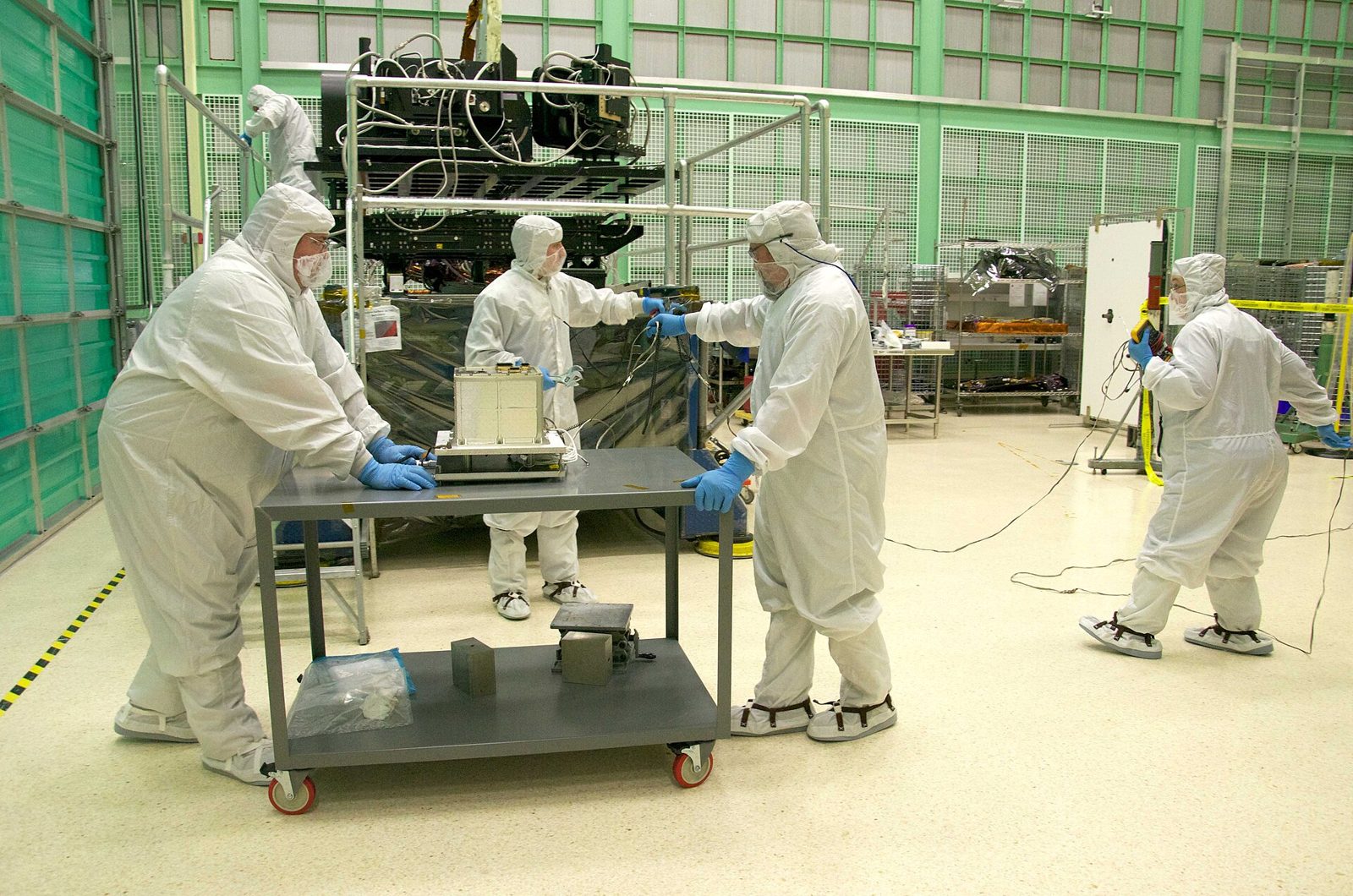
What is the space industry?
The space industry makes launch vehicles, satellites and the precision parts that go into them. Parts must survive heavy vibration and loads at launch, then keep working without maintenance in vacuum, sharp temperature swings and radiation once in orbit. Because materials such as aluminum, titanium and Invar are handled to very fine tolerances, precision cleaning, surface treatment, structural bonding and lubrication that holds up in vacuum and cryogenic conditions are at the center of the work.
In space, equipment cannot be serviced once it is launched. Contamination left on a surface or substances released from a bond line can cloud optics or seize mechanisms. So beyond chemical performance, the data must show how much a material releases in vacuum, how it reacts with other materials and what remains after cleaning. In space parts manufacturing, the first question is not which product was chosen but whether there is data showing how it behaves in the actual operating environment.
- US space-part quality issues tied to materials20.6%
- 01
Precision machining of launch vehicle and satellite parts
Aluminum, titanium and Invar are machined into engine casings, fuel tanks, satellite structures and brackets. Heat left in the material warps thin structures out of tolerance. Choose cutting fluid by cooling-lubrication balance and material compatibility.
- 02
Precision cleaning and degreasing
Cutting fluid, coolant and metal fines are removed after machining to prepare for surface treatment. Fine particles left behind can lead to engine failure. Choose cleaner by cleaning power, rinse residue and cleanliness checks.
- 03
Conversion coating and anodizing surface treatment
Chemical conversion coating and hard anodizing are applied to gain both corrosion resistance and electrical grounding. An uneven film leads to local corrosion, and hydrogen entering the material can cause embrittlement cracking. Choose chemicals by film thickness and grounding conductivity.
- 04
Structural joining and bonding
Satellite panels and composite structures are joined with structural adhesive in place of bolts. Incomplete cure delaminates bond lines, and cracks from low-temperature brittleness remain as irreversible damage in orbit. Choose an adhesive by strength, cure conditions and outgassing data.
- 05
Sealants and electrical potting
Fuel systems are sealed and electronic parts and connectors potted against vacuum and radiation. Substances released after cure settle on lenses and sensors and cloud optics. Choose materials by sealing, insulation and cold flexibility.
- 06
Conformal coating of electronics
A thin coating is applied over circuit boards and electronic units for moisture protection and insulation. Bubbles or uneven thickness break down insulation, and substances released in vacuum contaminate optics. Choose a coating by thickness uniformity, insulation and outgassing data.
- 07
Precision lubrication of bearings, gears and actuators
Reaction wheels, gyroscopes, screws, solar array drives and optical gimbals are lubricated. Lubricant evaporating in vacuum outgasses and thins the film and speeds wear. Choose lubricant by friction and wear performance and vacuum evaporation.
- 08
Electrical contact and connector protection
Electrical connectors, slip rings and switch contacts are lubricated and protected from corrosion. Oxide or fretting wear raises contact resistance. Choose a protectant by contact resistance stability, vacuum compatibility and non-volatility.
- 09
Cryogenic lubrication of turbopumps and combustion systems
Bearings and seals in launch vehicle engine turbopumps and ground test facilities are lubricated under cryogenic conditions. Stiffened oil seizes bearings, and lost lubrication leads to rotor failure. Choose lubricant by cold viscosity and thermal vacuum stability.
- 10
Rust protection for long storage and transport
Part surfaces are protected from corrosion through storage and transport until launch. A rust preventive that releases substances in orbit contaminates lenses and sensors. Choose rust preventives by protection period, outgassing data and removal before launch.
- 11
Pre-launch environmental testing
Vibration, acoustics, thermal vacuum and radiation exposure are reproduced to confirm part integrity. Facility lubricant that evaporates can contaminate the chamber and parts. Choose chamber fluids by lubrication, vacuum compatibility and vapor pressure.
Regulation and certification
ASTM E595
A test method that measures mass loss and condensable volatiles released by materials in vacuum. Lubricants, adhesives and coatings used near satellites and optics are screened on these results.
NASA-STD-6001
A NASA standard for testing the flammability, offgassing and oxygen compatibility of materials. Lubricants and sealants used in crewed cabins or oxygen systems must be materials that have passed these tests.
ECSS-Q-ST-70
The European space standard (ECSS) for materials, mechanical parts and processes. Lubricants, adhesives and coatings used in space hardware must be entered on the declared materials list and approved.
AS9100
The quality management standard shared across aviation, space and defence supply chains. Chemicals in launcher and satellite part processes also fall under its traceability and change-control requirements.
FAQ
If a product has an outgassing test report, can it be used for space as is?
A report is measured under set test conditions, so behavior can differ if the temperature and vacuum level where the part sits are different. Even if total mass loss and collected volatile condensable materials are within limits, that alone usually does not settle adoption.
If the cure conditions of the test sample differ from the shop floor, the same product can give different values. For thick applications or lines that shorten cure time, data from samples made under those conditions is needed separately, and where a satellite maker runs its own approved list, listing is a requirement apart from the report.
How do we pick grease or solid film lubrication for satellite mechanisms?
It often depends on speed, load and number of operations. Fluid lubrication suits places with frequent rotation under load, and solid film suits places with few operations where contamination is a particular concern.
Using both within one satellite is common. Reaction wheels with frequent rotation get fluid lubrication, while deployment mechanisms that move only a few times get solid film, so each mechanism is set differently. Fluid lubrication, however, brings the need for evaporation data in vacuum, and solid film brings the chance of wear debris reaching optics.
Cleaned parts keep failing residual particle tests. Will a different cleaner help?
The cause more often lies in rinsing, drying and the work environment than in the cleaner. There are cases where cleaning itself is done but particles reattach from rinse water, drying air or packaging.
Rinse water, drying air and packaging are often the actual last source of contamination. The longer parts sit in the air after cleaning, the more particles reattach, and in some cases shortening the wait between cleaning and packing alone changed inspection results. Reviewing a cleaner change makes more sense after this stage is sorted out.
Will switching to chrome-free surface treatment lower corrosion resistance?
It tends to vary with conditions. Some formulations show similar levels under the same test conditions, while others have a narrow pretreatment window that widens variation on the shop floor.
It is good to set pretreatment conditions at the same time as the switch. With insufficient degreasing and etching, differences show more in chrome-free films, so defining immersion times per material and bath control ranges first makes the comparison accurate.