From ultrapure makeup water to cooling tower blowdown
Korea's thermal power generation divides into coal-fired and LNG combined-cycle plants.
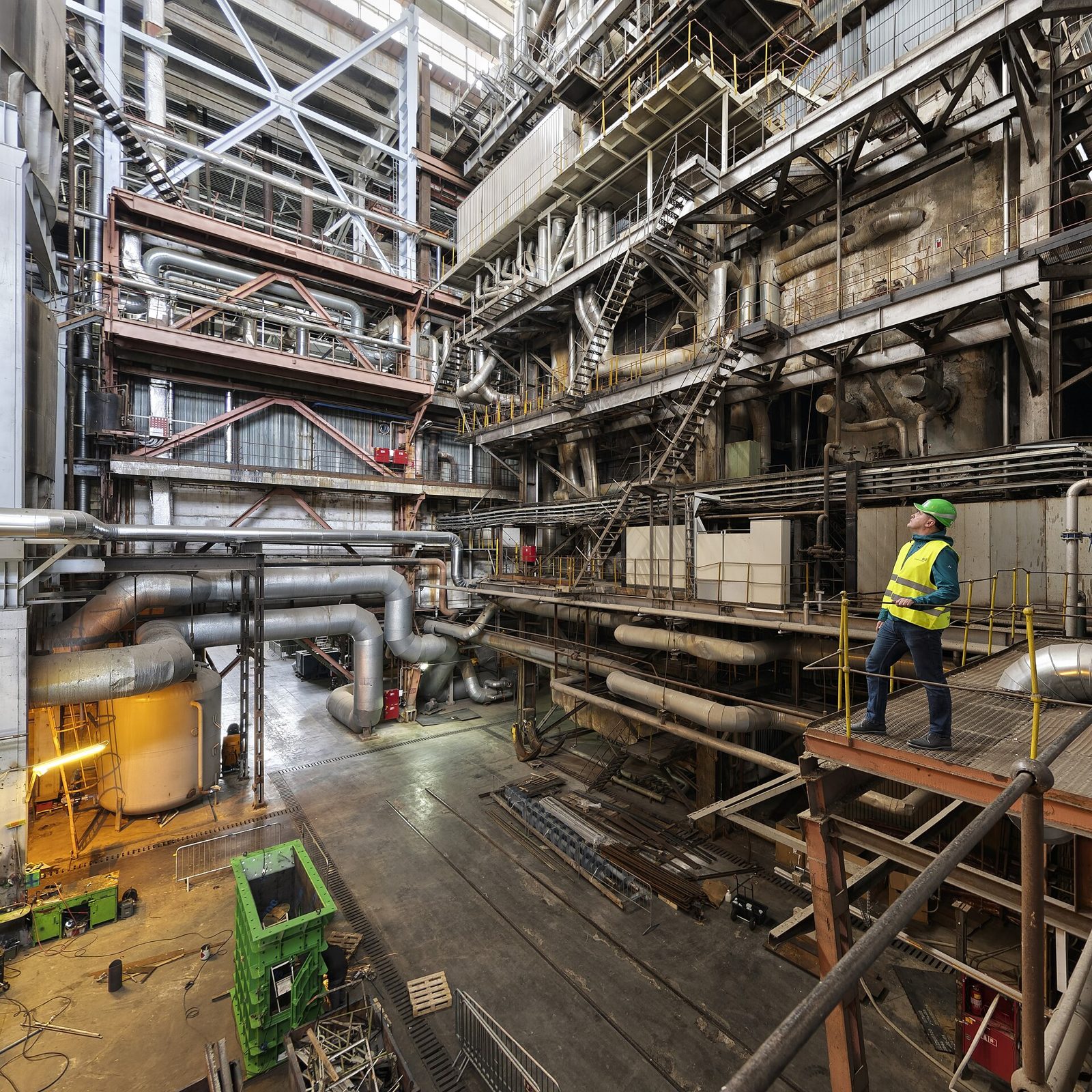
What is thermal and combined cycle power generation?
Thermal and combined cycle power generation produces electricity by driving turbines with high-temperature, high-pressure steam and combustion gas from burning fuel. Plants must keep planned operating schedules, and unplanned outages are costly, so the condition of water and oil circulating through the systems must be held constantly. Water circulates through boilers, piping, condensers and cooling towers while oil circulates to turbine bearings, so water purification, deaeration, pH adjustment, scale and microbial control and turbine lubrication run along the systems.
The condition of feedwater and cooling water shows only as numbers on instruments, so nothing looks wrong on the outside even while pipe walls thin. Oxygen and trace impurities left in feedwater attack metal, and in cooling systems, scale and biofilm gradually reduce heat exchange performance. Whether a program fits system materials and operating pressure, and whether it can be used within discharge standards, weigh as heavily as the chemical's own performance. In thermal and combined cycle generation, data read from system condition is the basis for any program, so cooperation starts with looking at water and oil quality together.
- US coal-plant forced outages caused by boilersUp to 54%
- 01
Makeup water pretreatment by UF, RO and ion exchange
Industrial water is purified by filtration and reverse osmosis, then brought to ultrapure levels by ion exchange or electrodeionization. High hardness and silica foul RO membranes. Choose pretreatment chemicals by removal performance, raw water quality and membrane compatibility.
- 02
Condensate purity control and recirculation
Condensate from the condenser is monitored for purity and dosed before returning as makeup. Small condenser tube leaks let chlorides and sulfates in. Choose chemicals by corrosion inhibition, monitoring interference and material fit.
- 03
Boiler feedwater deaeration
Dissolved oxygen left in feedwater is removed to prevent oxidation and corrosion in the system. Overdosing scavenger can dissolve the magnetite film. Choose oxygen scavengers by removal speed and whether copper alloys are present.
- 04
Feedwater pH control and flow-accelerated corrosion suppression
Feedwater pH in the economizer and low-pressure evaporator is held within the control range to suppress iron and copper dissolution. Below range, piping thins first at high-velocity bends and ruptures. Choose pH control chemicals by pH holding power and system materials.
- 05
Boiler evaporator water phosphate treatment
Phosphate is added to boiler water in intermediate and high-pressure evaporator circuits to keep alkalinity. Chlorides concentrating under iron oxide start localized corrosion. Choose boiler treatment chemicals by the concentration range set by operating pressure before alkalinity holding power.
- 06
Turbine lubrication in operation
Lubricating oil is circulated to turbine bearings and governor systems. With frequent starts and stops, oxidation products harden into varnish on servo valves. Choose turbine oil by viscosity and oxidation stability.
- 07
Condenser cooling water treatment
Turbine exhaust steam is condensed with seawater or cooling tower water while scale, corrosion and microbial fouling are controlled. Shellfish and algae at tube inlets lower condensing performance. Choose chemicals by scale control and the tube and tubesheet material combination.
- 08
Cooling tower cycles of concentration and blowdown treatment
Cooling tower cycles of concentration are managed and blowdown is discharged or reused. Raising cycles raises silica and calcium, making chemical control harder. Choose chemicals by treatment performance and scale onset.
Regulation and certification
KEPIC
The Korean power industry code for the design, manufacture, construction and maintenance of plant equipment. Coatings, sealants and cleaners used in maintenance are chosen to meet its material conditions and record-keeping requirements.
ISO 8068
The international specification for lubricating oils for steam and gas turbines. Turbine oils are selected after checking that oxidation stability, rust protection and air release meet the grade in this standard.
ASTM D4378
The ASTM practice for monitoring mineral turbine oils in service in steam and gas turbines. Periodic checks of oxidation, contamination and water show when the oil should be topped up, purified or replaced.
Water Environment Conservation Act
The Korean law that controls water pollutants in wastewater discharged to public waters. Chemicals for equipment cleaning and cooling water treatment are chosen with the wastewater treatment load and discharge limits in mind.
FAQ
We changed turbine oil recently, but servo valves keep sticking. Is it the oil?
Varnish is a likely cause. In units that start and stop often, oxidation products can bake into narrow gaps in control systems, and in that case components left in the system often keep acting even when the oil is new.
What makes varnish difficult is that it does not leave with an oil change. Components stuck to system walls and narrow gaps can redissolve into new oil and build up in the same places, so many set the system cleaning method and outage period in advance along with the oil change. Disassembling and cleaning only the servo valves while leaving the system as is tends to just widen the interval before recurrence.
Feedwater iron is creeping up. Where should we look first?
It is best to start by checking for sections where pH has dropped below the control range. Rising iron is often read as a sign that protective oxide on pipe surfaces is dissolving now, and it tends to appear first at high-velocity bends and low-pressure evaporator inlets.
Splitting values by sampling point narrows the range. If values are high only in one section, look at that section's material and velocity; if the whole system has risen, suspect pH control first. Wall thinning cannot be reversed once it occurs, so it is safer to treat the rising trend itself as the signal.
If corrosion persists despite oxygen scavenger, should we raise the dose?
Increasing is not always the answer. Overdosing makes conditions too reducing, which can dissolve the magnetite film and accelerate flow-accelerated corrosion.
The direction depends on whether the system contains copper alloys and whether cation conductivity stays low. If conditions fit, oxygenated treatment, which reduces scavenger and adds a trace of oxygen, can be the better fit, so it is good to sort out system configuration before adjusting dose. In systems where dosing has been raised for a long time, oxide condition has already changed, and some take a stepwise path when reducing.
In seawater cooling, only the tubesheets degrade fast. Can chemicals fix it?
Chemicals alone often cannot fix it all. In combinations with a large potential difference, such as titanium tubes and carbon steel tubesheets, galvanic corrosion is also at work, so changing only the corrosion inhibitor tends to just slow the rate.
On the tubesheet side, conditions from the material combination often come before chemicals. In combinations with a large potential difference, stronger corrosion inhibitors only slow progress, and raising residual chlorine to control microbes can also increase tubesheet corrosion. That is why the usual order is to sort out the tube and tubesheet material combination first and then set the chemical specification.
What is involved in switching our boiler treatment chemical to another product?
In most cases chemicals must pass both the power company's vendor registration and plant-specific specification listing before dosing. Even within one company, system materials and operating pressure differ by unit, so specifications are often not unified.
Even within the same company, each unit has its own specification, so a chemical approved on one unit may have to go through the process again on the unit next door. If the specification names the chemical, the process starts with listing; if it specifies only composition or grade, review tends to proceed within that range. Which unit hosts the trial dosing volume largely decides the schedule.
Water seems to have gotten into the turbine oil. Can we keep using it?
It depends on the degree of emulsification. If water separates and settles at the bottom, it is often handled by draining and filtration, but if emulsification has progressed and the oil stays cloudy, the film breaks down and bearings can be affected.
Where the water came from matters too. Steam ingress and oil cooler leaks differ in amount and rate, so the fix differs: for the former, seals and vent systems; for the latter, cooling water differential pressure. If emulsification repeats, rust and antifoam additives are consumed first even after water is removed, and the same oil may not hold up as before.