From ingot slicing to 25 years of panel maintenance
The solar industry installs and operates generation infrastructure that converts sunlight into electricity with photovoltaic modules.
What is the solar industry?
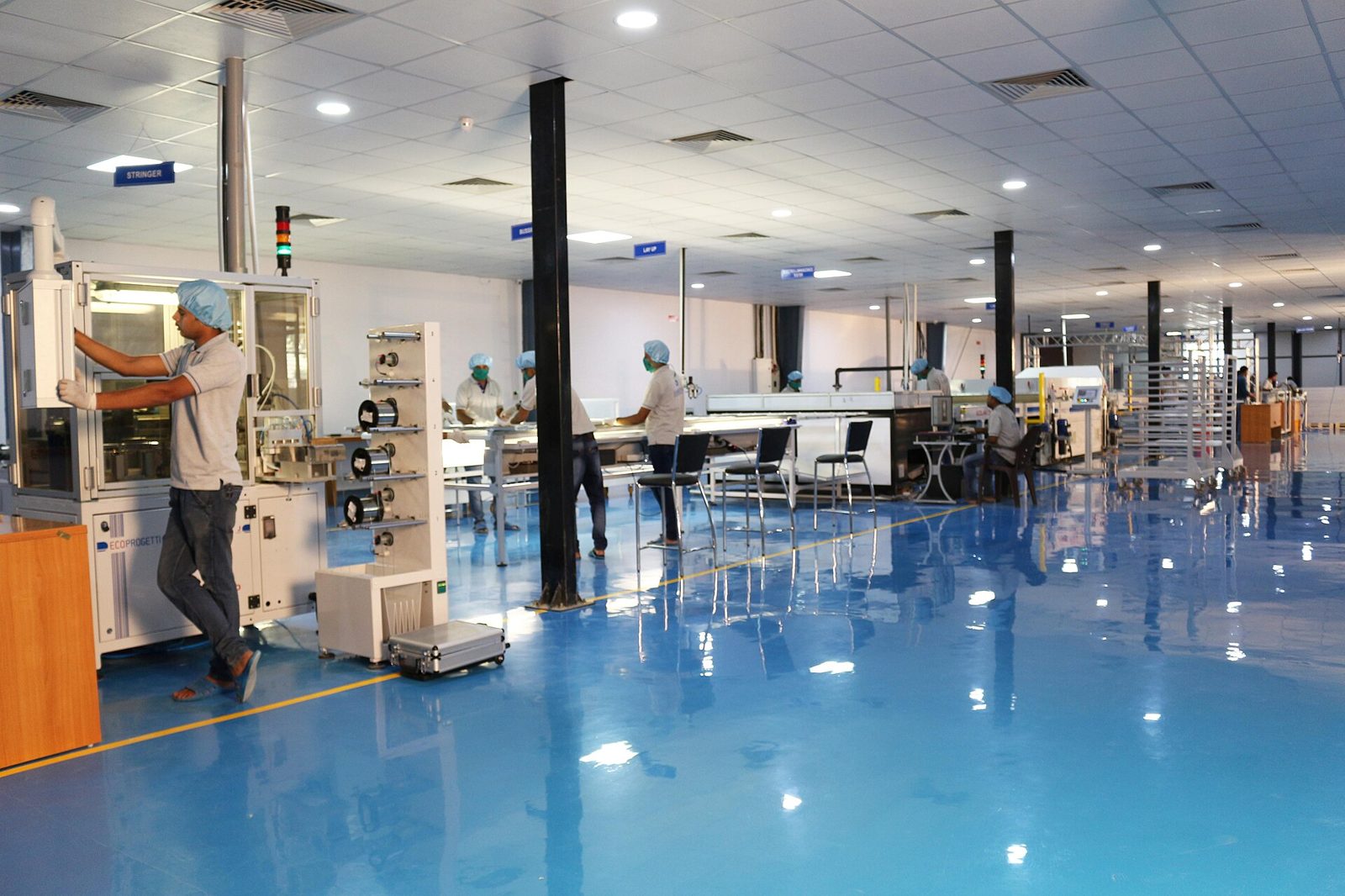
The solar industry makes cells from silicon wafers, assembles them into modules, and builds and operates generating facilities with those modules. Modules must stay in place for over twenty years fully exposed on roofs and fields, so care after installation drives output as much as cleanliness and sealing in manufacturing. Silicon, glass and aluminum frames are handled together, so ingot slicing and frame machining lubrication, cell cleaning, sealing and rust protection, drive lubrication and panel cleaning are each required at different stages.
In solar, what cuts output is concentrated on surfaces and contacts. Dust and bird droppings on panels block light, and outdoor wiring, connectors and tracker drives are continuously exposed to moisture and temperature change. Whether a product damages glass and coated surfaces, how long it holds up outdoors and whether it is safe near high-voltage equipment weigh as much as cleaning power or lubrication performance. Solar spends far more time after installation than in manufacturing, so reading site location and contamination conditions and setting maintenance methods together follows.
- Yearly global solar revenue lost to soilingAt least €3-5B
- 01
Ingot slicing for wafers
Diamond wire saws cut silicon ingots into thin wafers. A wire break loses every wafer caught on that line. Choose cutting fluid by cooling and lubrication balance, dispersion of silicon fines and fluid life.
- 02
Wafer and cell cleaning
The saw damage layer is removed, surfaces are textured and contaminants from cell processing are washed off. Uneven texture changes reflectance by cell and splits output grades. Choose chemicals by reaction speed, uniformity and reaction heat control.
- 03
Module assembly with lamination and frame machining
Cells are connected and laminated with encapsulant and backsheet, and protective glass and aluminum frames are attached. Moisture entering through weak seals at the frame and junction box lowers output. Choose sealant by sealing performance, cure conditions and UV resistance.
- 04
Panel import and storage
Imported and domestic modules arrive at port and go into warehouses. In coastal warehouses, salt corrodes frames and metal parts. Choose rust preventives and packaging by protection period, salt and humidity.
- 05
Installation and mounting
Aluminum rails are erected, modules are fixed, and wiring and inverters are connected. Galvanic corrosion starts where aluminum rails meet stainless fasteners. Choose anti-seize and fixing agents by fastening performance and outdoor durability.
- 06
Tracker drive lubrication
Grease and gear oil are filled into tracker slew drives, gearboxes and motor drives and topped up periodically. Hardened or washed-out grease speeds tooth wear, which shows as tracking error. Choose lubricants by cold flow, load capacity and water resistance.
- 07
Commissioning and performance verification
Generation is checked, capacity measured and inverter control tested. Measuring with contaminated panel surfaces gives low performance. Choose cleaners and contact cleaners by cleaning power, residue on glass and effect on anti-reflective coating.
- 08
Regular panel cleaning
Dust and bird droppings are removed from panel surfaces periodically and contamination is checked. Strong alkaline or abrasive cleaners damage the anti-reflective coating on glass. Choose cleaners by contaminant removal, surface damage and rinsability.
- 09
Fault diagnosis and repair
Infrared cameras find hot spots, insulation resistance is measured and faulty parts are replaced. Mixing connectors from different makers raises contact resistance, leading to heat and arcing. Choose contact chemicals by cleaning, protection and insulation.
Regulation and certification
IEC 61215
The test standard for design qualification and type approval of terrestrial PV modules. Sealants and adhesives are certified as part of a tested build, so changing a material may require retesting for damp heat and thermal cycling.
IEC 61730
The international standard for the electrical, mechanical and fire safety of PV modules. Materials for bonding junction boxes and sealing frames are certified as part of a build that meets its insulation and flammability requirements.
RoHS
The EU directive restricting hazardous substances such as lead and cadmium in electrical and electronic equipment. Fixed-installation PV panels are excluded, but materials used in inverters and similar electrical equipment are checked against it.
Chemicals Control Act
The Korean law setting rules for handling, storing and transporting hazardous chemicals. Cell-process etchants and cleaning solutions that count as hazardous chemicals are used only where its facility standards and permits are in place.
FAQ
Some sites clean panels with water only. Do we really need a cleaner?
It depends on the nature of the contamination. Dry dust often comes off with water and a brush, while bird droppings or oily contamination often do not come off with water alone.
Strong alkaline and abrasive products can damage the anti-reflective coating, so avoiding them here is safer. Even without cleaner, washing with hard water leaves water spots as it dries and takes more work, and spraying cold water in midday heat thermally shocks the glass. Work hours and water quality tend to decide results as much as product choice.
White powder is appearing at rail fastenings soon after installation. Why?
Galvanic corrosion starting where aluminum rails meet stainless fasteners is the likely cause. It tends to appear faster at coastal or humid sites.
Checking whether the powder gathers only around bolt heads or spreads across the rail surface tells them apart. If it gathers at contact faces, look at contact surface treatment and anti-seize at installation; if it spreads widely, look at surface condition and site conditions first.
Output is not what it used to be. Will cleaning alone restore it?
If surface contamination is the cause, cleaning often brings much of it back. But if invisible causes such as potential-induced degradation or cell micro cracks are mixed in, they remain after cleaning.
Comparing output before and after cleaning under similar irradiance splits the path. If recovery is small, it is good to look at infrared thermography and insulation resistance as well; if output is low only on certain strings, check connections first.
Does a different tracker lubricant affect the equipment warranty?
Equipment with a specified standard is normally lubricated within it, and products outside it can become an issue under warranty conditions.
Using products off the approved list can make lubrication the first suspect in failure analysis. So even when changing, many start with trackers past warranty to build records. For equipment from overseas makers, preparing compliance data in both Korean and English shortens the process.