Customer storiesAutomotive and defense parts machining shop
One coolant across 100-plus machines for an automotive and defense parts machining shop
- Customer
- Automotive and defense parts machining shop
- Industry
- Automotive Parts, Defense
- Product group
- Metalworking Fluids (MWF)
- Process · Material
- CNC machining on MCTs and NC lathes (milling, turning, drilling) · Stainless steel (turbochargers), cast iron (hydraulic parts), aluminum alloys (defense parts)
A parts maker that machines stainless steel for turbochargers, cast iron for hydraulic components and aluminum for defense parts under one roof set out to run its 100-plus machines on a single coolant. The customer and our team separated the conflicting material requirements by working principle and consolidated on one biostable semi-synthetic fluid built on a vegetable-based synthetic ester.
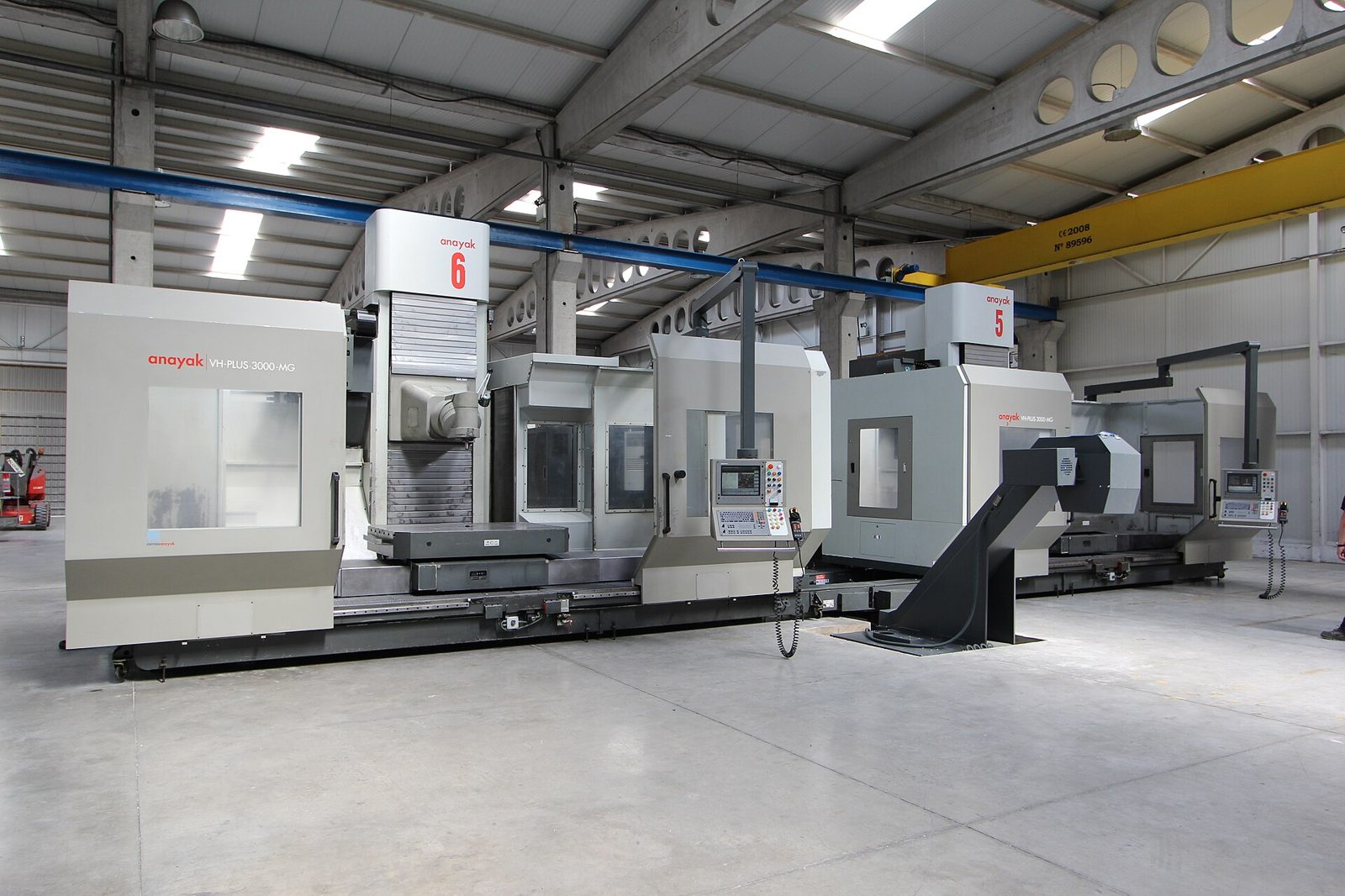
The customer machines automotive and defense components to tight tolerances. Stainless-steel parts for turbochargers, cast-iron hydraulic components and aluminum defense parts, metals with very different behavior, are all machined in the same plant under the same production system. It is a dense operation of more than 100 MCTs and NC lathes, running around the clock.
In a shop like this, the coolant is a shared variable that sits in more than 100 machines at once. The same machine may cut aluminum on the day shift and cast iron at night, so running a different fluid for each material was never a realistic option. The customer's competitive edge comes from managing that variety to a single standard.
The standard the customer set was three materials on one coolant. On defense aluminum parts, surface appearance is a delivery criterion, so machined aluminum had to come out free of staining. The same fluid had to cut cast iron without spoiling early or causing rust. And performance could not drop sharply over 24-hour machining, so that 100-plus machines could be run on the same product to the same standard.
The challenge: keeping aluminum unstained and cast-iron sumps sound in one fluid
The shop had been running general emulsions or synthetics and changed product whenever a material issue appeared. Each product did its job on one material and showed a weakness on another. A product with good bio-resistance stained the aluminum, and a product chosen to protect the aluminum let the cast-iron sumps spoil early and rust. Fixing one side upset the other.
Concentration varied from product to product, and each material ended up with its own product, stock and standards. Hydraulic oil leaking from the machines was emulsified into the fluid. Problems were handled case by case for each material, and splitting coolants by material was not a realistic answer for a shop of this size.
“When the aluminum side complained about staining, we'd change product, and a few weeks later the cast-iron sumps would start to smell. It only made sense once it was explained that the product wasn't the problem; trying to fix both with pH was.”Production engineering lead, customer
The customer asked whether the coolants that kept shifting with each material could be consolidated into one. What it needed was not another product change but a fluid that could carry one standard across 100-plus machines. So before choosing any candidate, the customer and our team set out to understand why the two materials want different coolants.
The solution: resolving a pH trade-off through formulation design
In the first one to three weeks, the customer and our team mapped the material mix, the sump layout of each machine, the running pattern, and the state of aluminum staining and the cast-iron sumps, and traced where each earlier product had hit its limit. Aluminum staining appeared mainly with products that held a high pH, while cast-iron sump spoilage appeared with products that had low pH and weak buffering. The issue was not the quality of any one product but the attempt to satisfy two requirements through pH alone.
The conflict is not chance; it follows from the chemistry of the two metals. Aluminum is amphoteric. Its thin oxide film is stable near neutral, but as pH rises the film dissolves and the surface stains and darkens. Some amines react directly with aluminum and make the staining worse. Aluminum-friendly coolants therefore tend to run at lower pH and lower alkaline reserve.
Cast iron wants the opposite, a high alkaline reserve. Graphite and the iron matrix form micro-galvanic cells, so cast iron flash-rusts quickly once wet, and fine cast-iron swarf, with its large surface area, consumes inhibitors fast. Many water-miscible coolants hold microbes back with high pH and amine buffering, so in a lower-pH aluminum fluid bacteria multiply easily, their metabolites push the pH down further, and cast-iron rust and spoilage arrive together. Raise the pH for bio-resistance and the aluminum stains again.
Breaking that loop takes biostability that does not depend on pH alone, together with components that adsorb on aluminum and protect its oxide film. An ester base fluid with strong affinity for metal surfaces and an emulsifier system that microbes cannot easily use as food point in that direction. So the criterion changed from “which material is it strong on” to “how does one fluid resolve the conflict”. In weeks four and five we sorted the candidates by working principle rather than by brand, on pH buffering, emulsion type, base fluid and tramp-oil rejection: whether biostability comes from formulation design rather than high pH, whether aluminum non-staining has been verified on representative alloys, whether the base fluid is an ester, whether wetting and tramp-oil rejection keep chips and oil from staying inside the machines, and, because most machines have their own sumps, whether top-up management stays simple. The field narrowed to a semi-synthetic ester fluid.
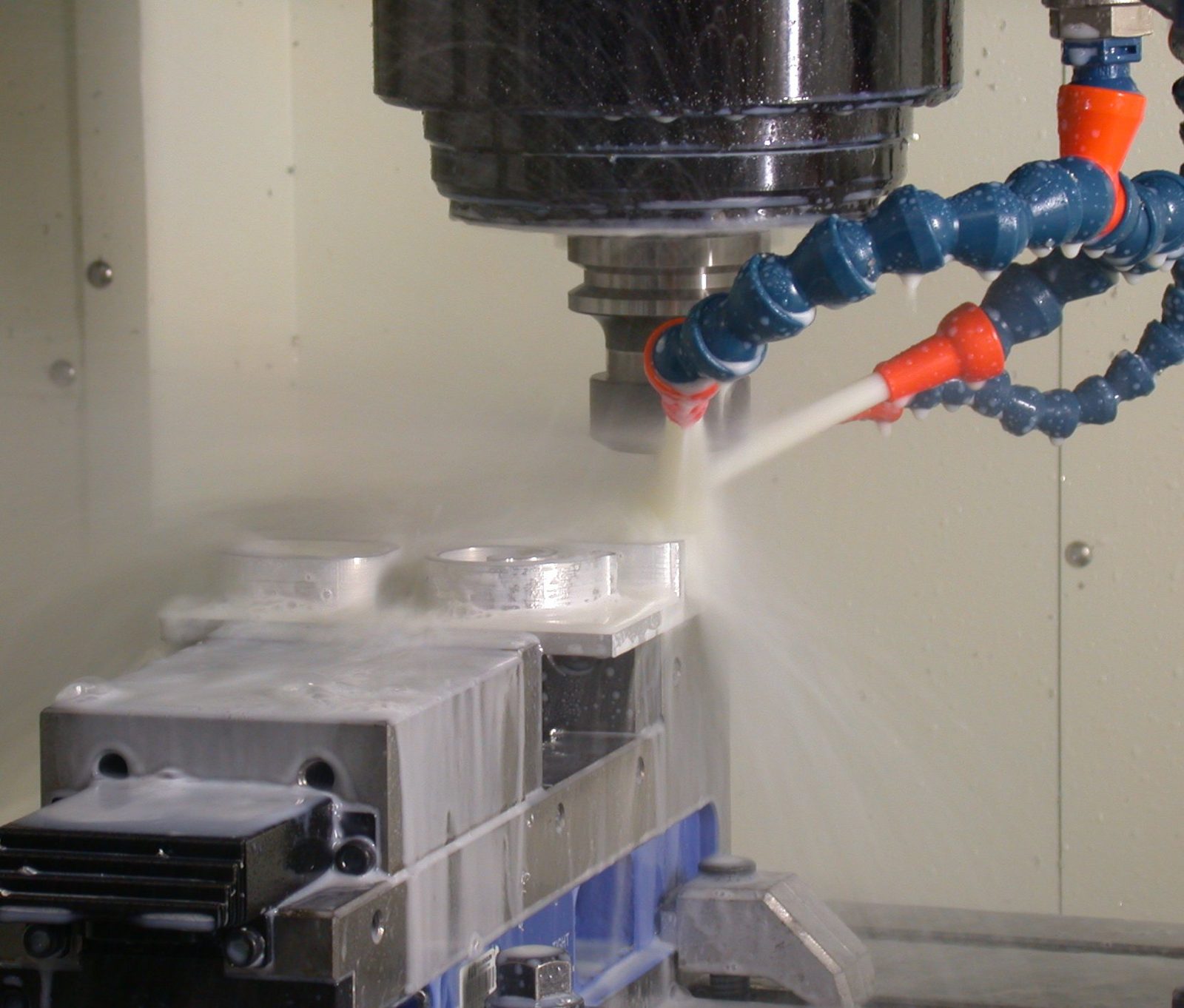
The choice was a biostable semi-synthetic coolant whose base fluid is a vegetable-based synthetic ester. Diluted, it forms a fine micro-emulsion that cools and cleans well, and the ester adheres to metal surfaces to form a lubricating film. Its biostable design resists the pH drop and odor caused by microbial growth, so it holds in circulation in the cast-iron sumps without leaning on high pH. Its product benchmark is no staining on aluminum 6061 at 5% concentration after 15 hours at room temperature. Good tramp-oil rejection, pushing out leaked hydraulic and way oils, keeps the fluid in that state for longer.
Adoption: from representative machines for each material to the whole floor
From week six to week thirteen, about two months, representative machines for each material ran the new coolant in a parallel trial. The trial watched aluminum surfaces for staining, cast-iron sumps for odor and pH drift, concentration drift, and machine interiors for cleanliness. Running aluminum and cast-iron machines side by side on the same fluid showed whether the old trade-off actually went away.
From the fourth to the sixth month, the 100-plus machines were converted in phases to the same fluid and the same management standard. Only the coolant changed, but the management standard became one as well. Concentration, which had varied by product, settled at around 5%, and every machine is topped up to the same concentration range and pH floor. Where hydraulic oil used to be emulsified into the fluid, the oil the coolant now rejects floats up and is skimmed off at a fixed interval.
The results: three materials checked with one refractometer
Aluminum staining and cast-iron spoilage eased together. Two conditions that used to trade off against each other are now managed in one coolant. In the 24-hour machining that followed the conversion, the fluid ran without loss of performance and did not drop sharply over long circulation. Tramp-oil rejection and wetting leave less oil and fewer chips inside the machines, cutting cleaning and inspection work.
Operation became simpler and cost came down. Coolants that had been switched by material became one fluid across 100-plus machines, and management that had been case by case per material moved to one concentration and pH standard. Separate products, stock and standards per material came down to one product and one concentration and pH standard, so stock items fell from three or four to one and ordering came down to one as well. With one product bought in volume and fewer spoiled sumps to dump and refill, the combined yearly cost of coolant purchase, change-outs and waste disposal fell by about 15–20% from before the switch.
For the customer's own customers, this means parts machined under the same process conditions regardless of material. When the company submits process-control records to automotive and defense clients, it no longer has to explain coolant conditions machine by machine. Defense aluminum parts, where surface appearance is a delivery criterion, are covered by the same fluid and the same standard as every other material.
“We used to keep a spreadsheet of which coolant was in which machine. We don't need it anymore. One lap of the floor with a refractometer and you're done.”Machining foreman, customer
What's next: bringing the logs of 100-plus machines into one table
The customer and our team are now looking at pooling the concentration and pH logs kept machine by machine into one table. The aim is to single out machines with unusually high top-up volumes and check them for tramp-oil ingress or evaporation. Because every machine runs the same fluid, they can now be compared directly. Top-up volumes and skimming records for each machine are being added to the same table, and the customer and our team review it each quarter to adjust the top-up rule and the skimming interval.