Customer storiesHard-alloy parts machinist for defense equipment
A defense parts machinist stretched coolant change-outs from 3 months to 9 months and more
- Customer
- Hard-alloy parts machinist for defense equipment
- Industry
- Defense
- Product group
- Metalworking Fluids (MWF)
- Process · Material
- Heavy-duty drilling, tapping and milling of hard-to-machine alloys · Stainless steel (SUS), heat-treated cast steel
A manufacturer machining defense components from stainless steel and heat-treated cast steel decided to choose coolant on total operating cost rather than price per liter. Moving from a chlorinated fluid to a long-life, bio-stable water-based fluid stretched the change-out interval from 3 months to 9 months and more, and tool wear, odor and skin irritation all fell.
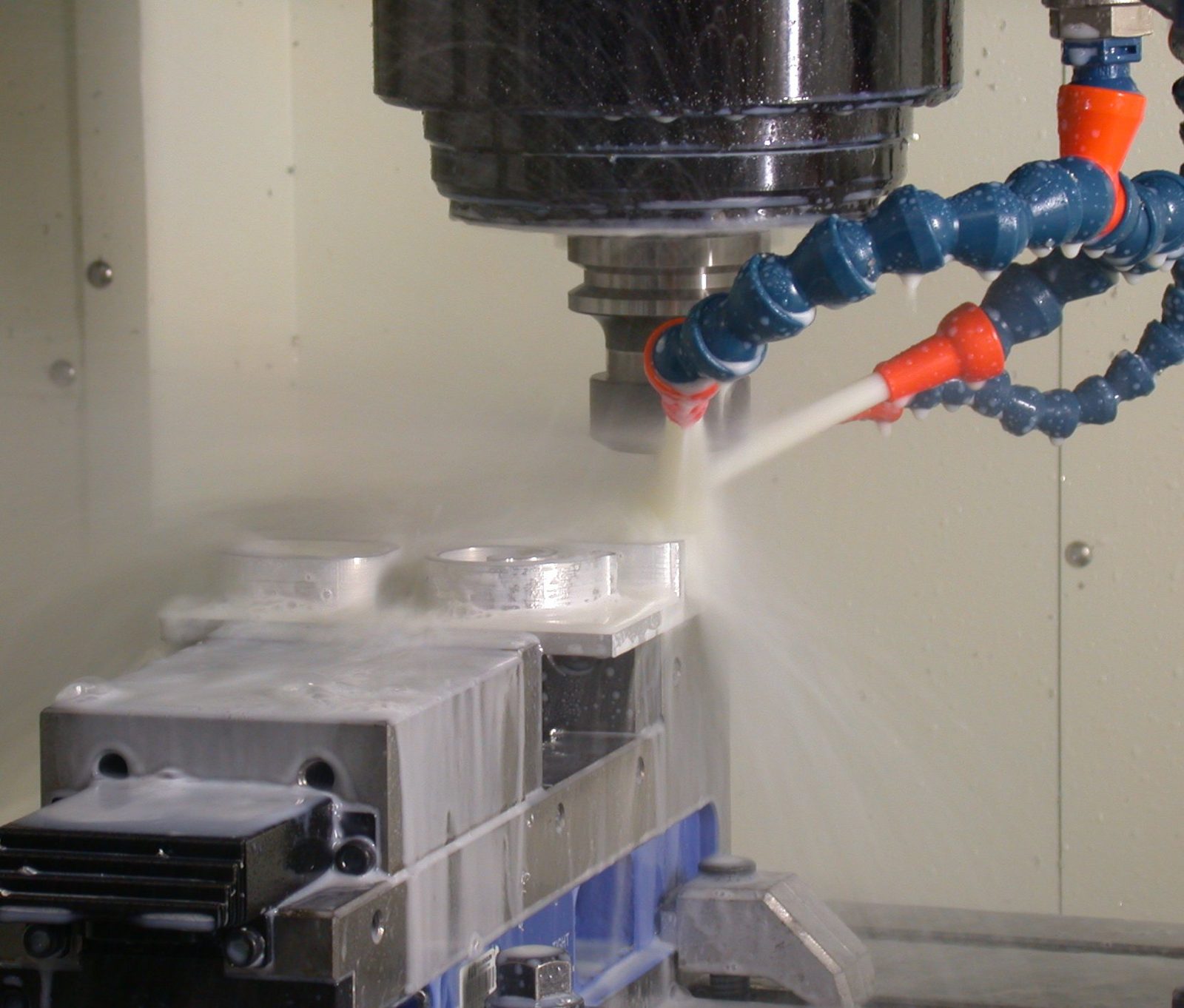
The customer machines components for defense equipment. It works tough, hard-to-machine materials such as stainless steel and heat-treated cast steel through heavy-duty drilling, tapping and milling, and delivers to defense dimensional and surface specifications. In these materials heat and pressure concentrate at the cutting edge and work hardening sets in easily, so the coolant's lubricity and extreme-pressure performance directly set tool life and machinability.
That is why the shop had long used a chlorinated cutting fluid to secure machinability. On cutting performance it was a reasonable choice, and the new standard the customer set started from not giving that performance up. The customer decided to judge coolant on what it costs to run for a full year rather than on price per liter. Three conditions sat inside that: long life, meaning fewer line stops, less waste-fluid disposal and fewer fresh make-ups; heavy-duty performance that protects tools and keeps machinability on stainless steel and heat-treated cast steel; and a safe composition without ingredients that could affect operators' health, cutting skin irritation and odor.
The challenge: a line that stopped every 3 months, seen as a year's cost
The previous fluid spoiled and had to be replaced every 3 months. That meant 4 change-outs a year, each one stopping the line, disposing of waste fluid and mixing a new charge, and the cost of the change-outs plus the opportunity cost of the downtime kept accumulating. Complaints about the smell and skin irritation had built up on the floor, and soap deposits were collecting inside the machines. Heavy tool wear on the hard materials persisted as well.
“On coolant price alone there was no reason to switch. But once we put the days the line stood still for each change-out next to it, it looked different. Going from four stops a year to one was the biggest money in the whole thing.”Production control lead, customer
In week 0 the customer asked for a review of the change-out every 3 months together with the odor and skin irritation. What the shop needed was a fluid that would last while keeping its cutting performance. So before picking any candidate, the customer and our team set out to cost a single change-out.
The solution: choosing on what sets the change-out interval, not on unit price
In weeks 1–2 the customer and our team checked tank volumes, the change-out procedure and its downtime, the share of work by material, and the hardness of make-up water. One change-out was broken into its costs: line downtime while the tank is emptied and cleaned, waste-fluid disposal, new concentrate and the make-up work, and the adjustment time until concentration settles after a fresh fill. In this shop a change-out stopped a machine for close to a day. Broken down this way, the burden of 4 change-outs a year lay more in downtime and waste fluid than in concentrate.
The life and cost of a water-based coolant for hard alloys are set by three mechanisms working together: the extreme-pressure chemistry, the microbial resistance of the emulsion, and deposits inside the machine. At cutting-zone temperatures, chlorinated EP additives react with the metal surface to form an iron chloride film with low shear strength, which keeps tool and workpiece from direct contact and makes tough materials machinable. It works, but as a halogen it makes waste disposal heavier, and regulatory pressure on skin exposure and the environment is rising. Chlorine-free approaches fill the same role by combining adsorbed films from synthetic lubricity components with EP additives of another chemistry.
A water-based coolant is water, base oil and emulsifier mixed together, a good home for bacteria and fungi. As bacteria grow they break down emulsifier and base oil and produce acids, pH falls, the emulsion splits, and corrosion protection and lubrication collapse together. The spoilage smell is the last signal of that process, and a bio-stable emulsion slows it with components microbes find hard to degrade and a buffer that holds pH high. On top of that, when fatty-acid components of the emulsion meet calcium and magnesium in make-up water, they form insoluble metal soaps that build up as sticky deposits inside the machine and destabilize the emulsion.
All three end up setting the change-out interval, so in this shop the cost is decided less by the price of the fluid than by how long the fluid keeps doing its job. In week 3 candidates were therefore compared on the mechanisms that set the change-out interval, not on brand, and costed on change-outs, downtime, waste fluid and tooling rather than unit price. The comparison asked how well the emulsion resists microbes, whether it delivers EP lubrication on stainless and heat-treated cast steel without chlorine, whether it suppresses saponification in the machine, and how much concentrate it takes at the recommended concentration for each material. The starting point was that a candidate with a higher unit price could still come out ahead once change-outs and tooling were in the sum.
The choice was a long-life, bio-stable water-based fluid with high microbial resistance (LUVISOL line). In place of a conventional emulsion, its emulsion holds back spoilage so the machining environment stays stable for a long time without frequent change-outs, and it suppresses saponification inside the machines so they stay clean. At 5% dilution its pH is 9.4–9.6, leaving alkaline buffer in reserve, and it shows no rust in a 3%, 48-hour cast-iron chip test. For EP performance it combines synthetic lubricity components and EP additives, protecting tools and keeping machinability on stainless and heat-treated cast steel without relying on chlorine, and specific ingredients that could affect operator health were excluded.
Adoption: two months in parallel and concentration rules by material
From week 4 to week 11, about two months, one heavy-duty machine ran on the new fluid in parallel. Over that period concentration, pH, odor and tool wear were tracked against the old fluid. Because the trial was about the change-out interval, the focus was on how fluid condition moved over time rather than on machinability on any single day.
From month 3 the whole line changed over, and the operating rules were reworked with it. Following the recommended concentration for each material, machines cutting stainless run at 10–15% and machines on high-alloy steel at 5–12%, read by refractometer. pH and odor are logged once a week, and make-up water hardness is checked too, to prevent saponification. These concentration and pH rules by material were written into the work standard.
The results: three times the interval, and a year in which the cost ranking flipped
The change-out interval went from 3 months to 9 months and more. The fluid has run past month 9 without a change-out, 3 times the old 3-month interval or more, and 4 change-outs a year became 1.3 or fewer on a calculated basis. Line stops, waste-fluid disposal and fresh make-ups fell in the same proportion, and maintenance cost dropped substantially. At one day of downtime per change-out, annual downtime for coolant went from around 4 days to 1–2.
Machining and the floor changed too. Tool wear on hard materials fell and machinability improved, and stainless drills and taps now cut about 20–30% more parts per tool. The spoilage smell and skin irritation were resolved and conditions on the floor improved visibly, while with saponification suppressed the machines stay clean and long-term stability across the process rose.
A difference invisible in a unit-price comparison became the largest line in total operating cost. The shop moved off chlorine without giving up the EP performance heavy-duty cutting needs. The three conditions the customer started with, long life, heavy-duty performance and a safe composition, were met together by one fluid.
“Three months after the switch, everyone looked at the tank. No smell, so we let it go, and the next three months were the same. That's how the year went by.”Machining foreman, customer
What's next: setting the change-out after month 9 by data
The fluid has now run for 9 months and more, and the next change-out point will be set from fluid-condition records. The customer and our team are overlaying concentration and pH logs with tool-change records. They are looking at finding the point where fluid condition starts to affect machining quality and making that point the change-out criterion. Tooling cost belongs in the same one-year view for that comparison to be fair.