Customer storiesPrecision machinist of airframe and engine-area parts
An aerospace machinist changed its coolant supply base without changing part quality
- Customer
- Precision machinist of airframe and engine-area parts
- Industry
- Aerospace
- Product group
- Metalworking Fluids (MWF)
- Process · Material
- Precision machining of aerospace parts (roughing and finishing, high-pressure coolant) · Titanium alloy, stainless steel, 7000-series aluminum
An aerospace parts maker machining titanium alloy, stainless steel and 7000-series aluminum on one line saw supply of its coolant's raw materials become unreliable, and set out to cut supply risk without touching part quality. Moving to a synthetic water-based fluid less exposed to base-oil supply, with material coverage, low foam under high pressure and aluminum staining all verified, kept quality steady and eased sump upkeep and procurement.
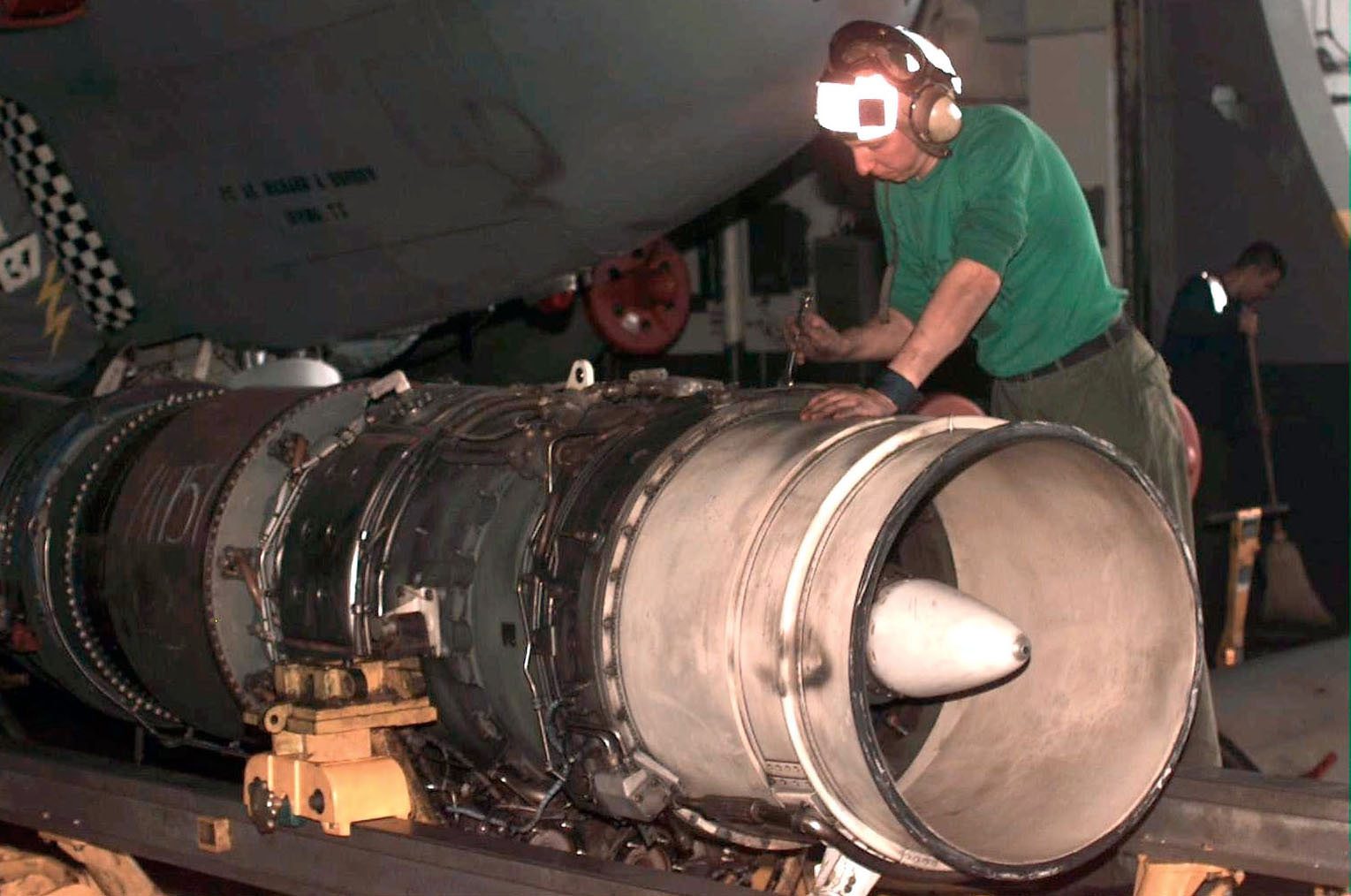
The customer machines airframe structural parts and parts that sit around aircraft engines. It works titanium alloy, stainless steel and 7000-series aluminum on one line and delivers to the tight dimensional tolerances and high surface requirements of aerospace work. In aerospace machining even a coolant change can affect surface quality and dimensions directly, so it is handled as a process change.
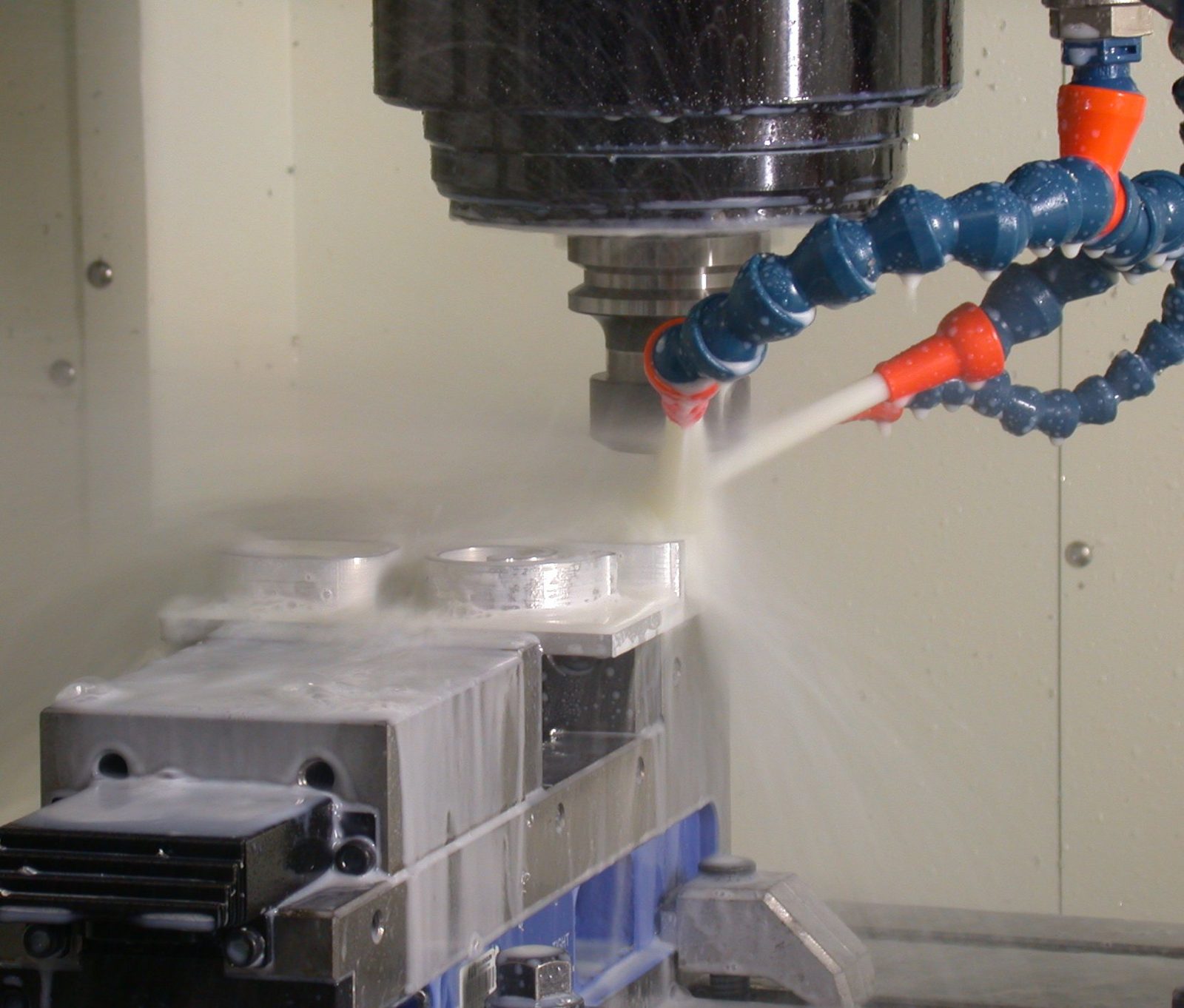
The three materials ask different things of a coolant. Titanium holds heat and tends to stick to the tool, so it needs cooling and lubricity; stainless steel needs extreme-pressure lubrication against work hardening; 7000-series aluminum needs chemical stability that leaves no stain. Roughing and finishing run on high-pressure coolant, so foam under delivery pressure has to be managed as well. Meeting all three with one fluid is the starting condition for this line.
The standard the customer set was to hold process quality at today's level while reducing the risk of a supply disruption. The new fluid had to machine titanium, stainless steel and aluminum alike, because a fluid that is good on one material only cannot be adopted. It could not foam excessively under high-pressure delivery, and it had to stand up to tramp oil and contamination in the sump so that maintenance would not grow. At least the current level of stability, with no surface staining or unstable lubrication, was also a condition.
The challenge: a fallback ahead of unstable raw-material supply, with performance untouched
The previous coolant was mineral-oil based, and the customer had no real complaint about its cutting performance. But supply of that product's raw materials became unstable, and its long-term availability started to look uncertain. Aluminum staining, foam under high-pressure delivery and sump contamination were already watched items with the old fluid, and dilution used ordinary plant water. Changing the fluid would put every one of those items back on trial.
“We weren't changing because the fluid was bad, so nothing could be different afterwards. We didn't set out to find something cheaper. We set out to find something that gave us exactly the same parts on all three materials.”Production engineering lead, customer
The customer asked for an alternative to be reviewed ahead of the unstable raw-material supply for its current coolant. Finishing the verification before supply actually ran out meant the process-change procedure could be followed without rushing. So the customer and our team agreed to run the search as a process-fit review, not a price comparison.
The solution: changing the raw-material base, not the brand
In the first one to two weeks, the customer and our team set down the line's conditions. They looked at the share of work and operations by material, high-pressure coolant pressure and nozzle settings, tramp oil and contamination in the sumps, and make-up water quality. They also went through the process-change procedure the customer has to follow when a coolant changes.
Supply risk comes from the backbone of the fluid. Emulsions and semi-synthetics are built on refined mineral oil, with emulsifiers and additives on top. When supply of a particular class of base oil wavers, the formulation itself is affected. A synthetic water-based fluid uses water-soluble synthetic lubricity components and corrosion inhibitors as its backbone instead of mineral oil, which puts it a step away from swings in the base-oil market. That is why spreading supply risk means changing the raw-material base rather than looking for another brand of the same type.
The same change in structure affects machining. The thin oxide film on 7000-series aluminum is vulnerable to alkali, so a high-pH coolant readily leaves stains and discoloration, and a synthetic that holds pH near neutral lowers that risk. Titanium conducts heat poorly, so cutting heat concentrates at the edge and cooling capacity sets tool life, and for aerospace titanium parts avoiding halogenated components is a common rule. On stainless steel a weak lubricating film speeds up built-up edge and tool wear. A synthetic is clear and low in oil, so chips come out dry and washing is lighter, but without mineral oil its lubrication rests on EP and synthetic lubricity components, which is why it has to be verified on each of the three materials.
In weeks three and four we compared candidates on raw-material base and process fit, not on brand. The questions were whether the formulation depends on a particular base oil, whether it machines evenly across the three materials, whether it stays foam-free at high pressure, whether it holds back aluminum staining and whether it stands up to tramp oil and soil, with supply continuity added to the list. Some synthetic candidates are designed to perform in deionized water, so site water quality went onto the comparison as well. The comparison narrowed the field to a synthetic water-based fluid.
The choice was a synthetic water-based fluid that is less exposed to swings in base-oil supply. It is a mineral-oil-free synthetic (0% mineral oil) with no heavy metals, boron, formaldehyde or silicone. Its concentrate pH of 7.5–7.7 is in the neutral range, which reduces aluminum staining and skin irritation, and it defoams well at high pressure and runs with 1-micron filtration. It is also stable against tramp oil and soil, so it does not add to sump maintenance.
Adoption: coupons and real parts in three materials, then a process change
From week five to week twelve, about two months, process fit was checked on one machine. Coupons and real parts in titanium, stainless steel and 7000-series aluminum were compared with the old fluid for surface finish, dimensions, aluminum staining, foam during high-pressure delivery and sump contamination. All three materials were verified on the same line because the customer would not adopt a fluid that was good on only one of them.
From month three, after a process-change record and first-article check, the fluid was applied to the line. Concentration is set within 6–10% according to the material mix, and dilution uses DI or deionized water instead of ordinary plant water. Concentration, pH and tramp oil in the sump are logged regularly.
The results: the same parts, with lighter sump upkeep and procurement
Since the changeover, machining quality has held at its previous level on all three materials. Finished surfaces on all three stayed in the same Ra 0.8–1.6 μm range as before, and no dimension fell outside tolerance in the first-article inspection. Tool life in titanium and stainless steel finishing, counted as parts per tool, came within ±10% of the old fluid. Staining on 7000-series aluminum, held back by the neutral pH, and foam during high-pressure machining, confirmed as low, are within control limits.
The fluid stands up to sump contamination, so managing the coolant takes less effort. Skimming tramp oil off the sump went from 2 times a week to 1. With the base moved from mineral oil to a synthetic water-based fluid, the risk of disruption tied to one class of base oil has been spread. Lead time from order to delivery, which had stretched to 6–8 weeks at times, has settled at around 3–4 weeks, and the procurement burden has eased.
Where process tolerances are as tight as in aerospace work, reviewing raw-material structure and supply continuity in advance is part of quality management. Because this change started from supply-chain risk rather than dissatisfaction with performance, the customer could explain to its clients why the process changed and what the checks showed, with evidence. The process-change record and the first-article results were that evidence.
“If you asked me what's different since the switch, I'd say the tank's a bit cleaner. The parts come out the same. That's what we wanted.”Quality lead, customer
What's next: qualifying a second source ahead of time
The step after changing the raw-material base is making sure the same situation does not catch the shop out again. The customer and our team are now qualifying one more synthetic candidate that meets the same conditions, on the same test items, in advance. They are also looking at using consumption trends to set stock levels and order points. Finish, dimensions and tool life, along with concentration, pH and tramp oil, are logged monthly and will serve as the baseline when the fluid moves to other machines.